Cliff StudiosA Monograph · MMXXVI
CliffStudios
A recording studio — its own building, two floors, a Rupert Neve 5088 at its heart — and the whole estate wired back to the desk.
A House on the Cliff · In Thirteen Chapters
The monograph begins↓
A recording studio — its own building, two floors, a Rupert Neve 5088 at its heart — and the whole estate wired back to the desk.
Every music city has a proven room. None of them have this — a world-class studio built around a Rupert Neve 5088, and a private estate wired to the same desk, taken as a single exclusive lockout. No day-trippers, no shared lounge, no booking by the hour. The band wakes up, walks across the courtyard, and the record never leaves the property.
Pull a project out of the daily grind and bring it somewhere no one can find you — a hill of your own, three minutes above downtown Birmingham and ten from the airport, with the city's Michelin tables and record stores at the bottom of it. Hidden and central at once. So is the discretion: who records here is nobody's business but yours.
A fully loaded Rupert Neve 5088 at the center, two dozen mic preamps, thirty-two channels of conversion, and DB25 tielines that patch any room in the house back to the desk. Track a full band live, all at once. The full rider — mic locker, complete I/O, recall and delivery formats — is a page, and it's yours on request.
Most studios are a room. Here there are two buildings — a purpose-built studio, and an estate wired into it with Mogami DB25 tielines, so any room in the house can be patched to the 5088. You don't book a session. You move in.
The studio is less than a year old. The artists and engineers who've already recorded here hold more than thirty Grammys.
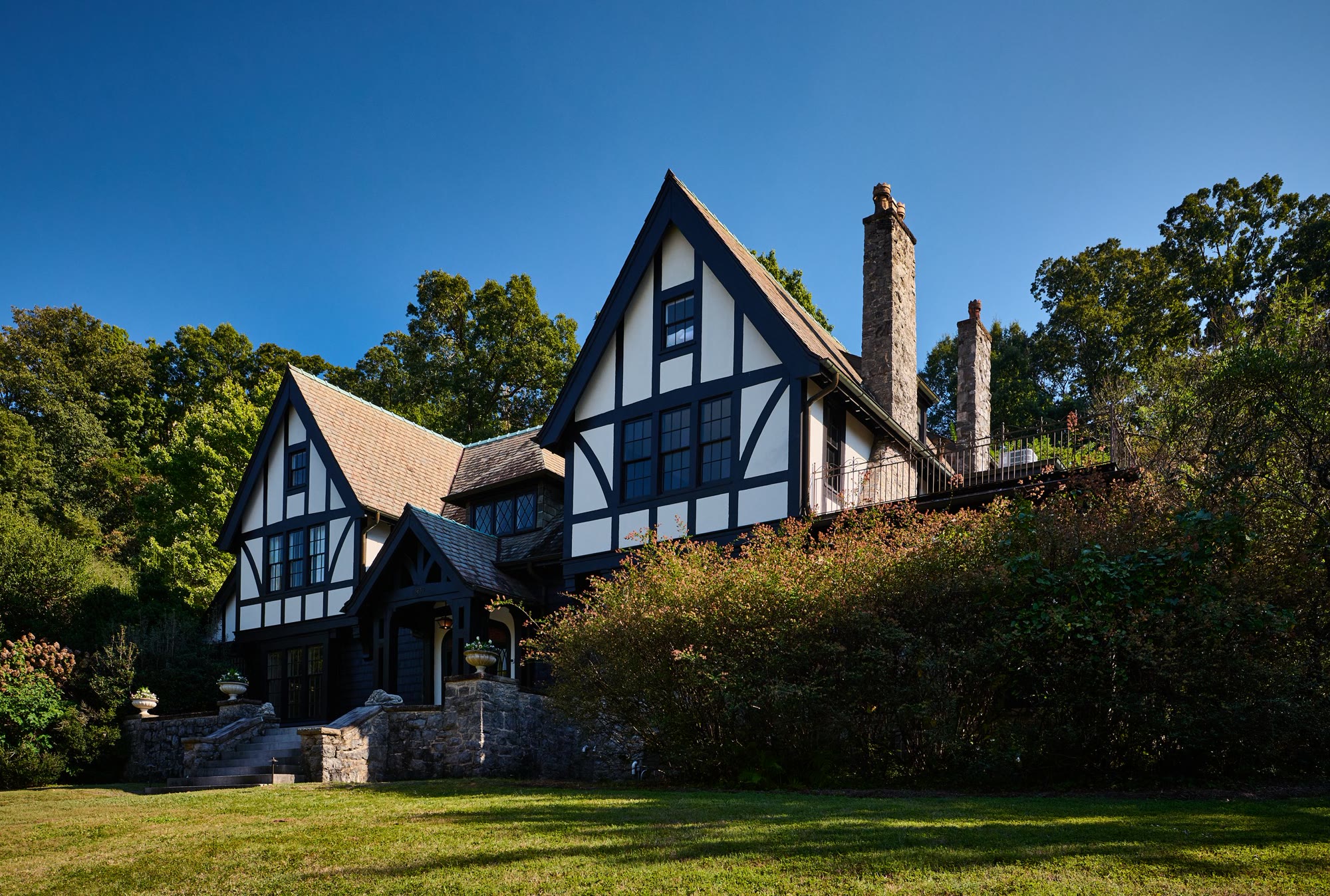
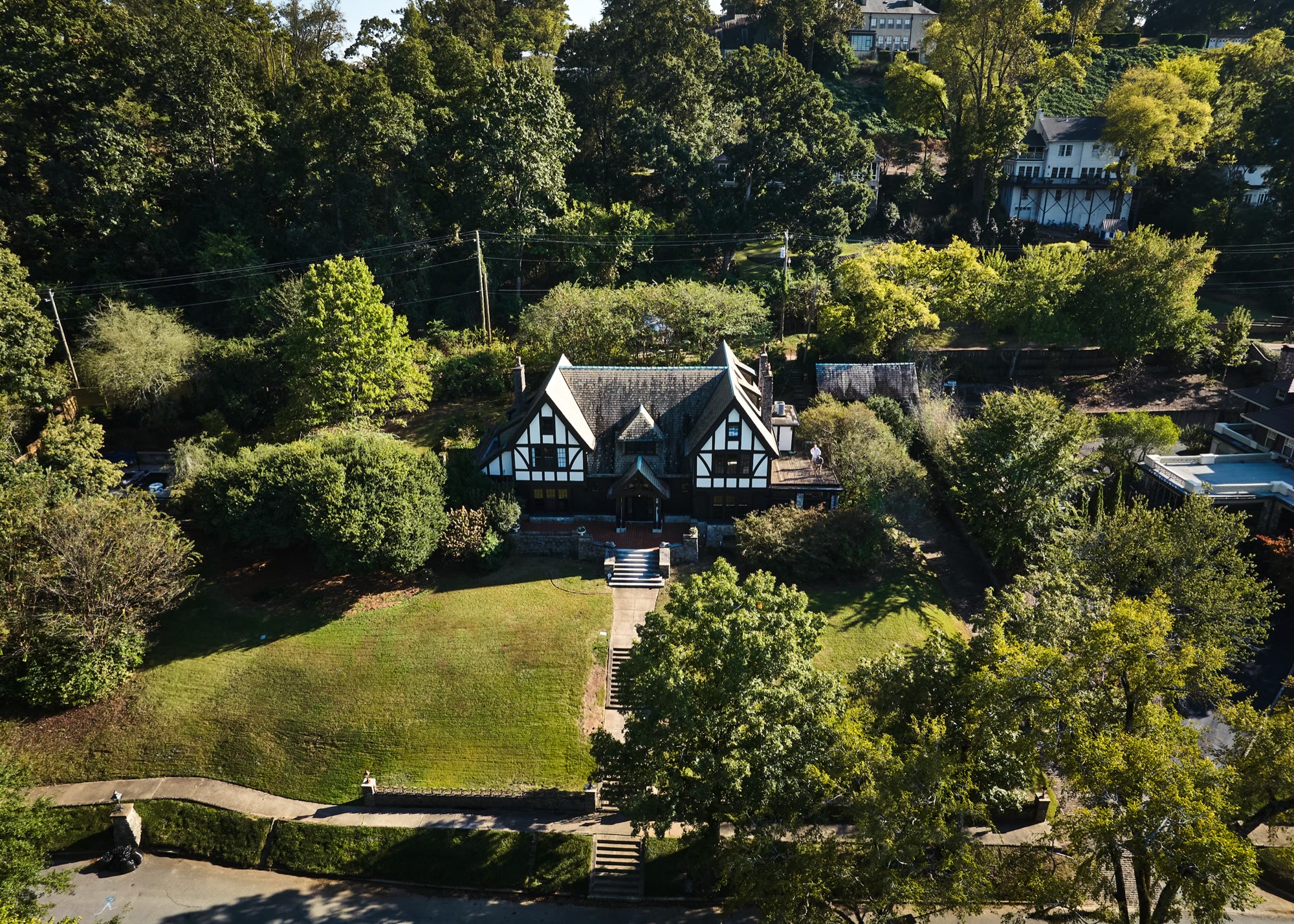
A large, secluded, wooded property — the house set back behind a long stone stair, the studio in its own building beyond. Begin outside, to see how much house there is.
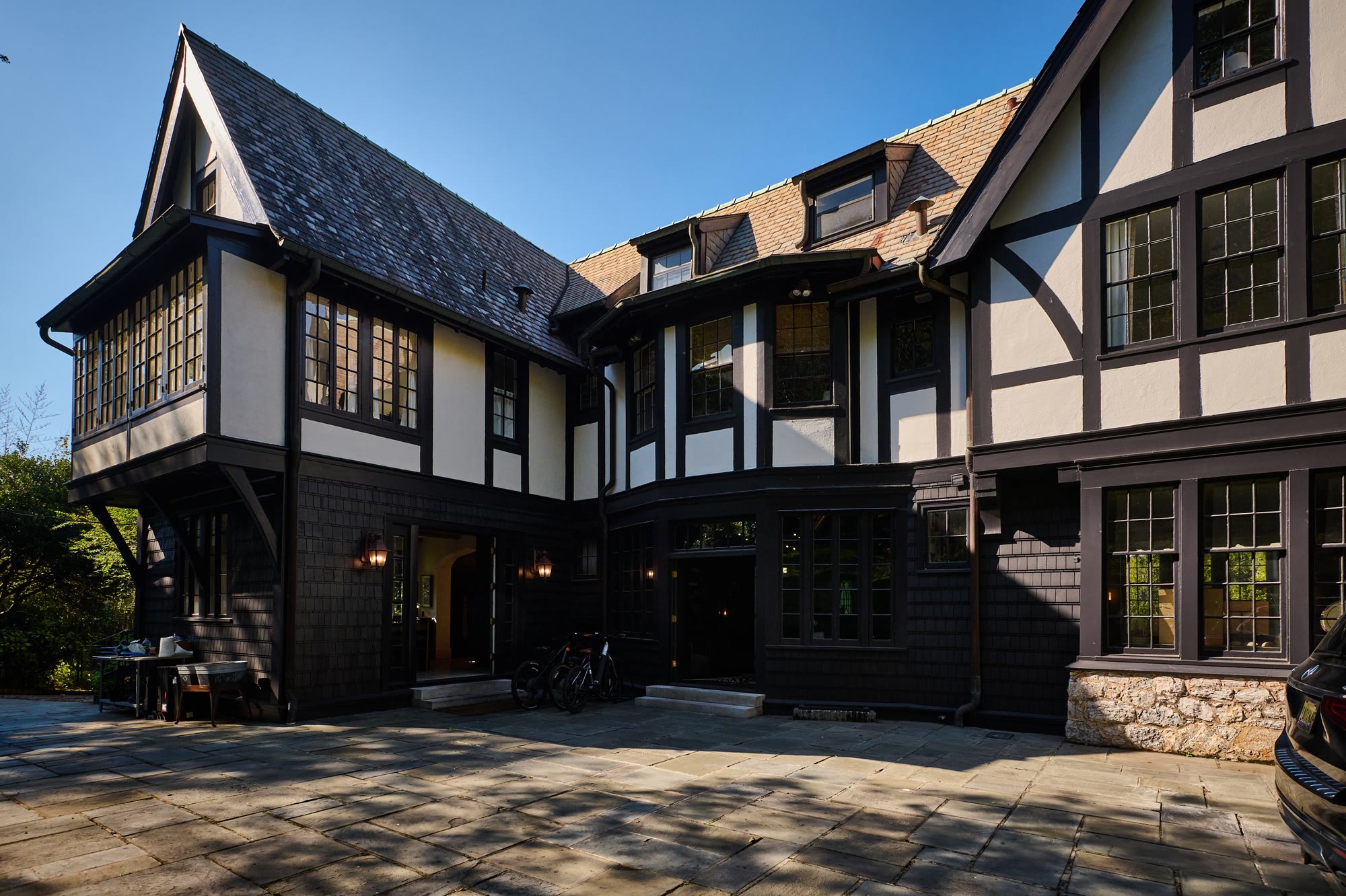
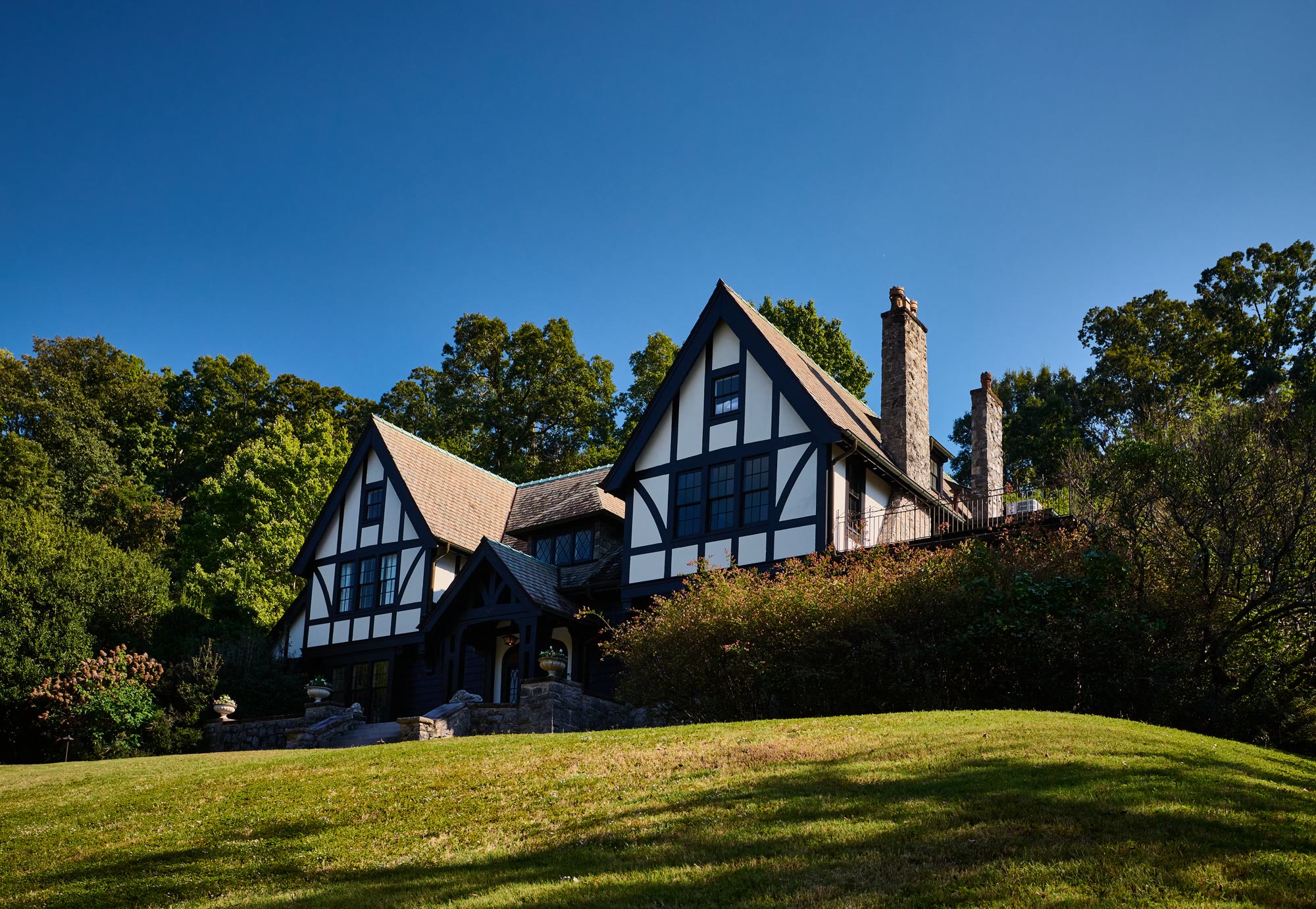
Tudor, twin-gabled, half-timbered, with stone chimneys and a long flight of steps up from the street. It sits in trees on a hill, which is the first thing to understand about recording here: nobody is driving past.
The studio is the building beyond it — its own roof, its own two floors — close enough to walk to in a robe, far enough that the house stays a house.
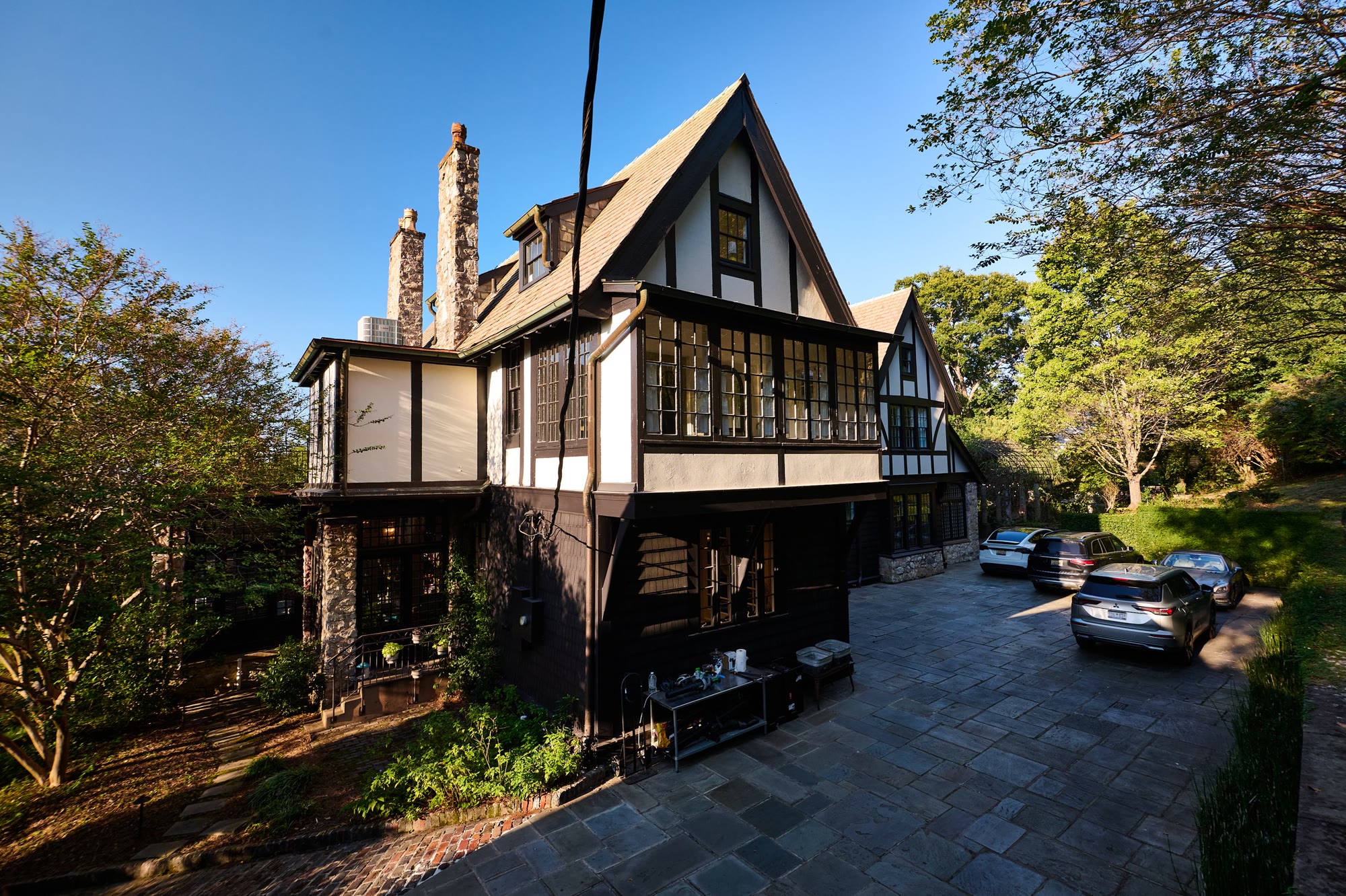
A separate building. Two floors. At the heart of it, a Rupert Neve 5088 — among the finest he ever drew — and the whole estate answers to it.
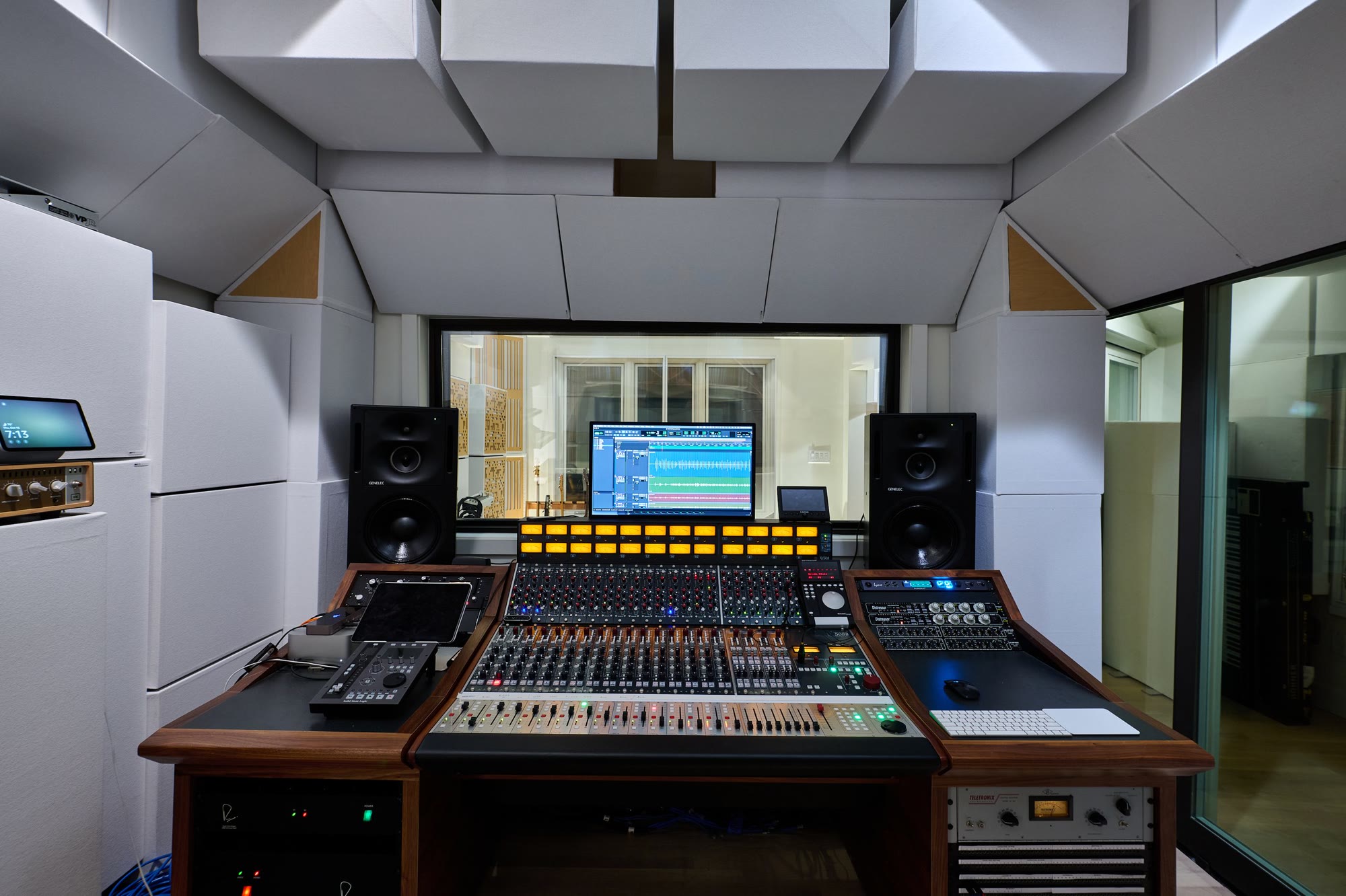
Upstairs, the engine room — and at the heart of it, the console Rupert Neve counted among the finest he ever drew: the 5088. Sixteen channels, eight groups, fully discrete and Class-A, every signal routed through his own transformers. It is the Neve sound — the one records have been chasing for fifty years — in its purest, hand-built form, and almost nobody wires one to a whole estate.
Around it, a rig to match: Genelec 1237As on motorized stands, Lynx conversion, a Mac Studio, and a deep bench of outboard — an 1176, an LA-2A, a pair of Distressors, a Bricasti — because a desk like this deserves the company. Monitoring is all-analog: a Wolff Audio MeMore rig that runs over the estate's DB25 tielines, so you can cue and mix straight from the console in any room of the house — zero latency, no screens, pure signal. The room was designed, and much of the gear provided, by David Lyons of Sonic Circus.
Through the glass is the tracking room; down the stair, the big live floor. The rest of the estate is a building away — across the courtyard, wired back to this desk through the Mogami DB25 — so every room of it lands here too.
UPSTAIRS · RUPERT NEVE DESIGNS 5088 · FULLY DISCRETE · HAND-BUILT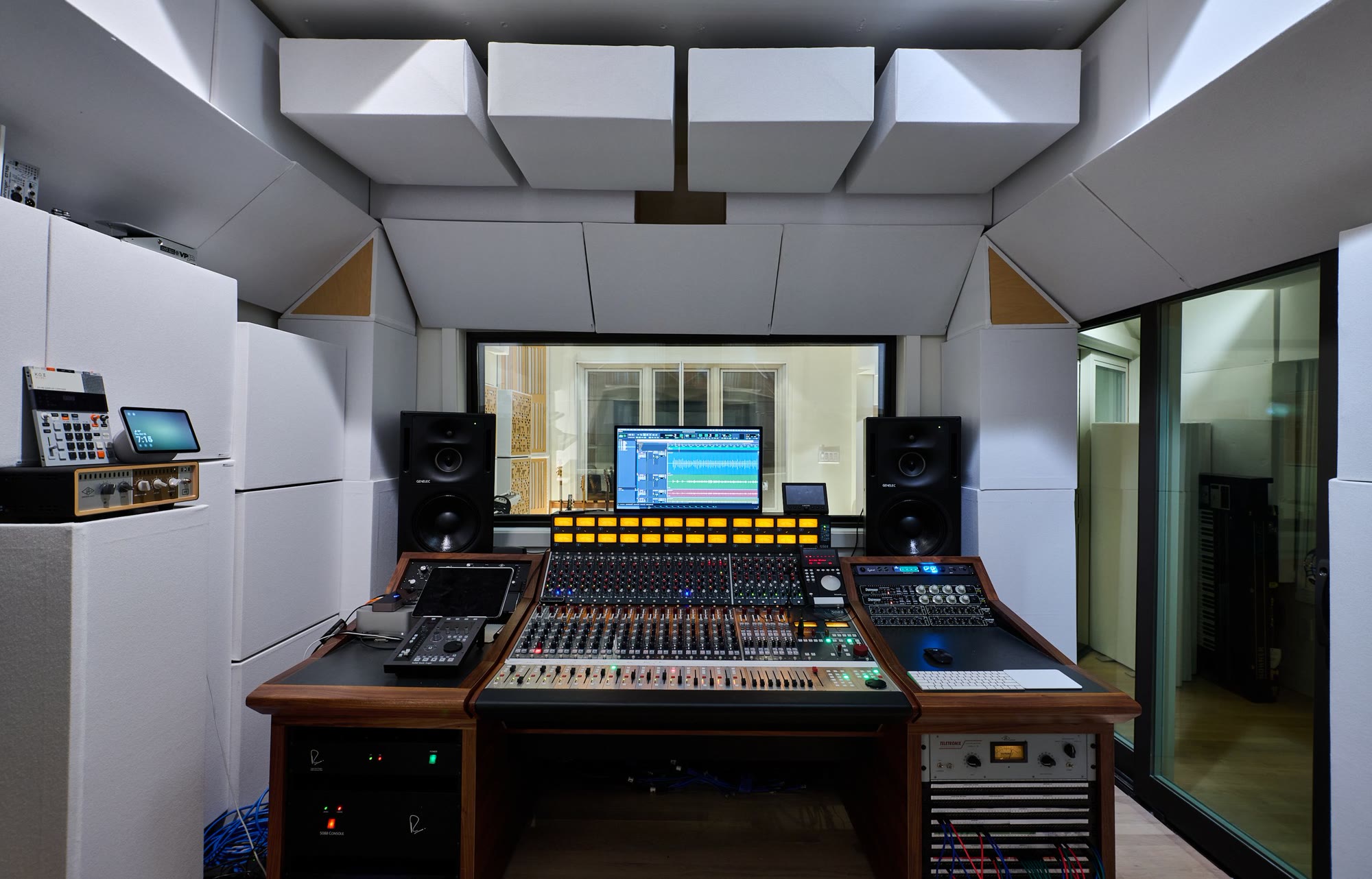
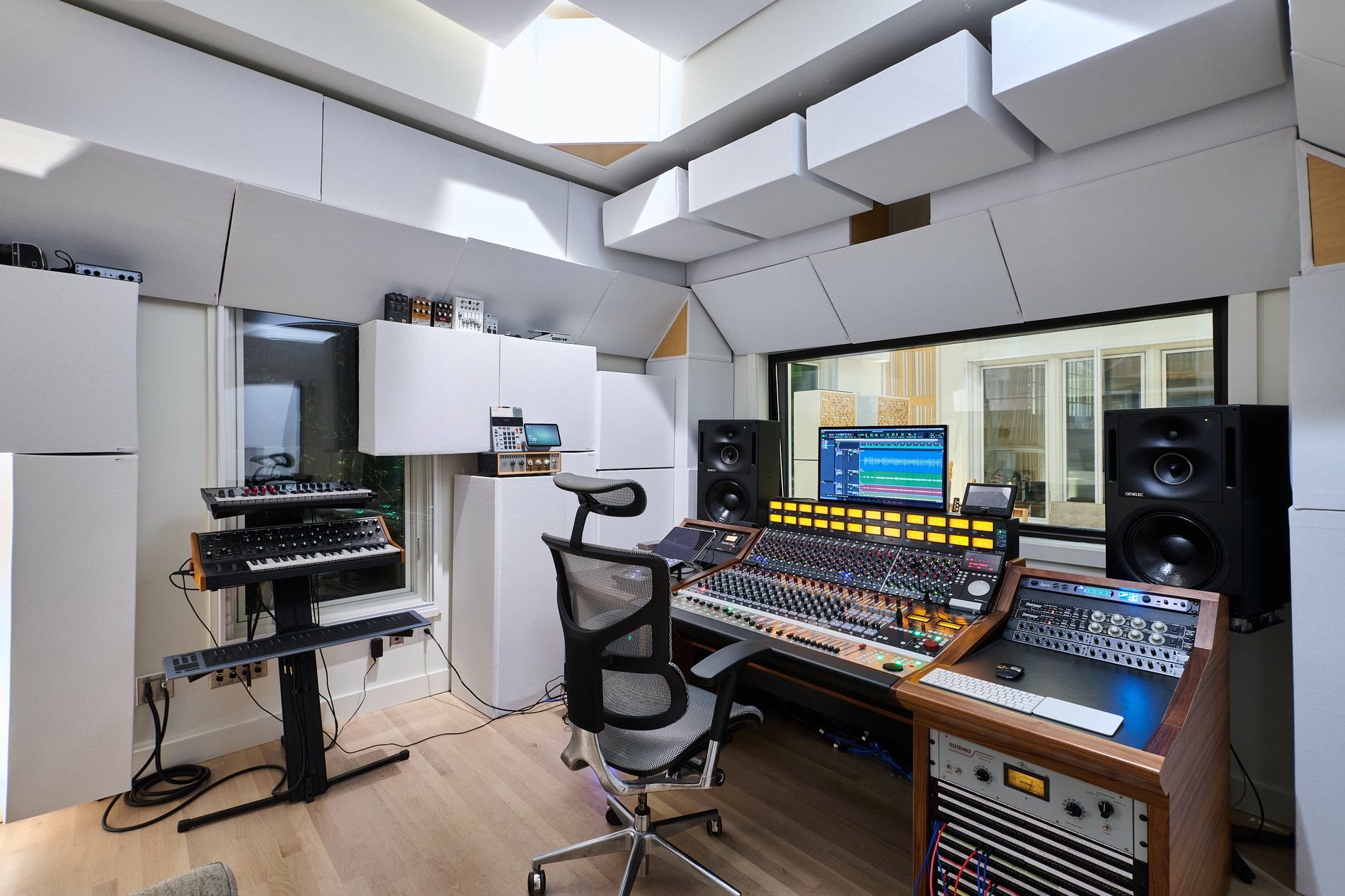
The desk doesn't run itself. It's run by Emanual Ellinas — who has tracked St. Paul & the Broken Bones and The Secret Sisters, played djembe behind Taj Mahal, and toured with the White Stripes. In the hours a studio isn't recording, he builds the Sitori Sonics pedals you'll find under the feet of Sonic Youth, St. Vincent, Mogwai, Passion Pit and the Black Keys. He mastered half the Christmas record before anyone thought to ask.
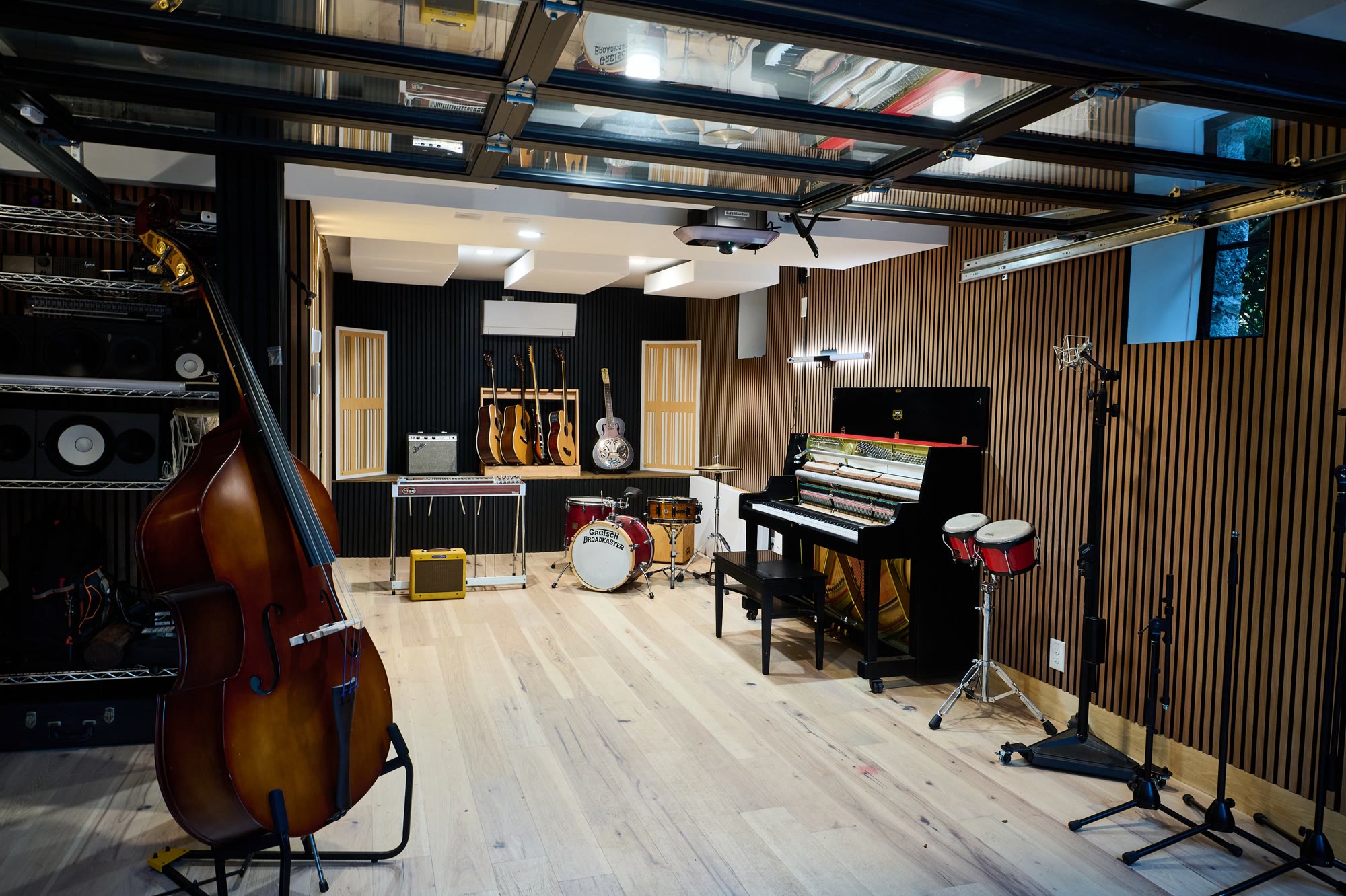
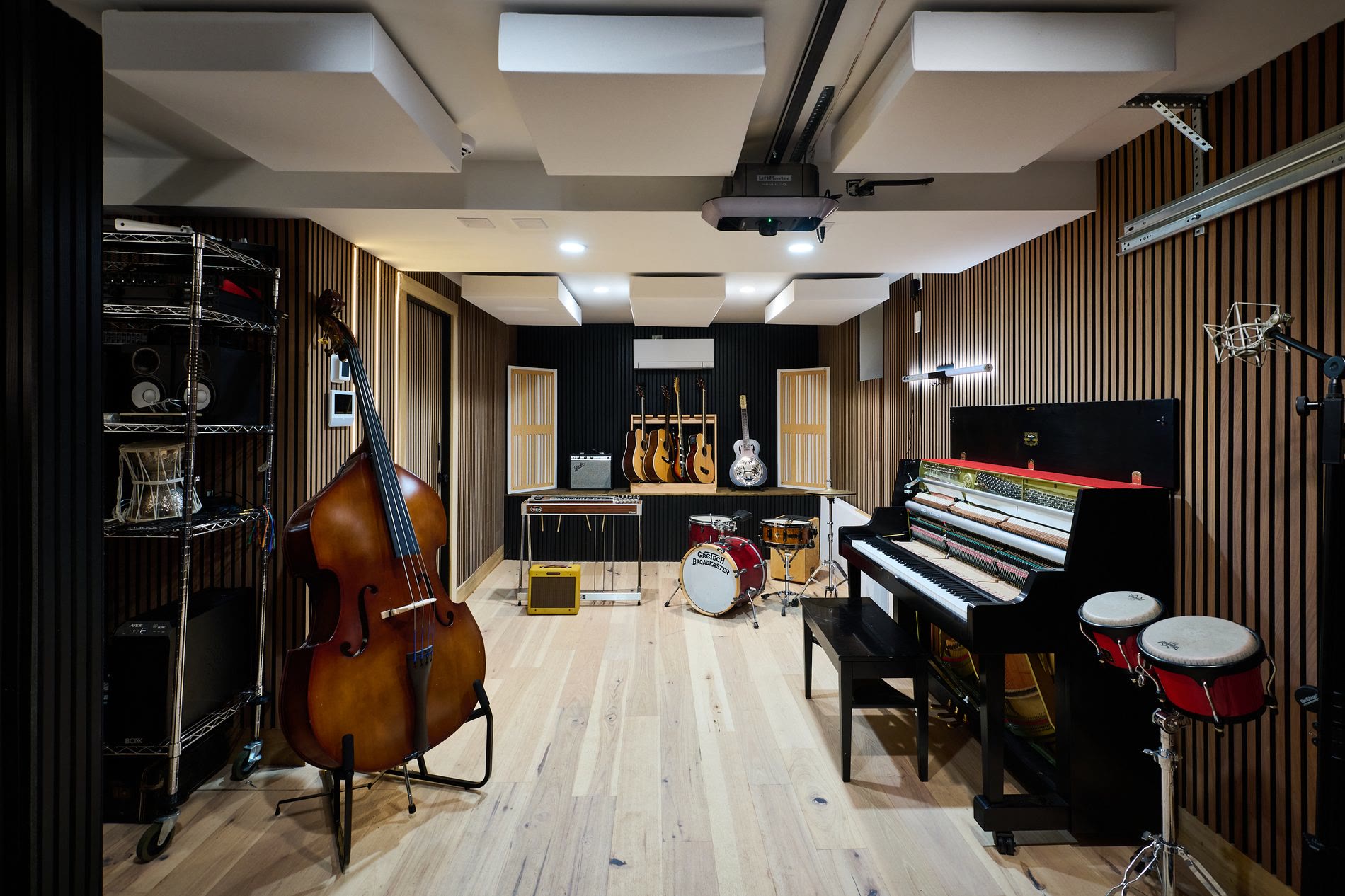
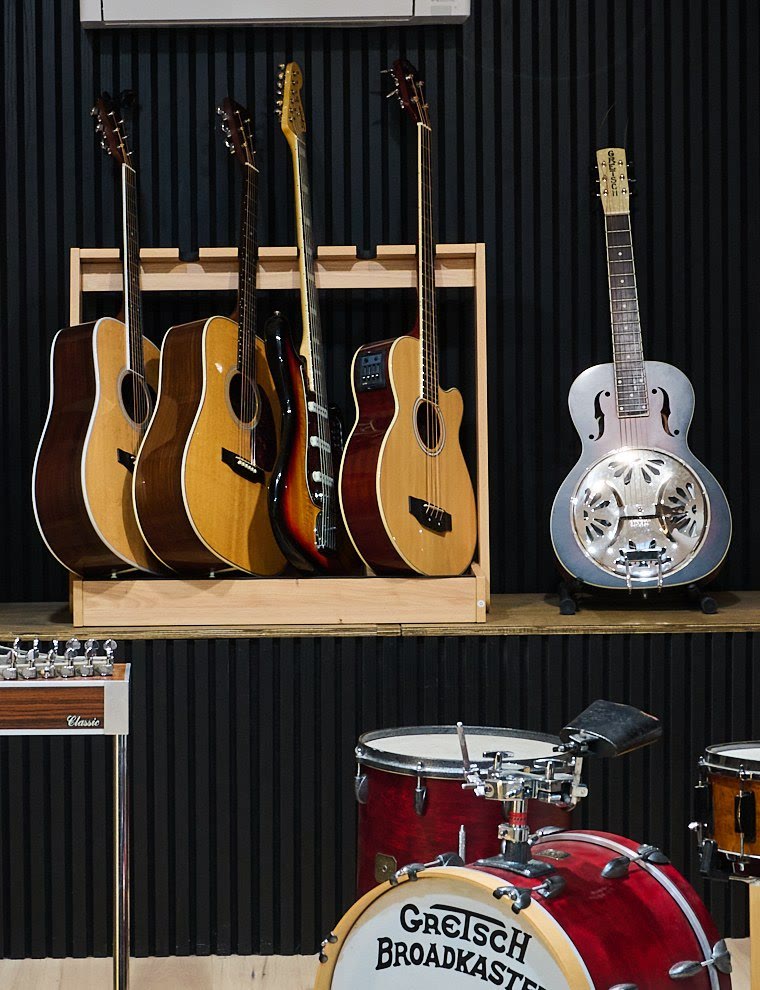
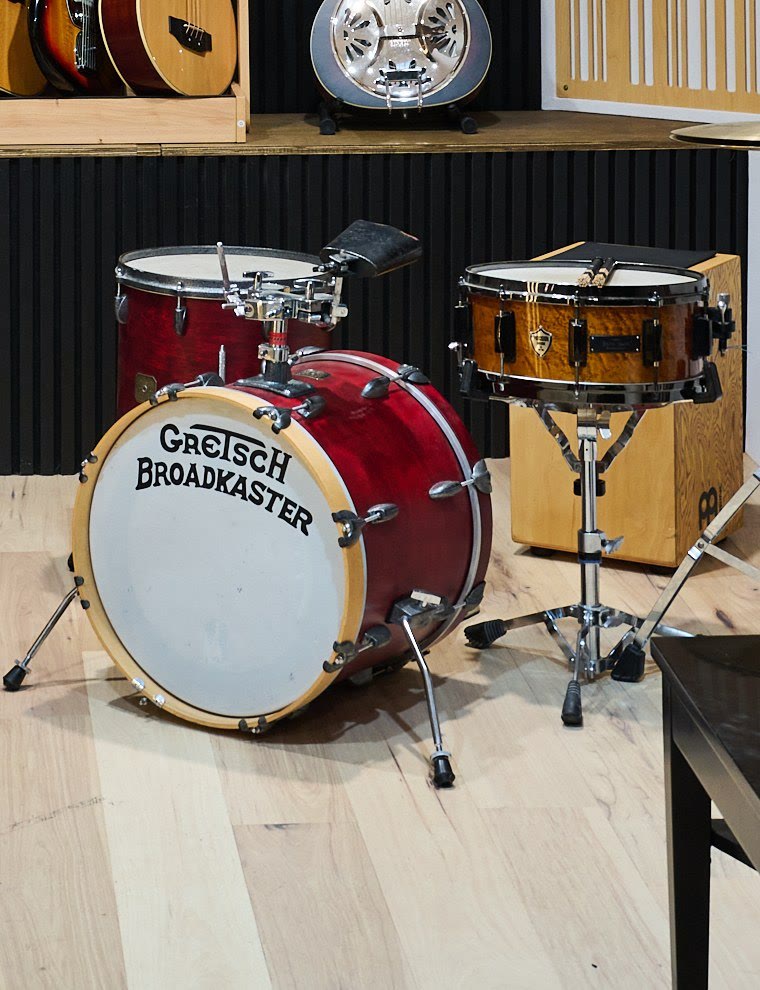
Downstairs, the big room. Walnut slats, a white-oak floor, and north light that doesn't quit — a Kawai ST-1 upright, a double bass, a full kit, and a wall of synthesizers that were here when we arrived and are staying.
It's the room you picture when someone says "let's cut it live." Everyone in one space, the bleed doing half the work.
DOWNSTAIRS · PATCHED 16CH → 5088 · FLOOR — WHITE OAK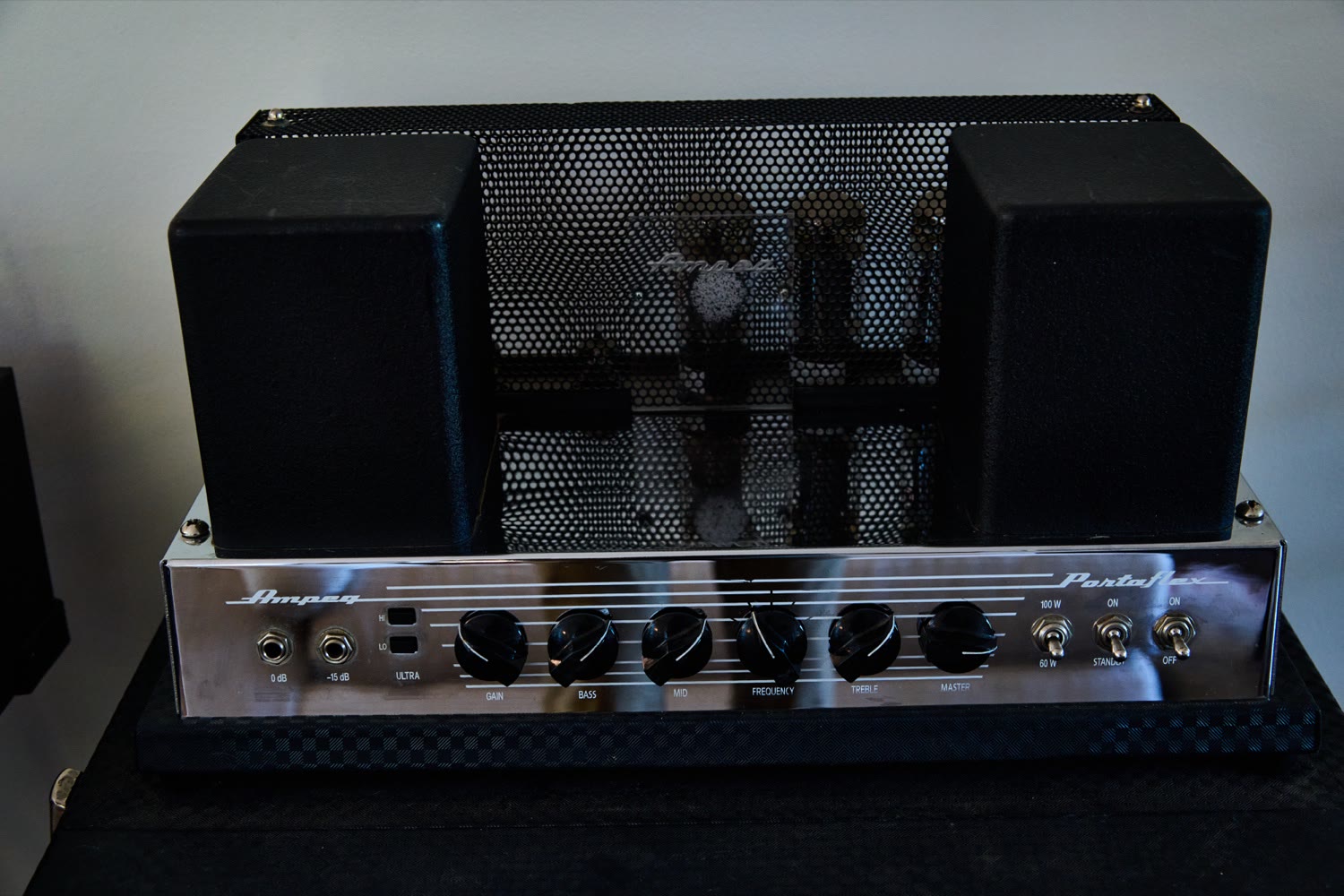
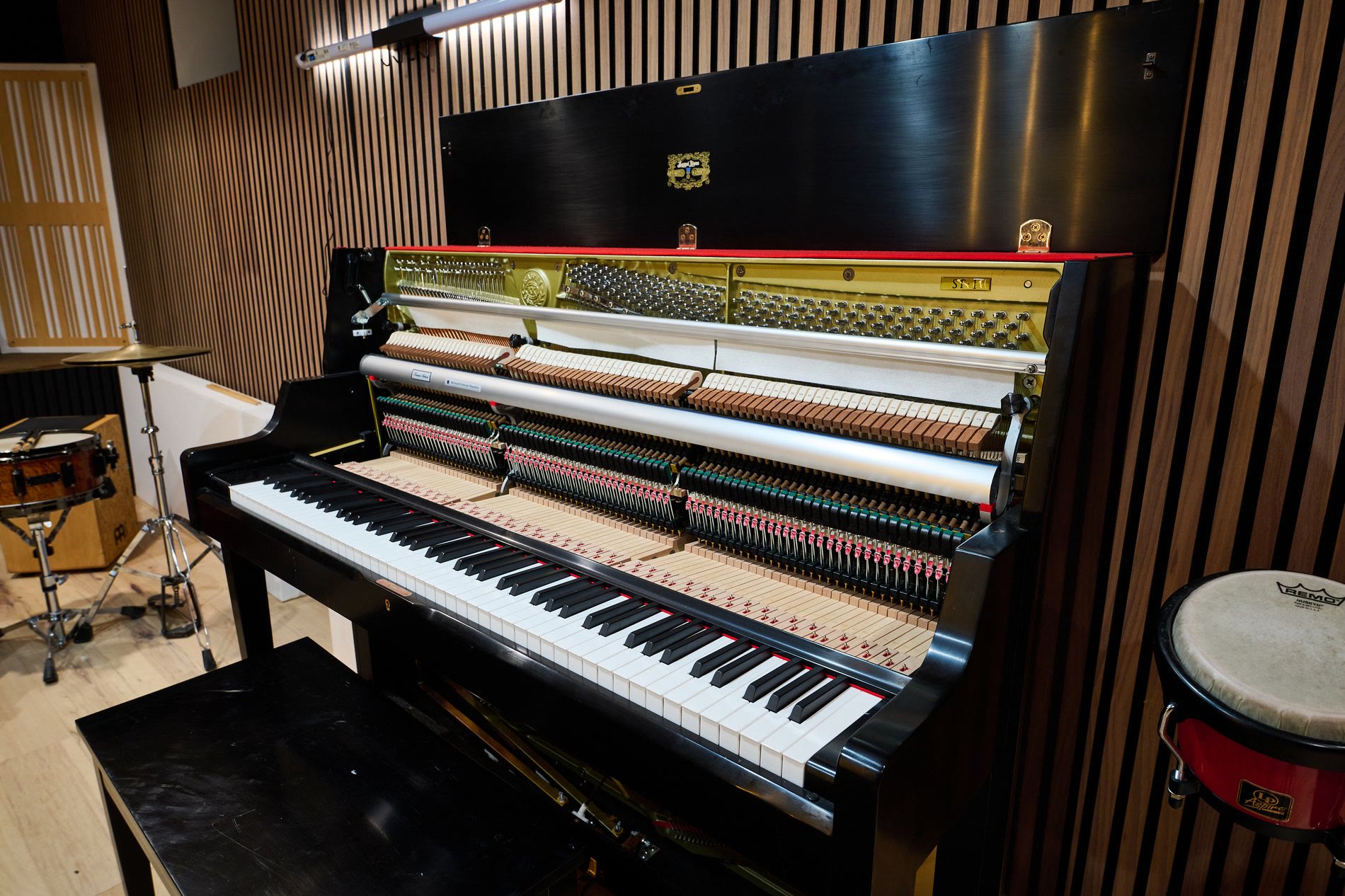
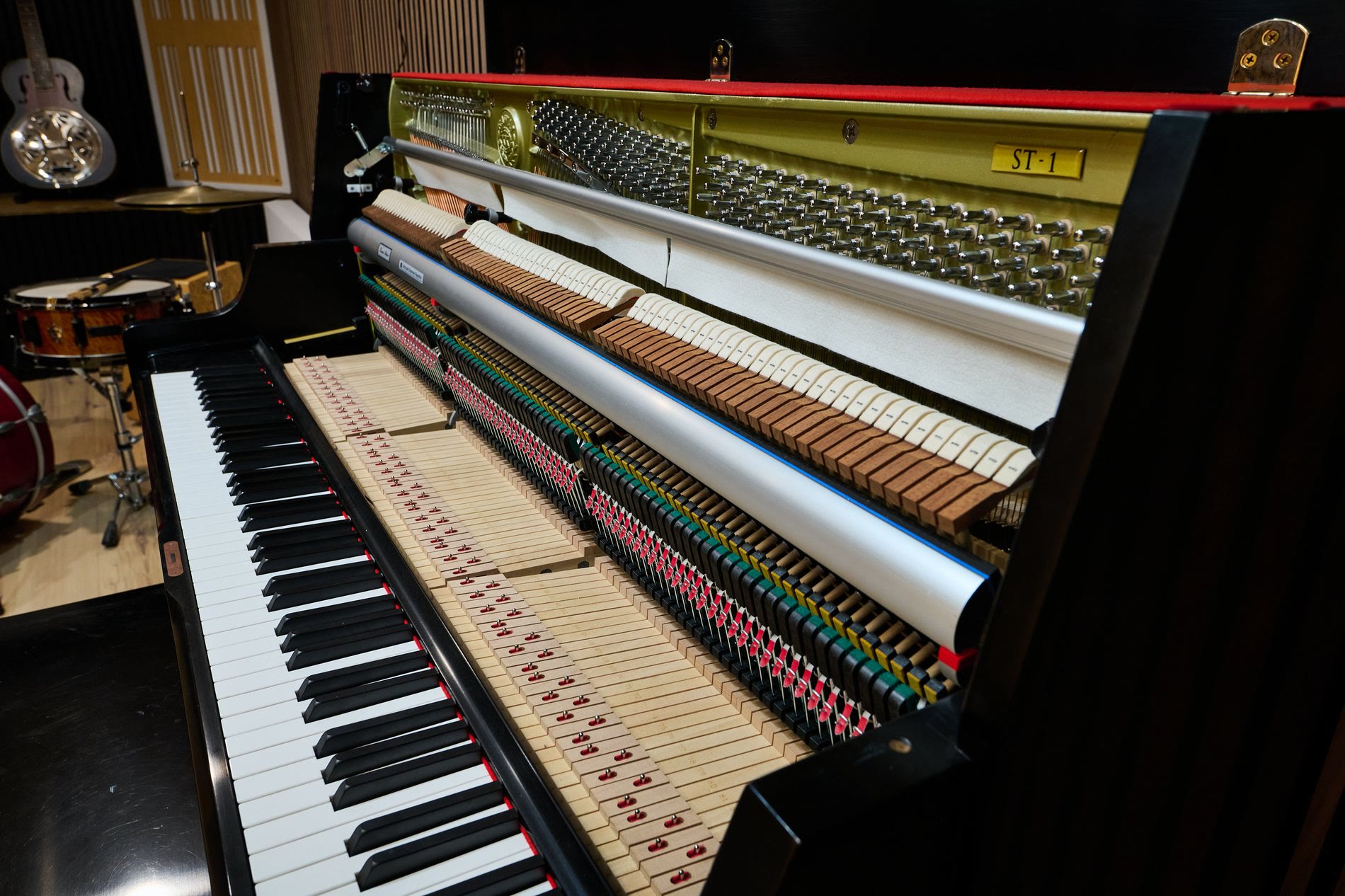
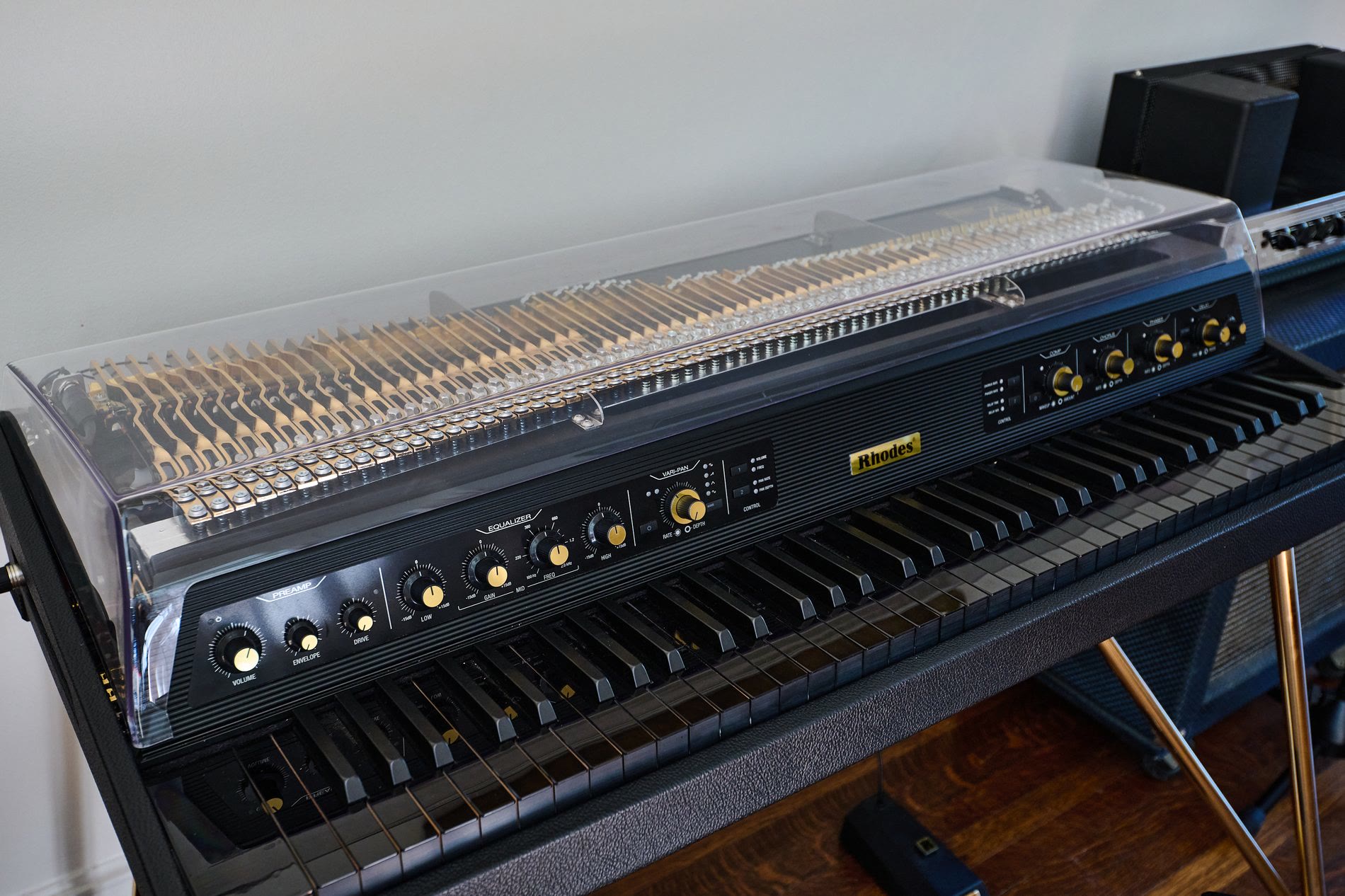
And the keys: a Kawai ST-1 upright, its action open to the felts, and a rare Rhodes MK8 75AE — one of seventy-five on earth — all mic'd where they stand.
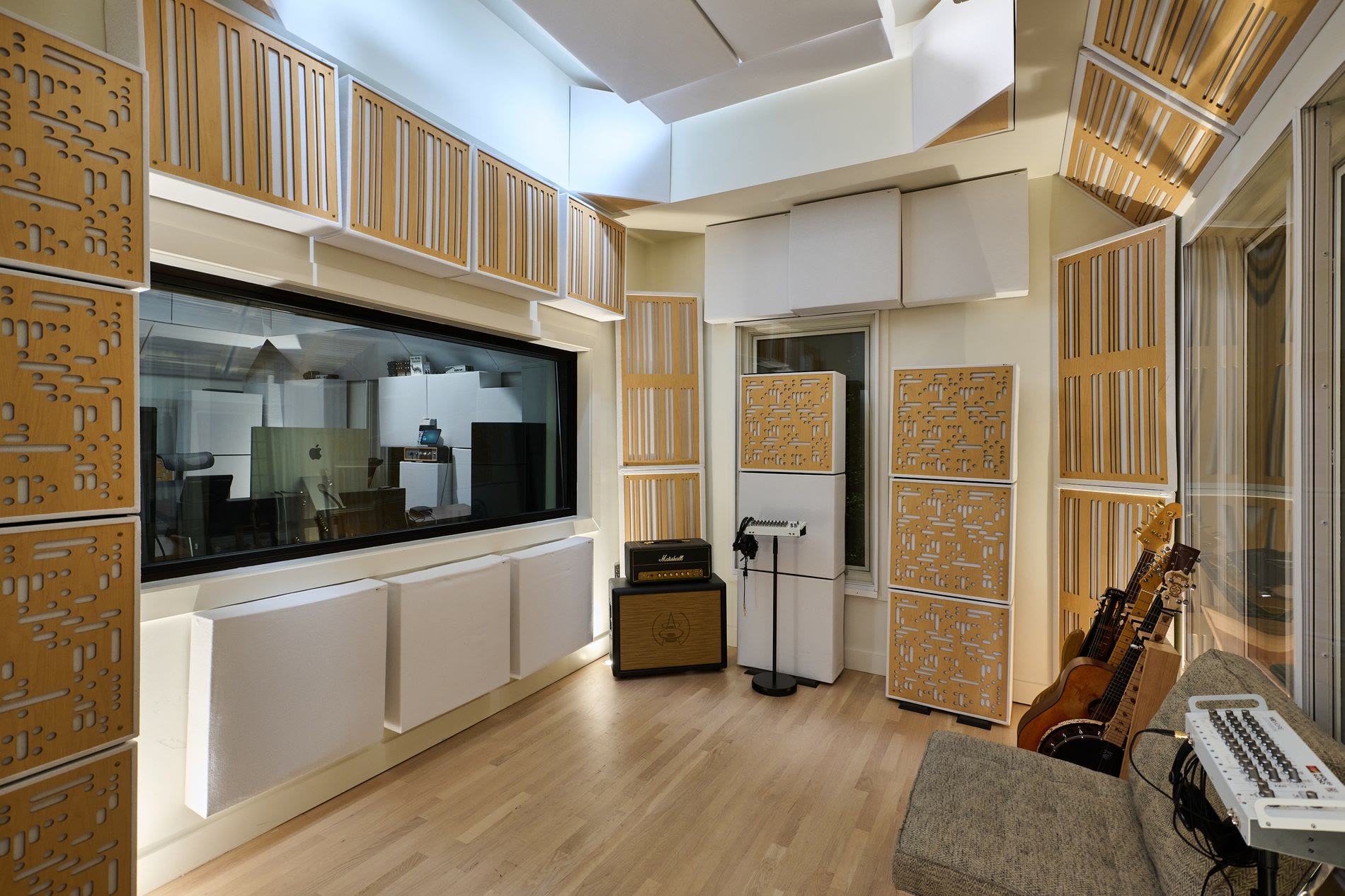
A brighter tracking room — white diffusion, pale wood, a couch and a couple of amps — close to the desk, for overdubs and focused takes that want a livelier space than the live room below.
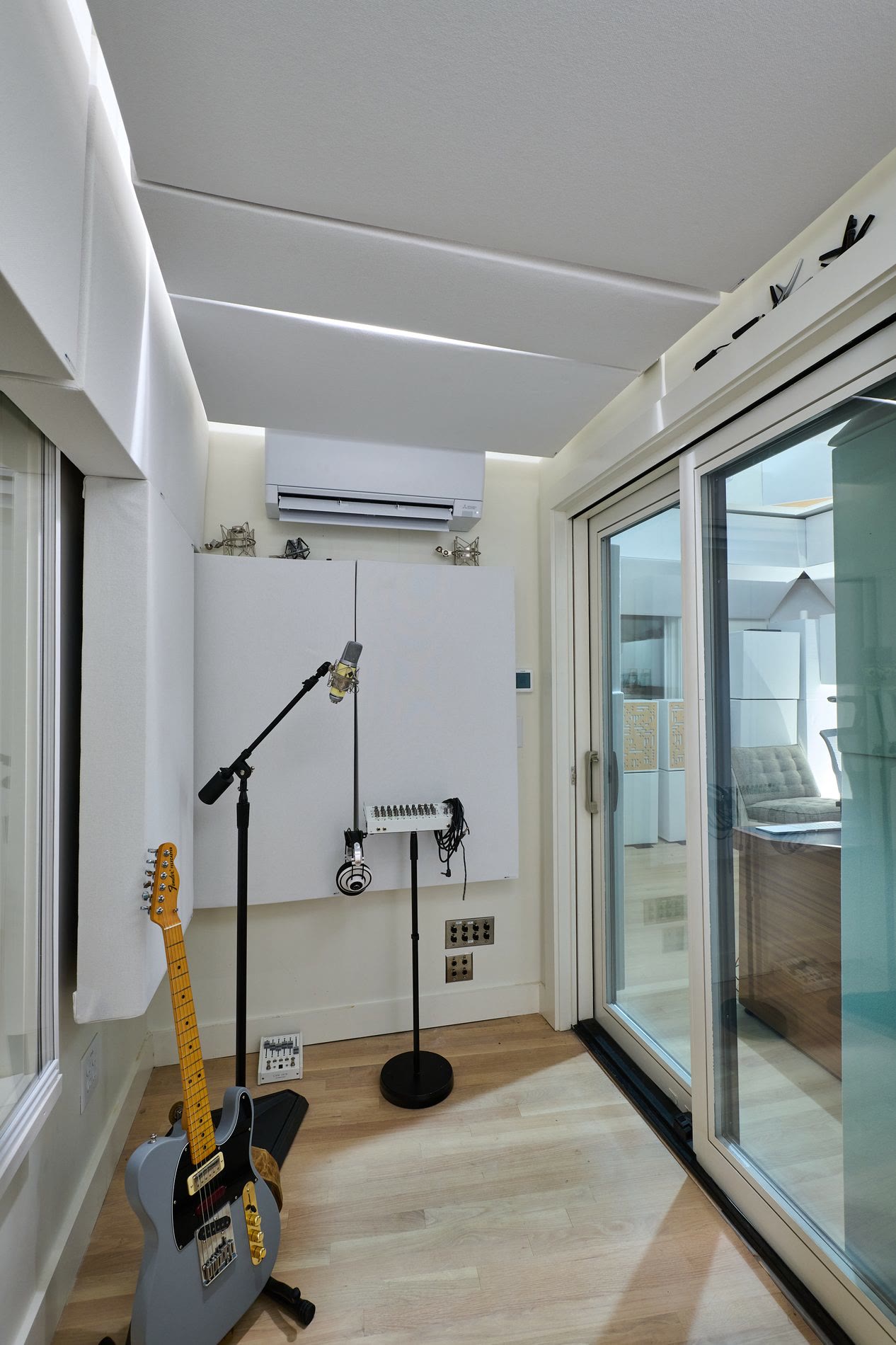
And a true iso booth: just big enough for a voice and a microphone, dead quiet behind glass, with a sightline back to everyone else.
OVERDUBS · ISO BOOTH · GLASS TO THE FLOOR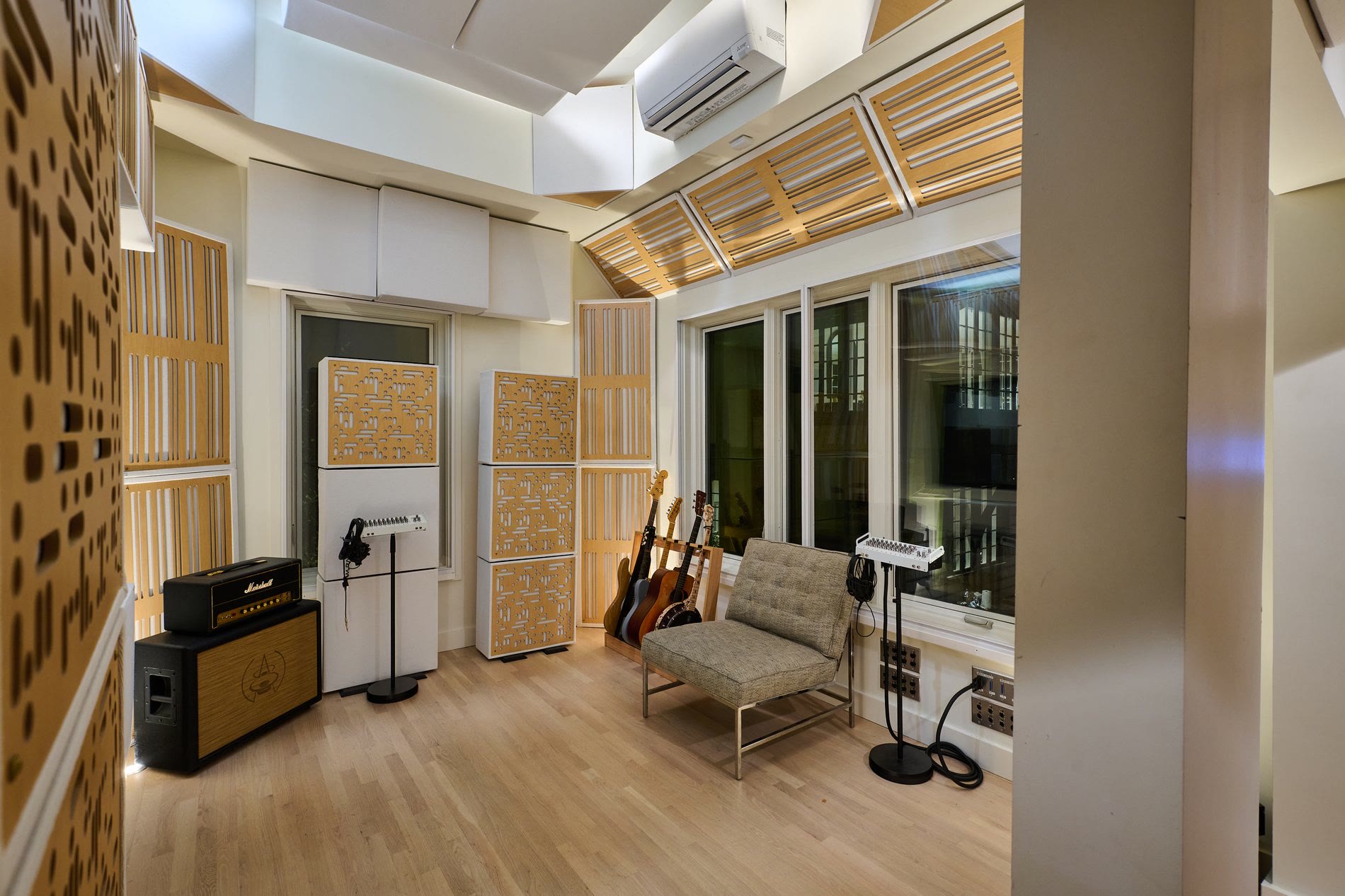
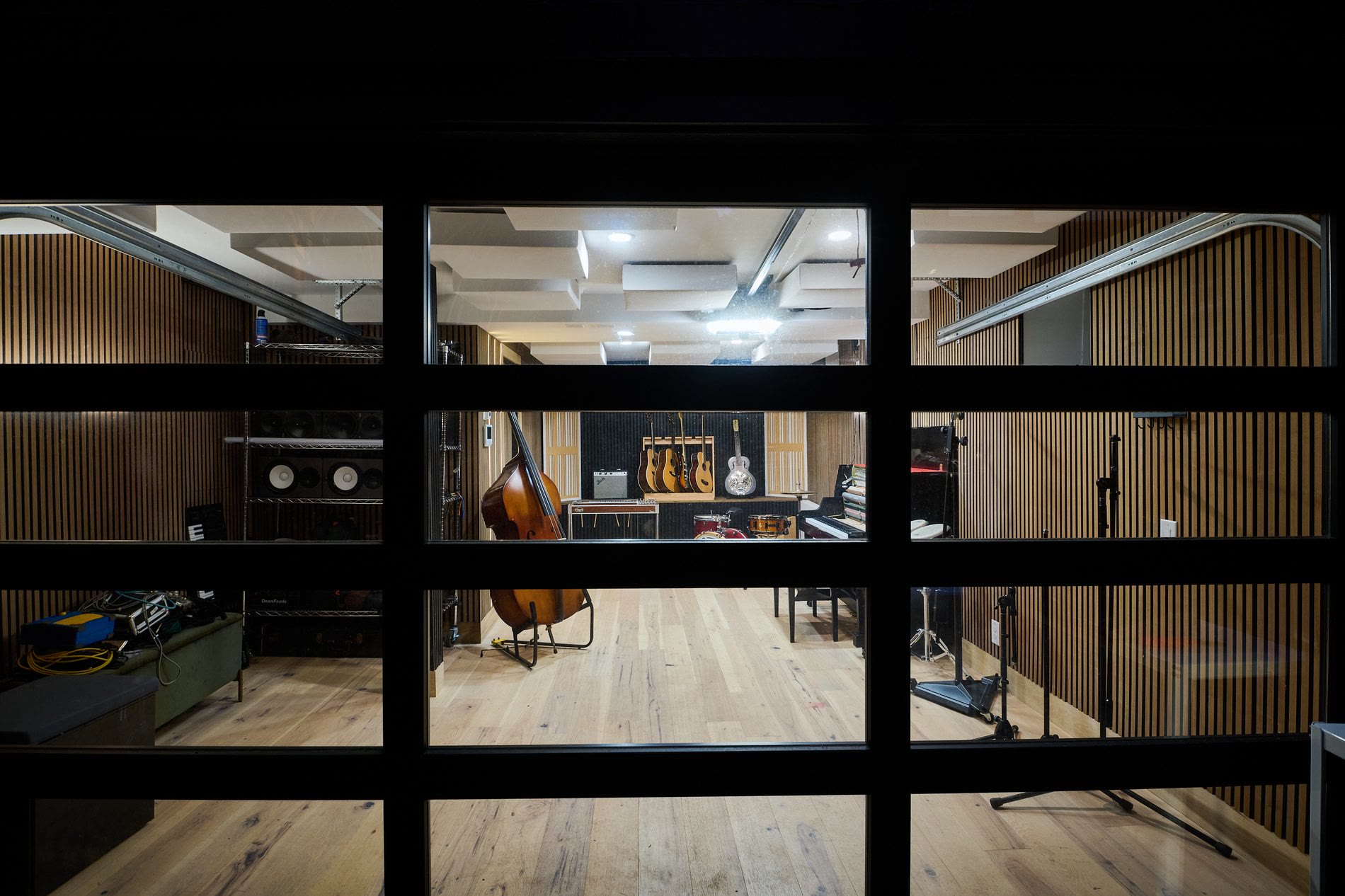
Several nights from the Can'd Aid Christmas sessions — on the cobblestones, round the table, in the control room — shot on a phone, in the rooms, across the studio's first year. Different players, different evenings. Nothing here is staged.
Eccentric, specific, and wired. Cut drums in the stairwell, vocals in the red room, strings in the library. Every room here is a live room.
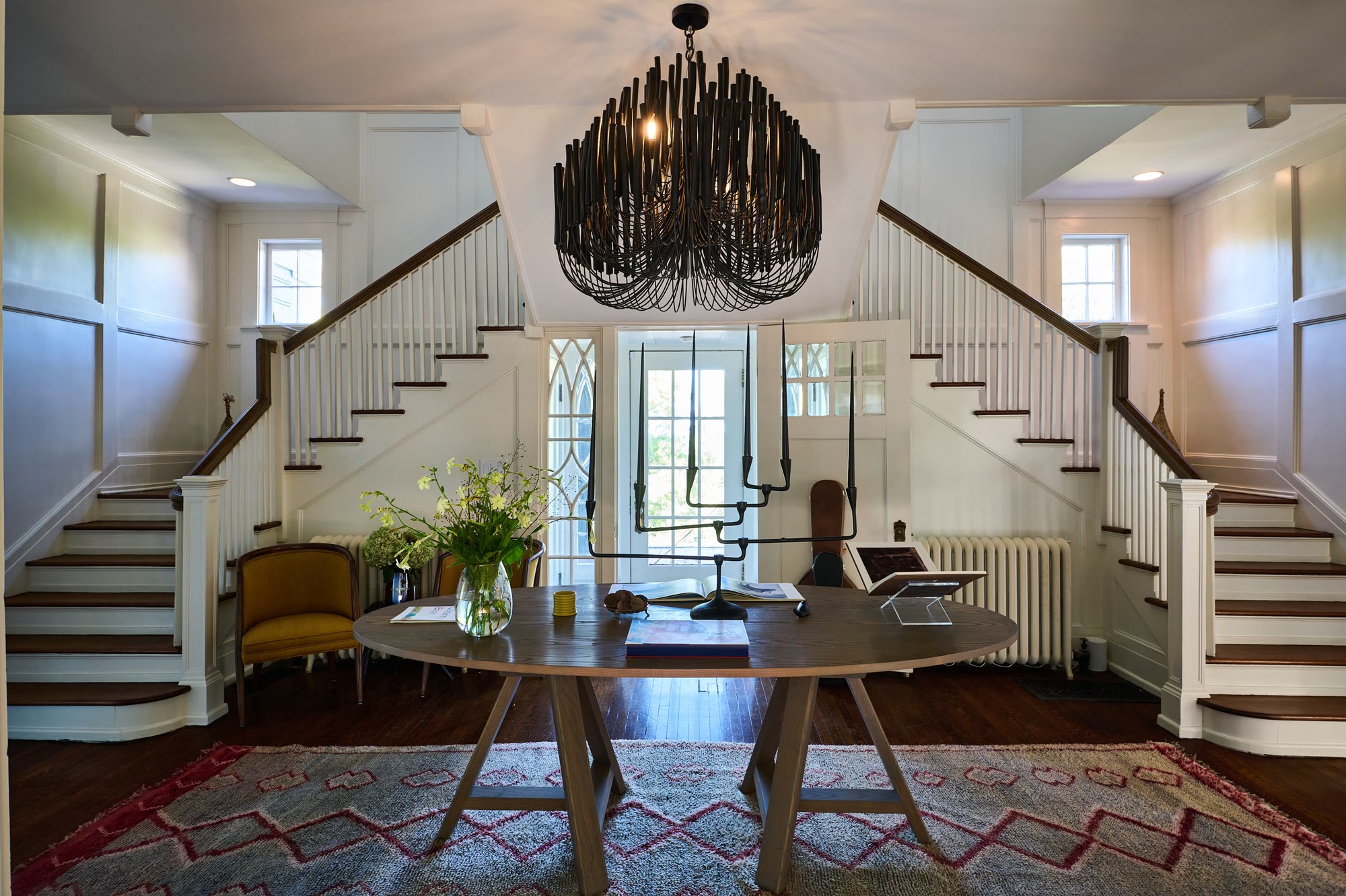
Cross the threshold and the house shows its hand: a sweeping stair, a spindled chandelier, a gallery wall climbing with it. It's the spine of the place — and, as it happens, a reverb chamber. Three storeys of plaster and hardwood wound around an open stairwell: send a snare or a vocal up it and you get a natural decay no plate or plug-in has ever quite matched.
PATCHED · THE STAIRWELL IS A REVERB CHAMBER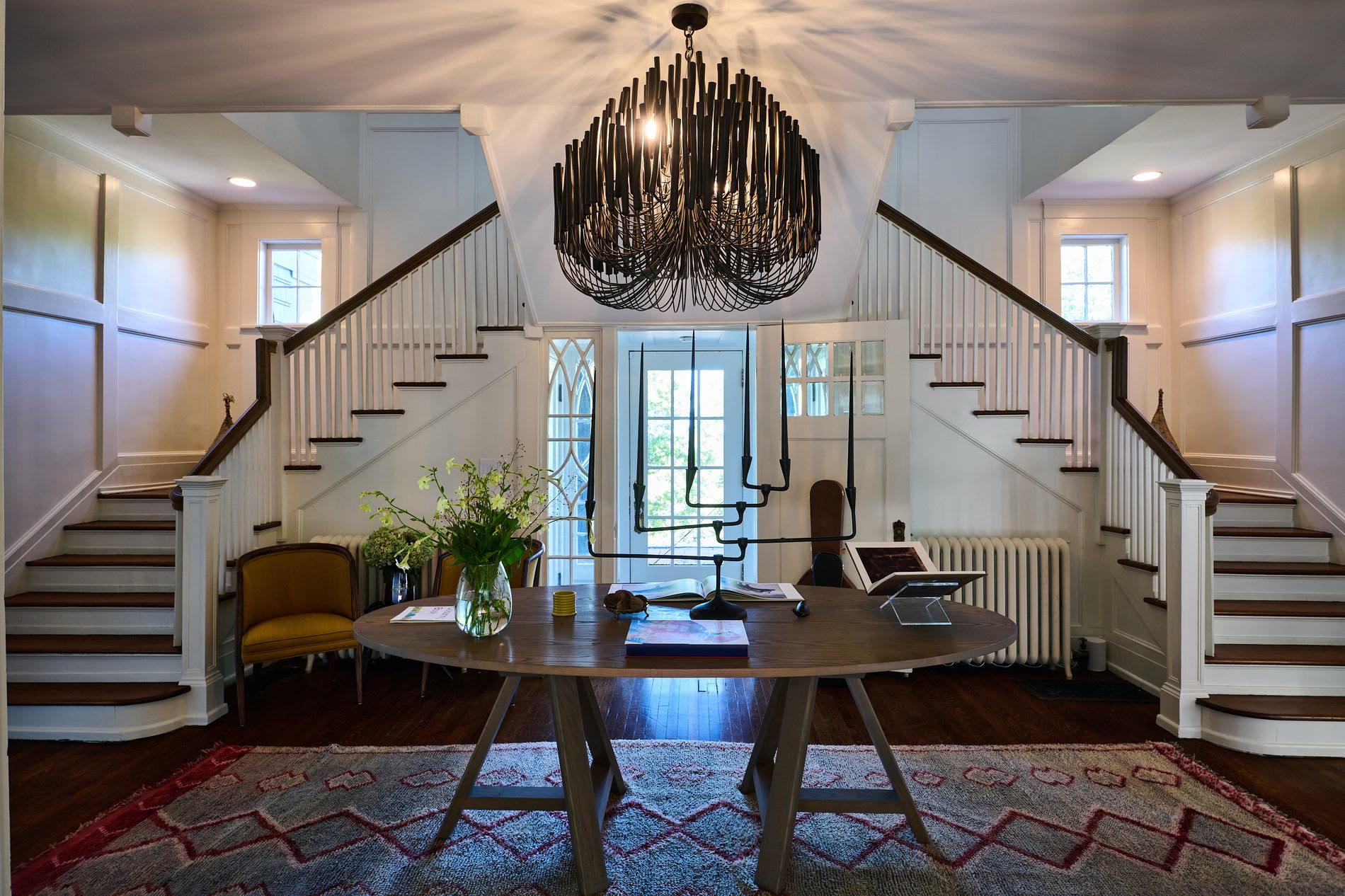
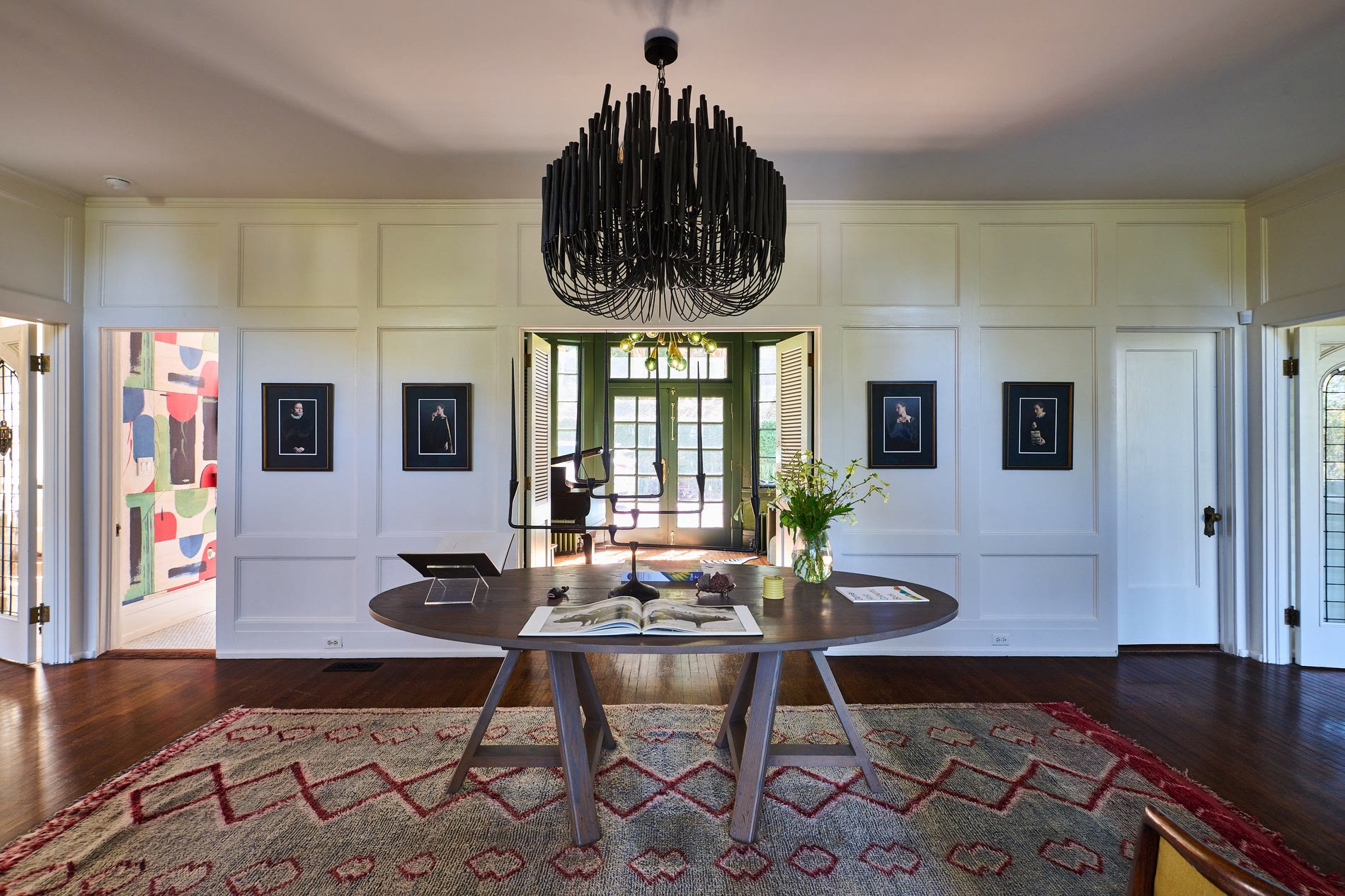
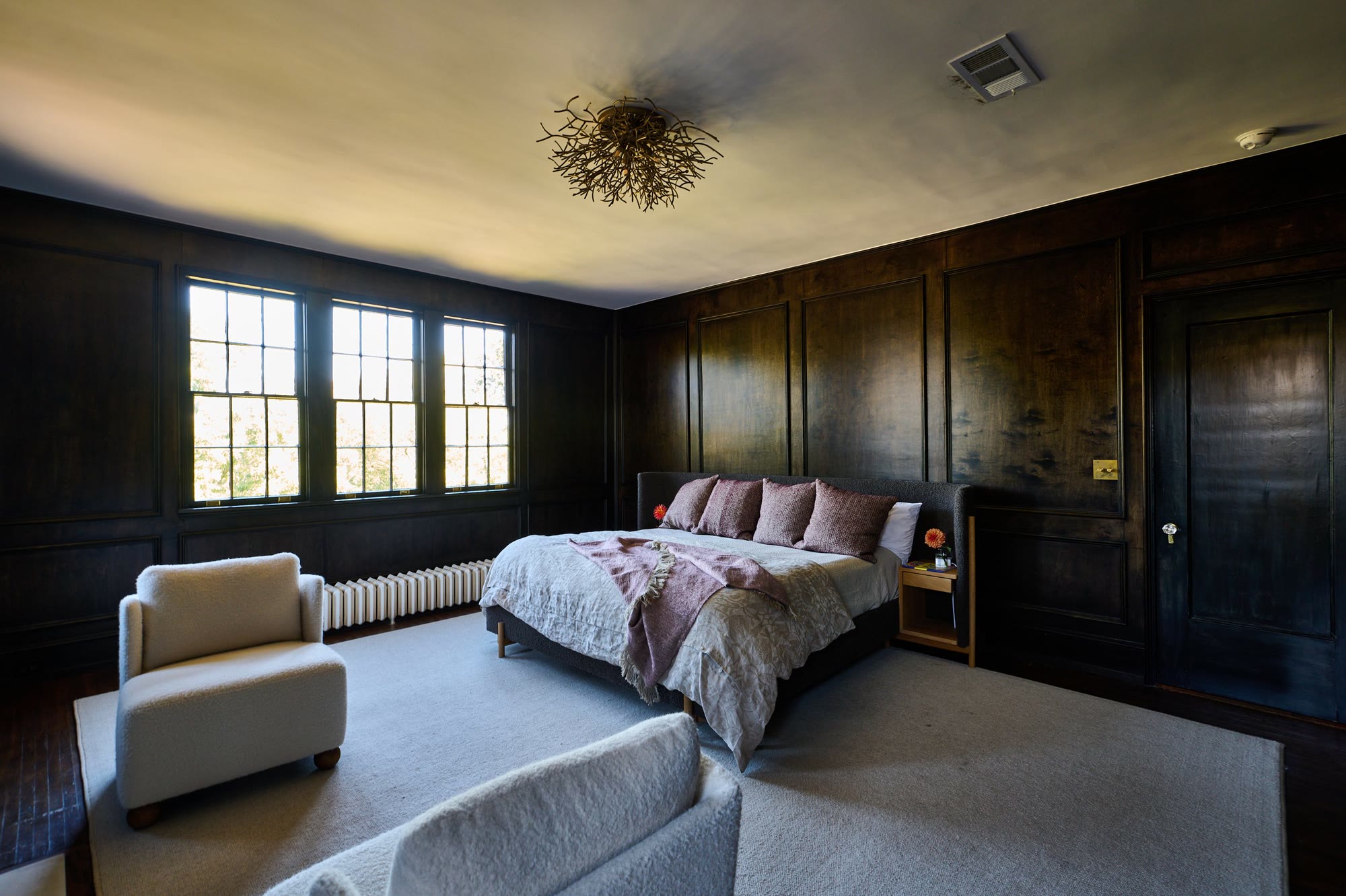
Floor-to-ceiling wood panelling, leaded windows, a fireplace, and a branch of brass overhead — the one room in the house that's actually lived in.
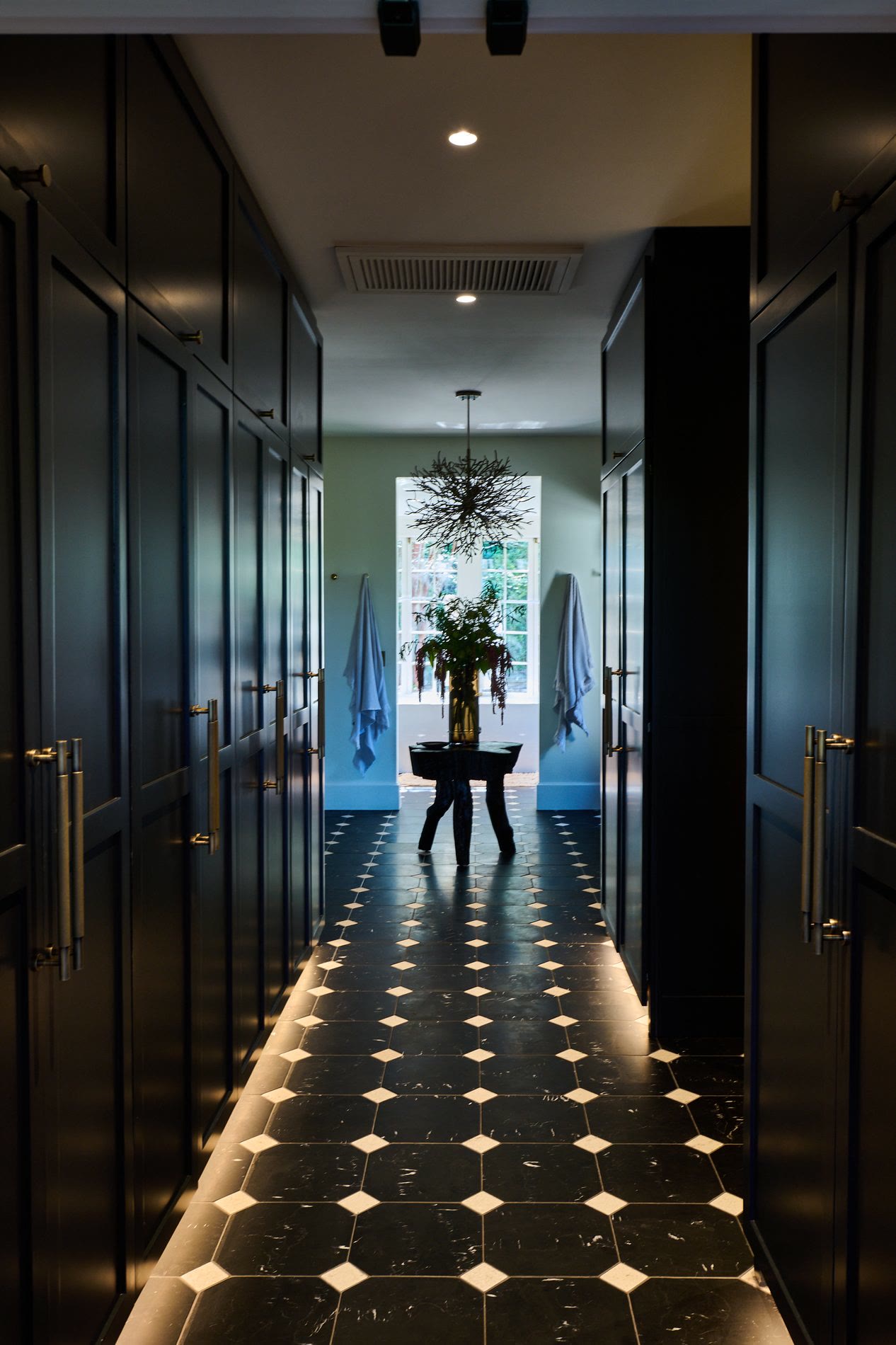
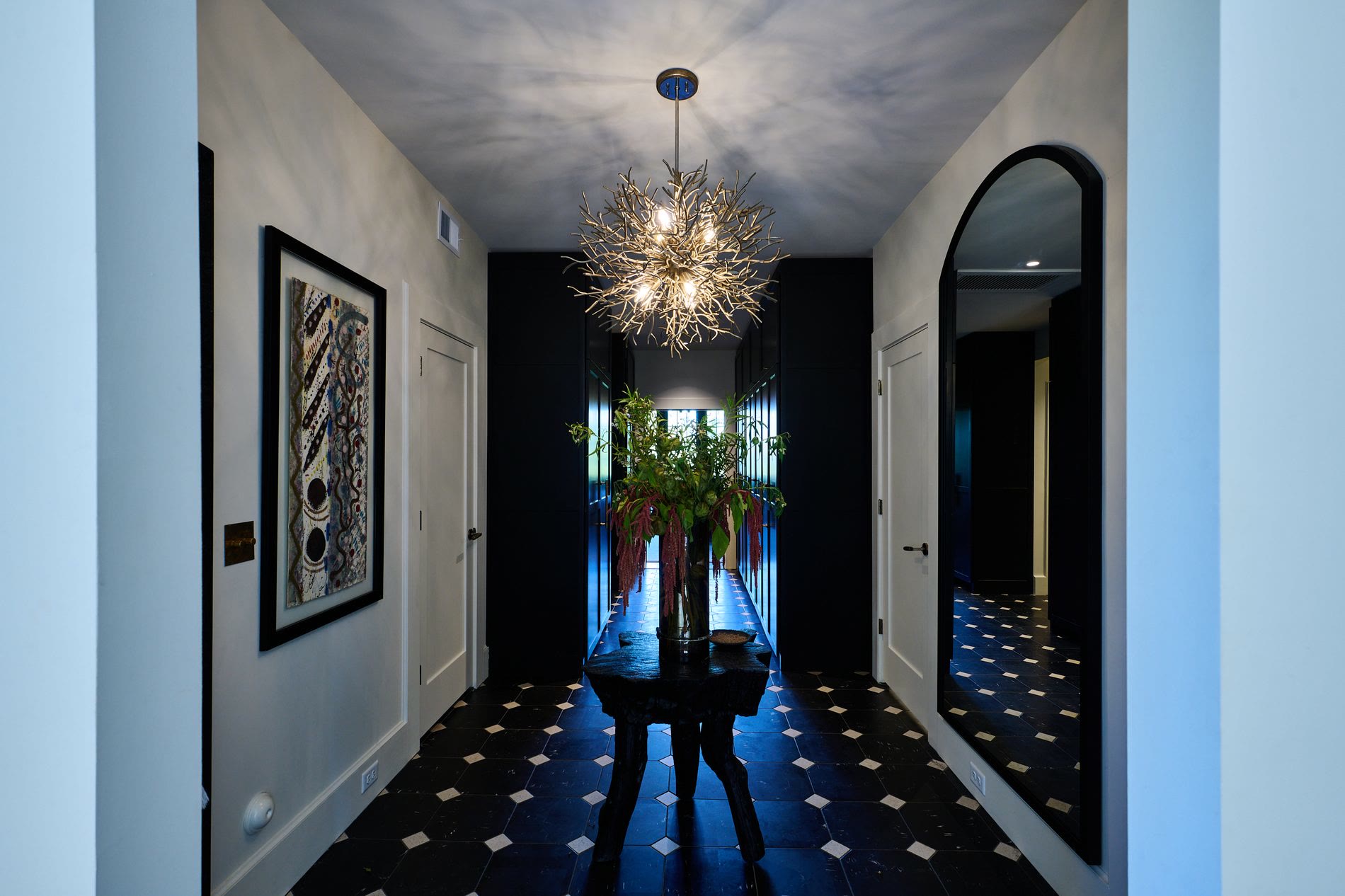
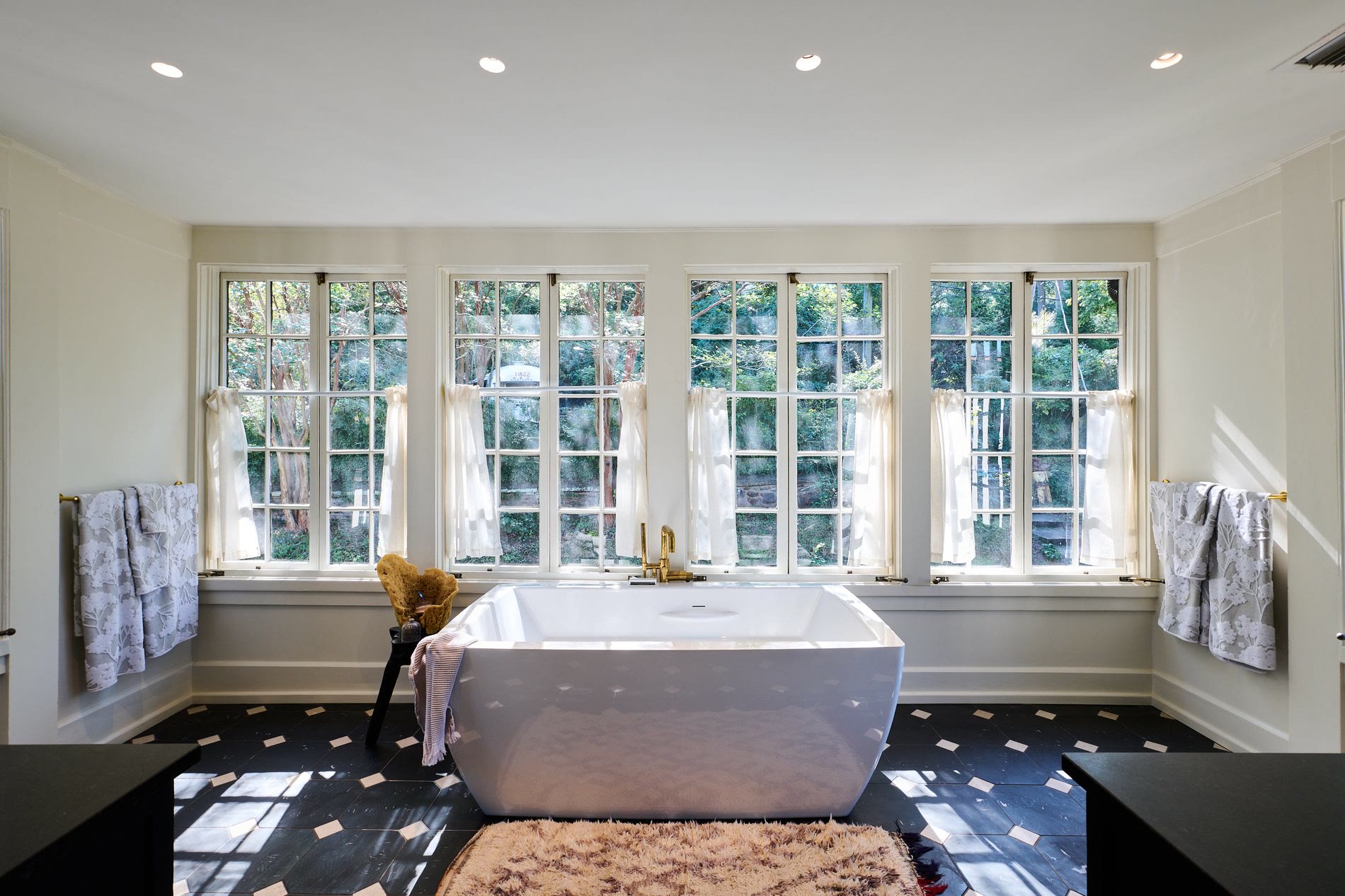
Through the doors runs a long corridor of wardrobes on a black-and-gold diamond floor; past those, the tower bath. The whole suite is a sentence you walk through.
WOOD-PANELLED · WARDROBES · LEADS TO THE TOWER BATH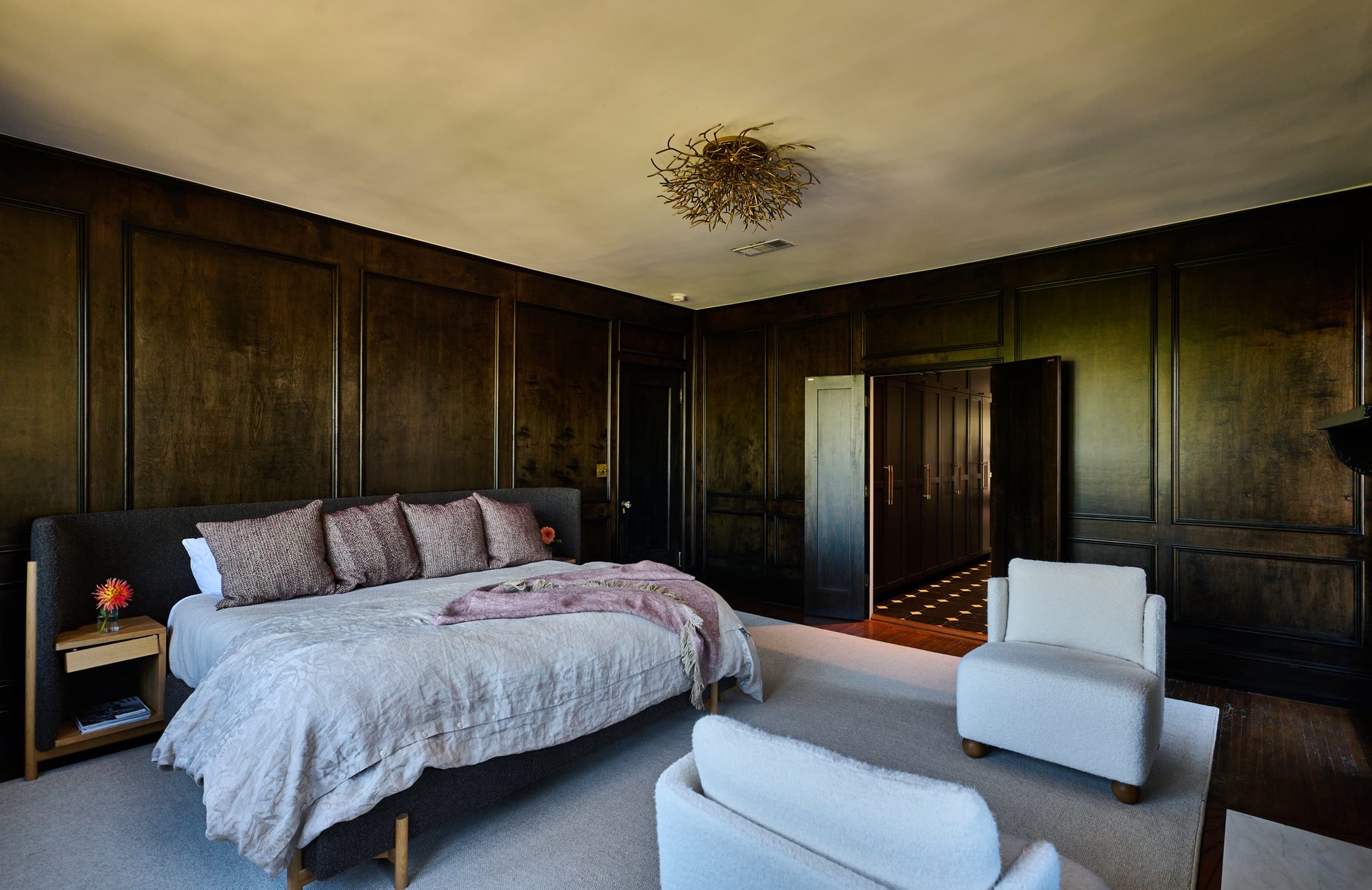
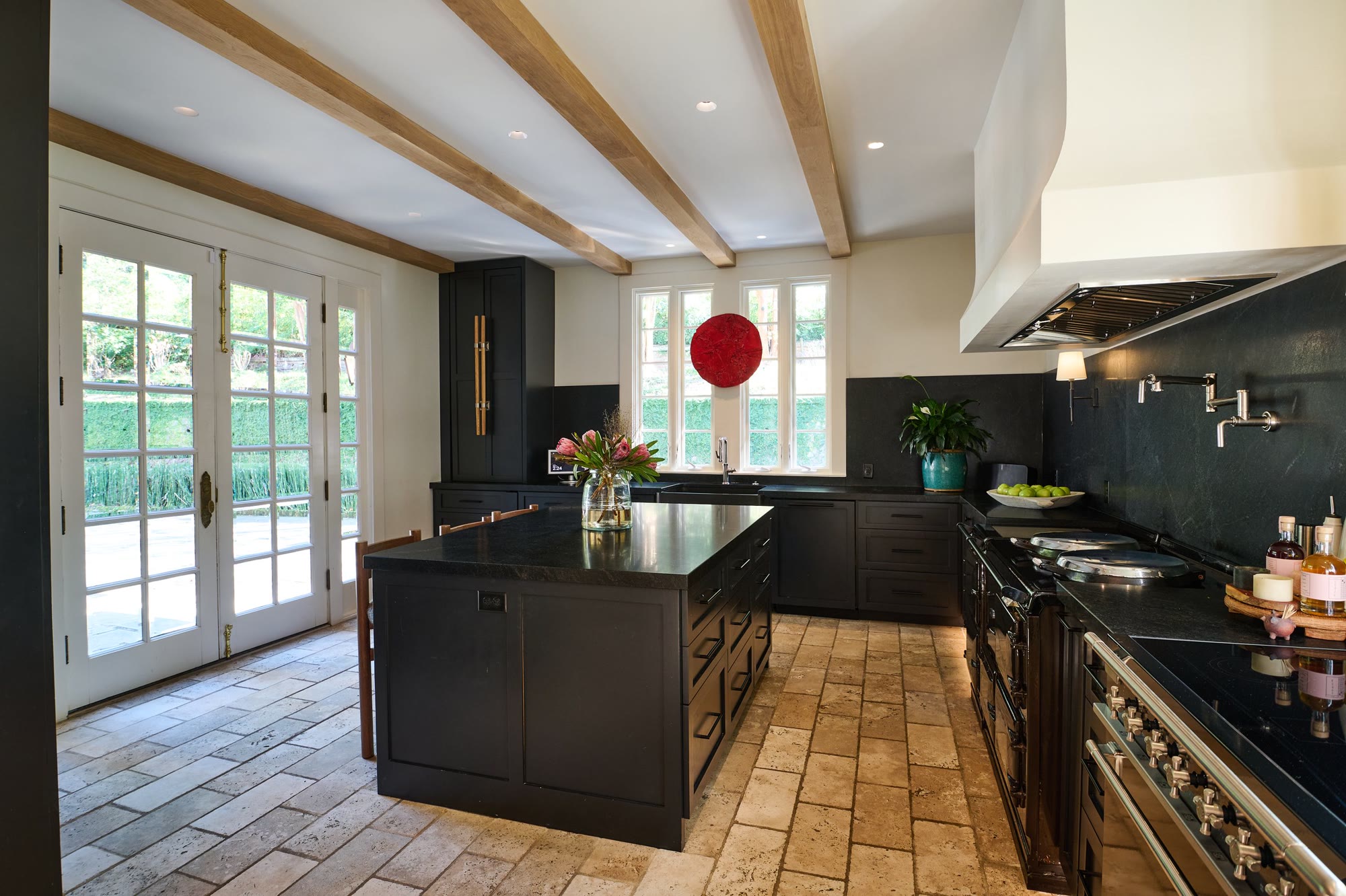
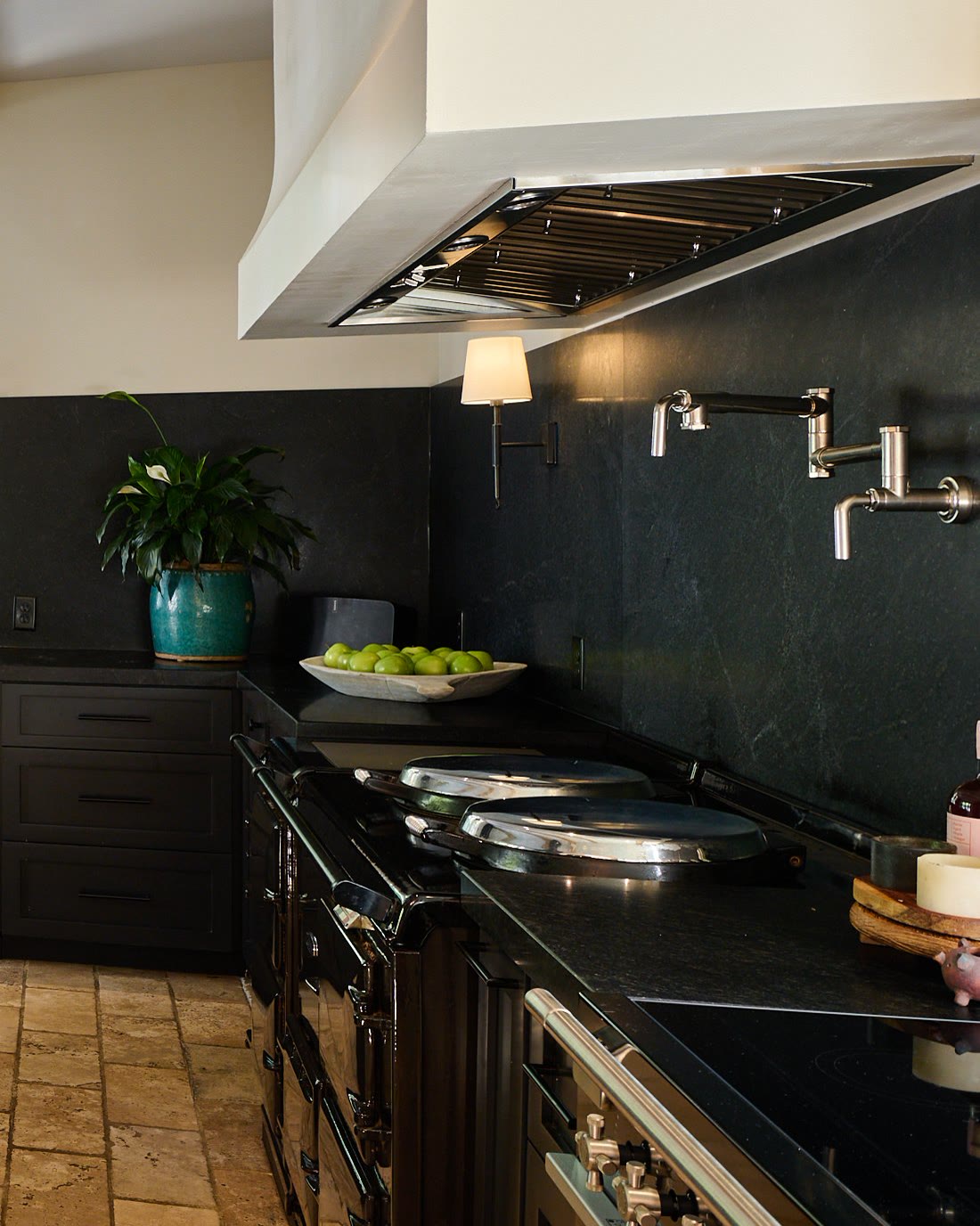
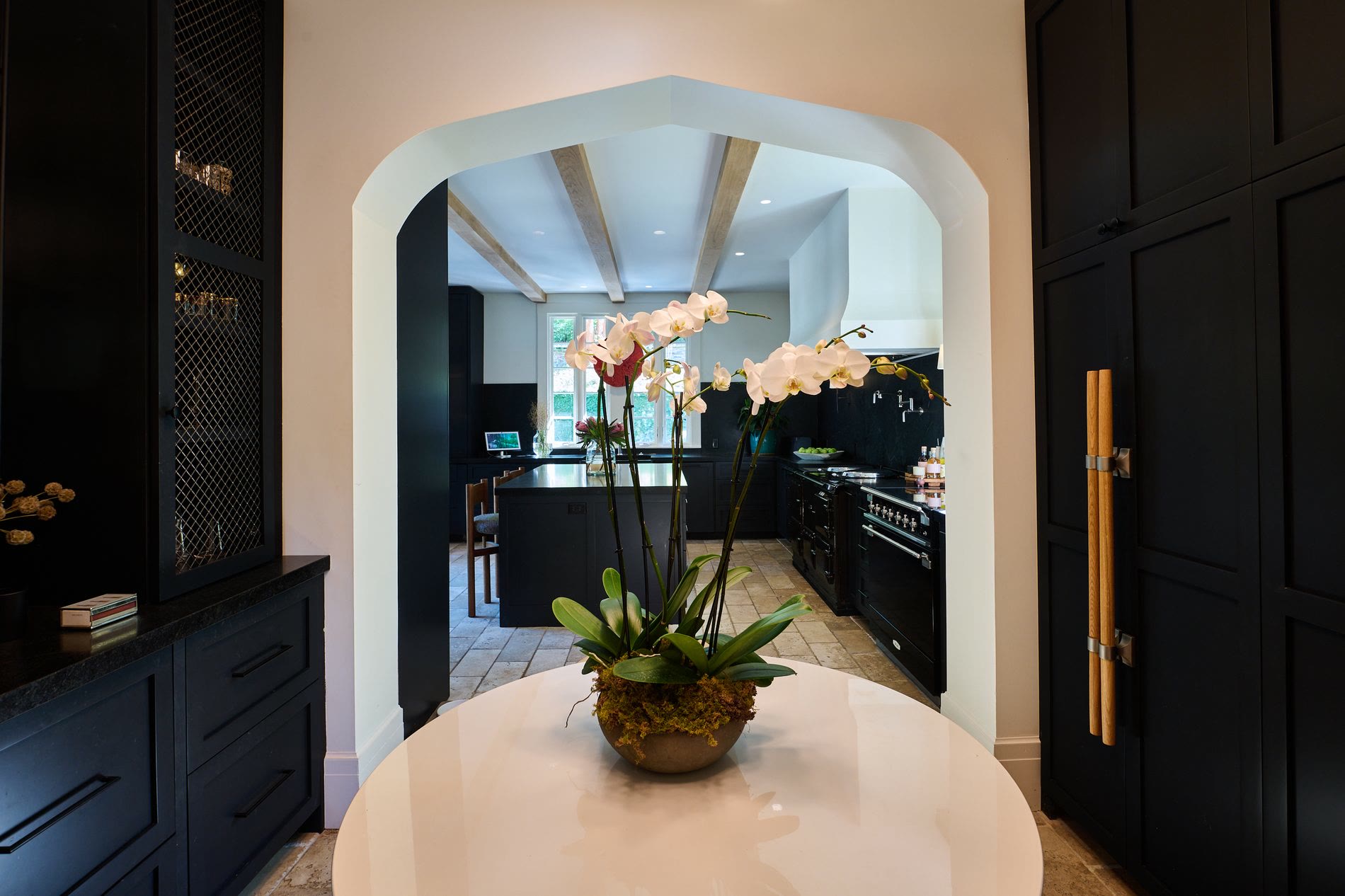
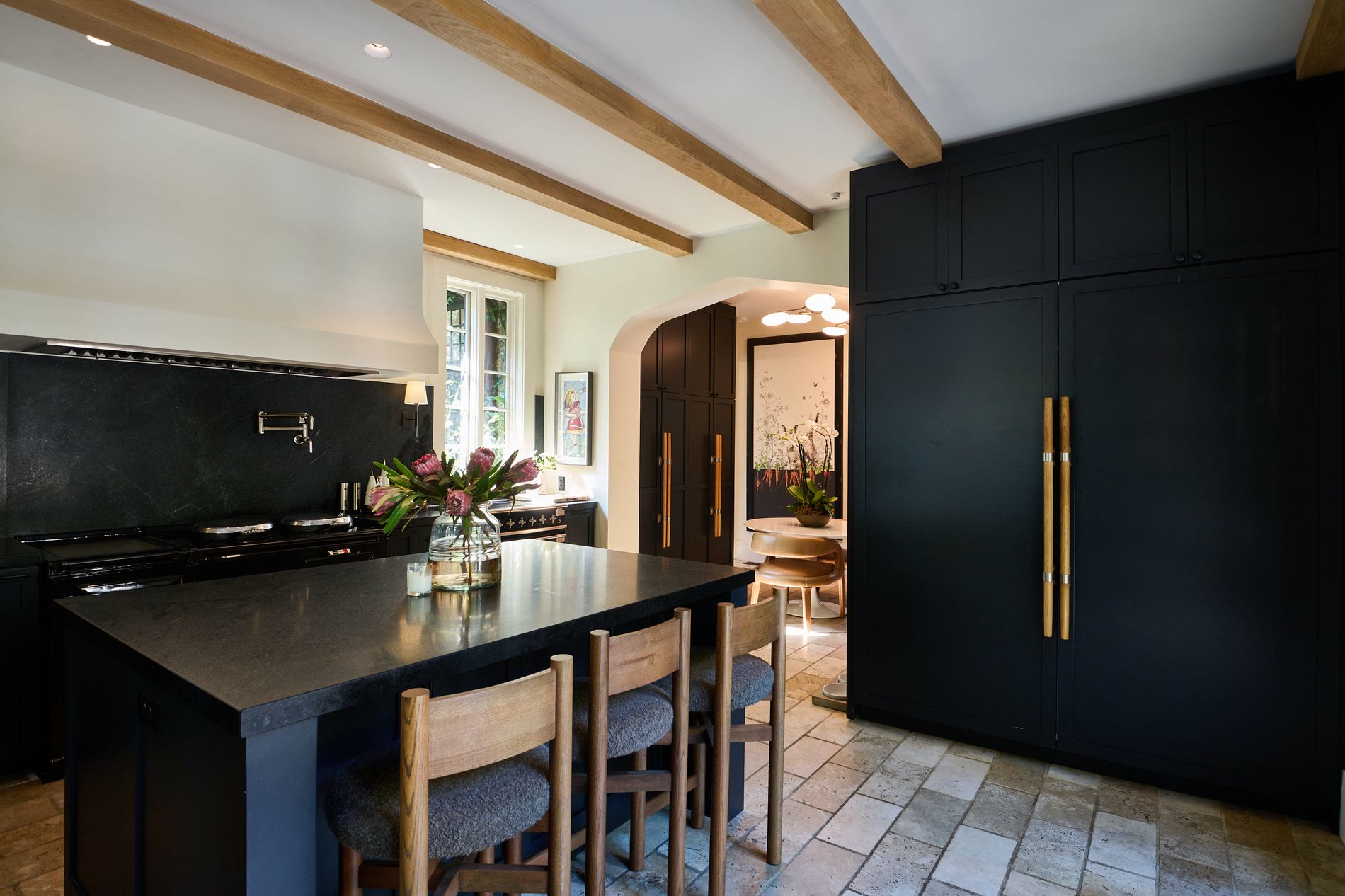
Black cabinetry, a beamed ceiling, an AGA built to cook for twelve — because someone will be. A chef works here through a residency; the band eats when the take is done, not before.
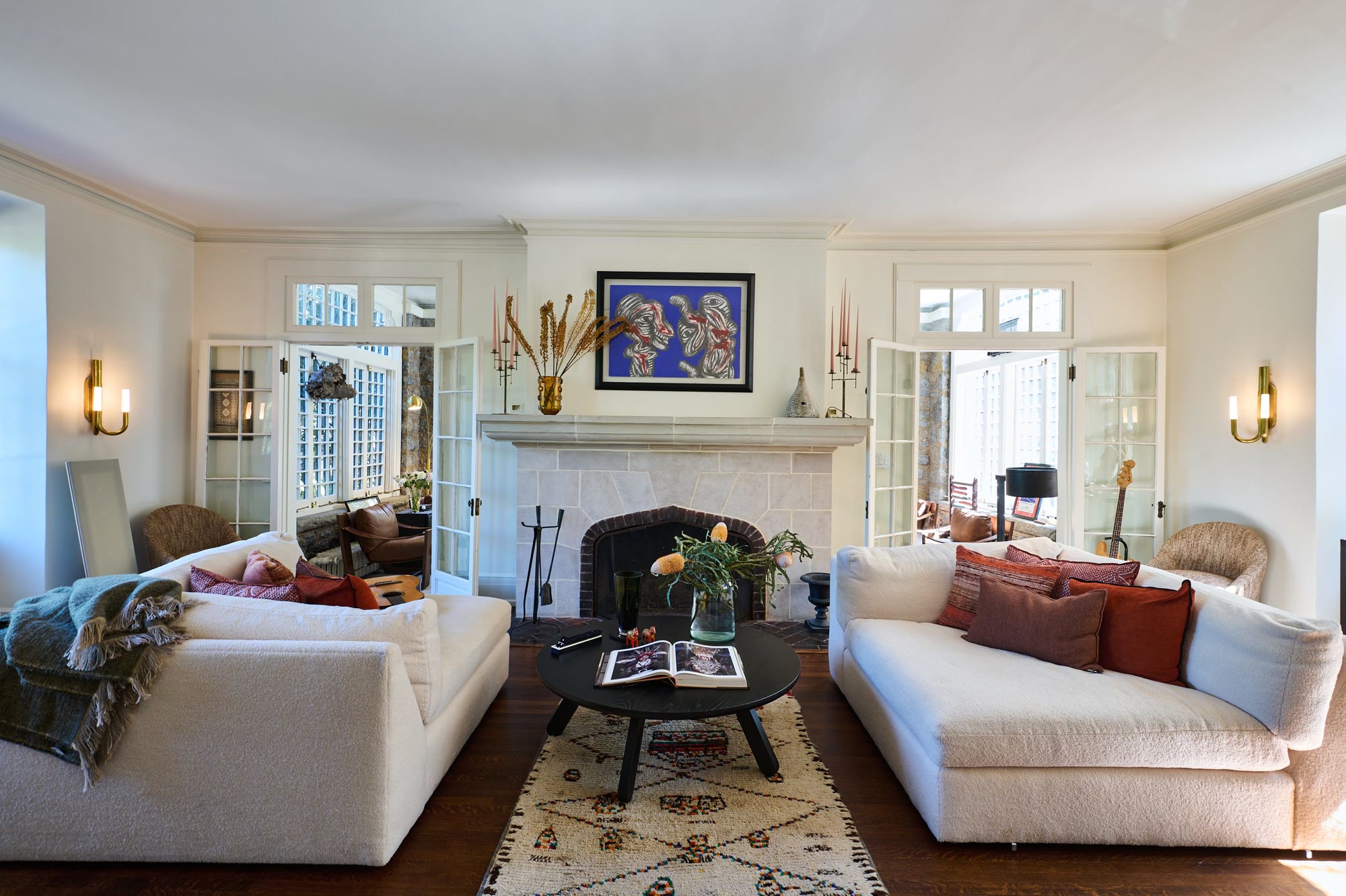
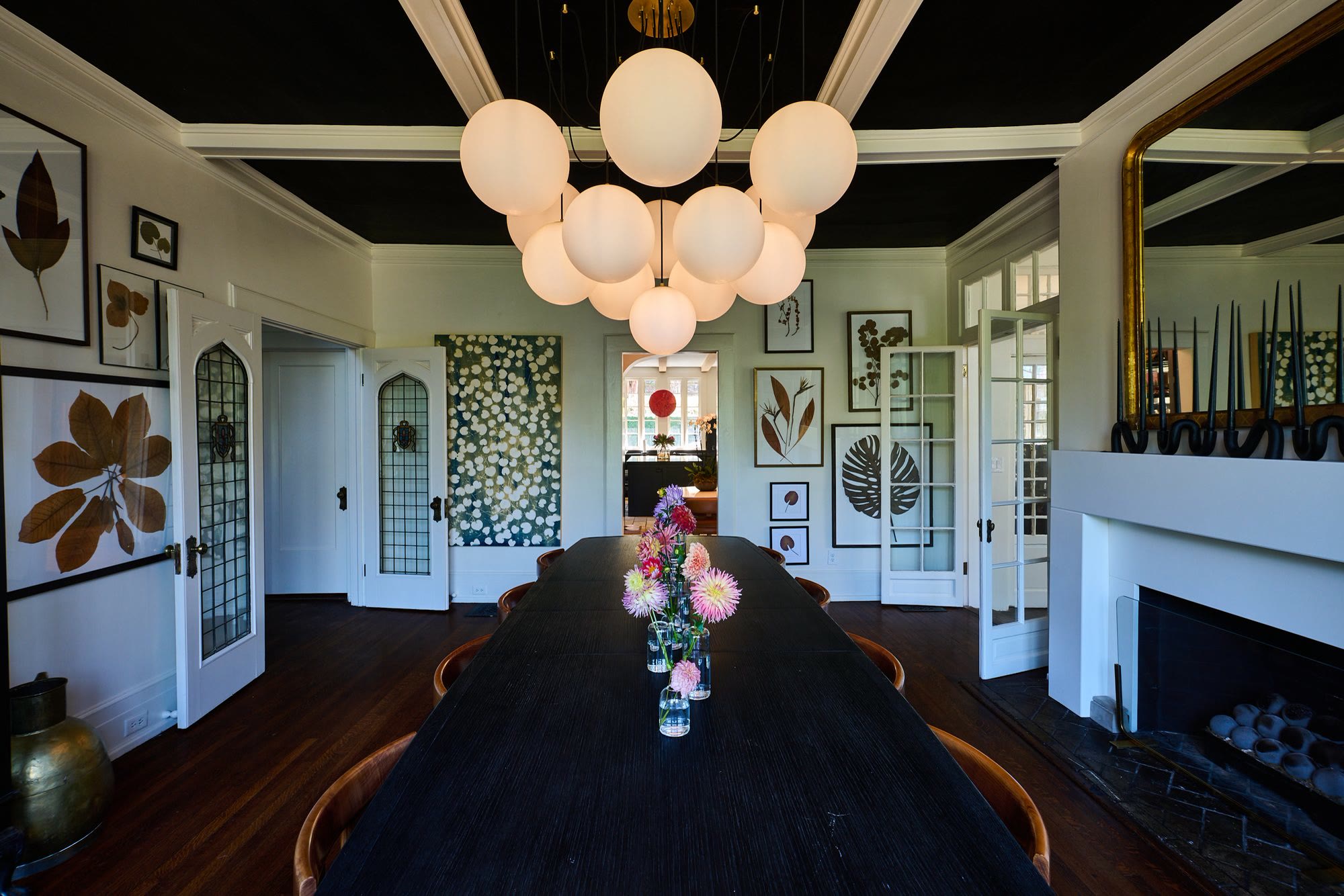
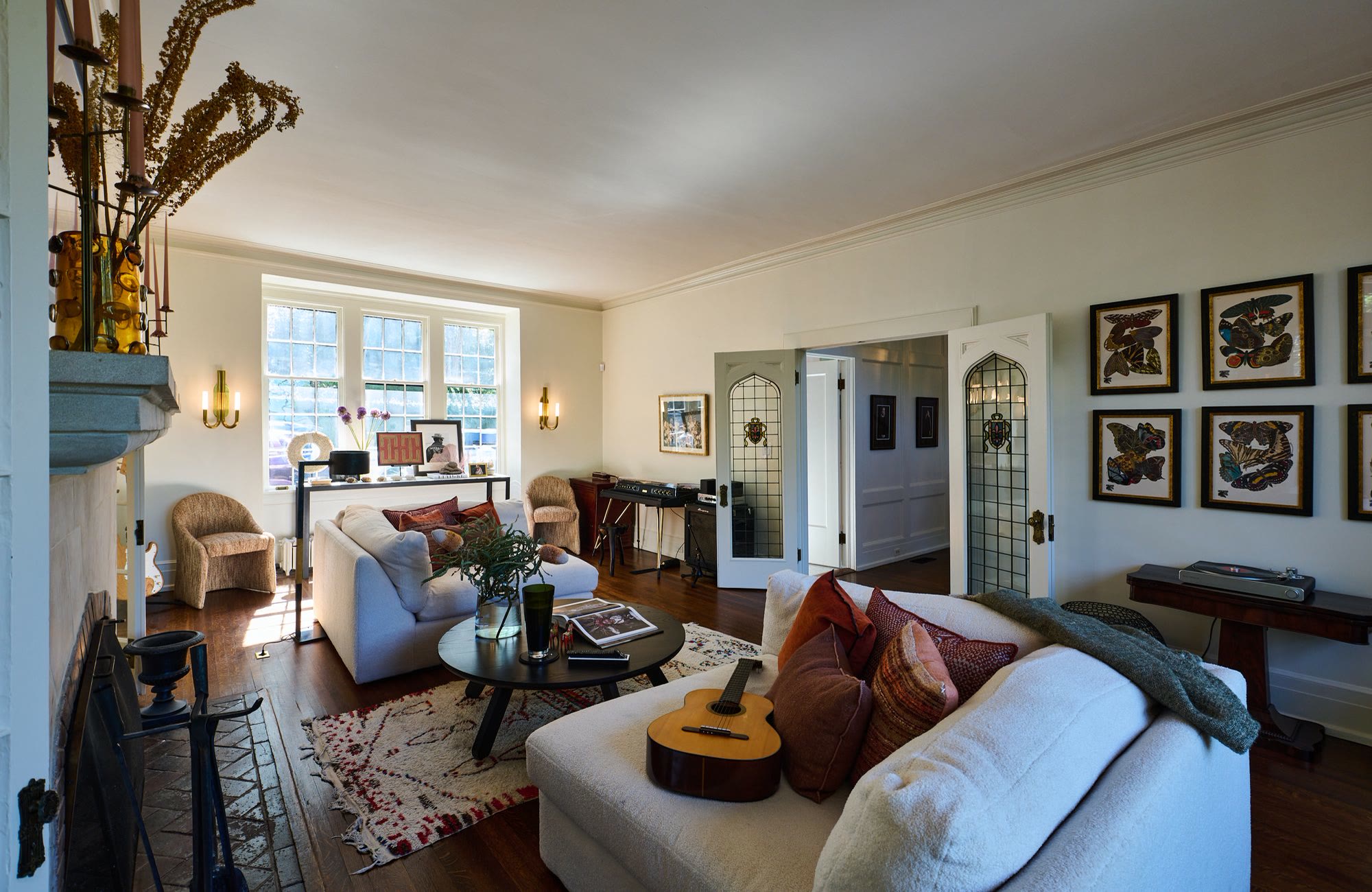
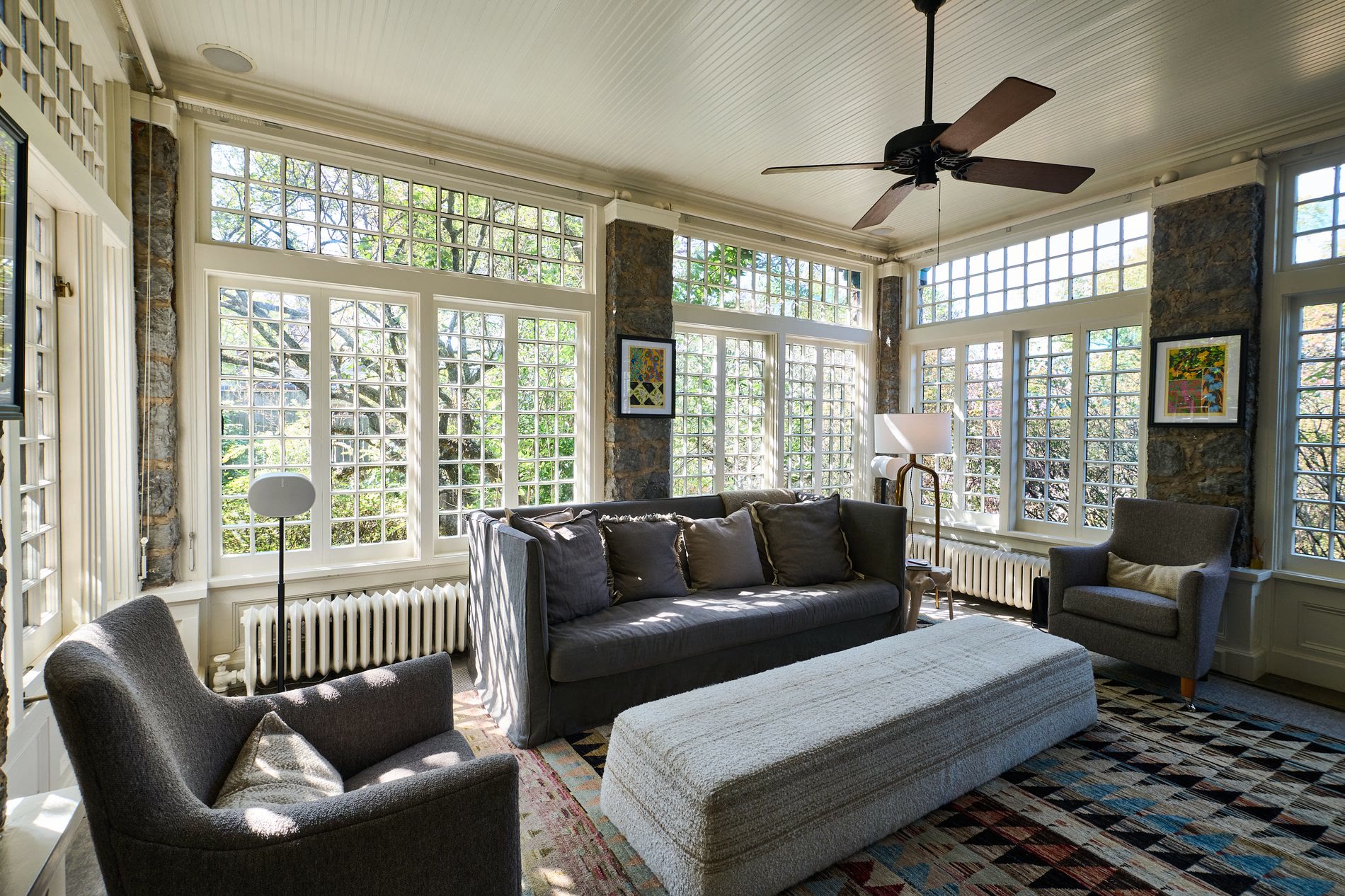
Where the house gathers between takes. The living room runs symmetrical around a grand stone fireplace — two long sofas, a hearth you could nearly stand in — and opens to a dining room under a cluster of glass and a glazed sun porch for the afternoon everyone needs.
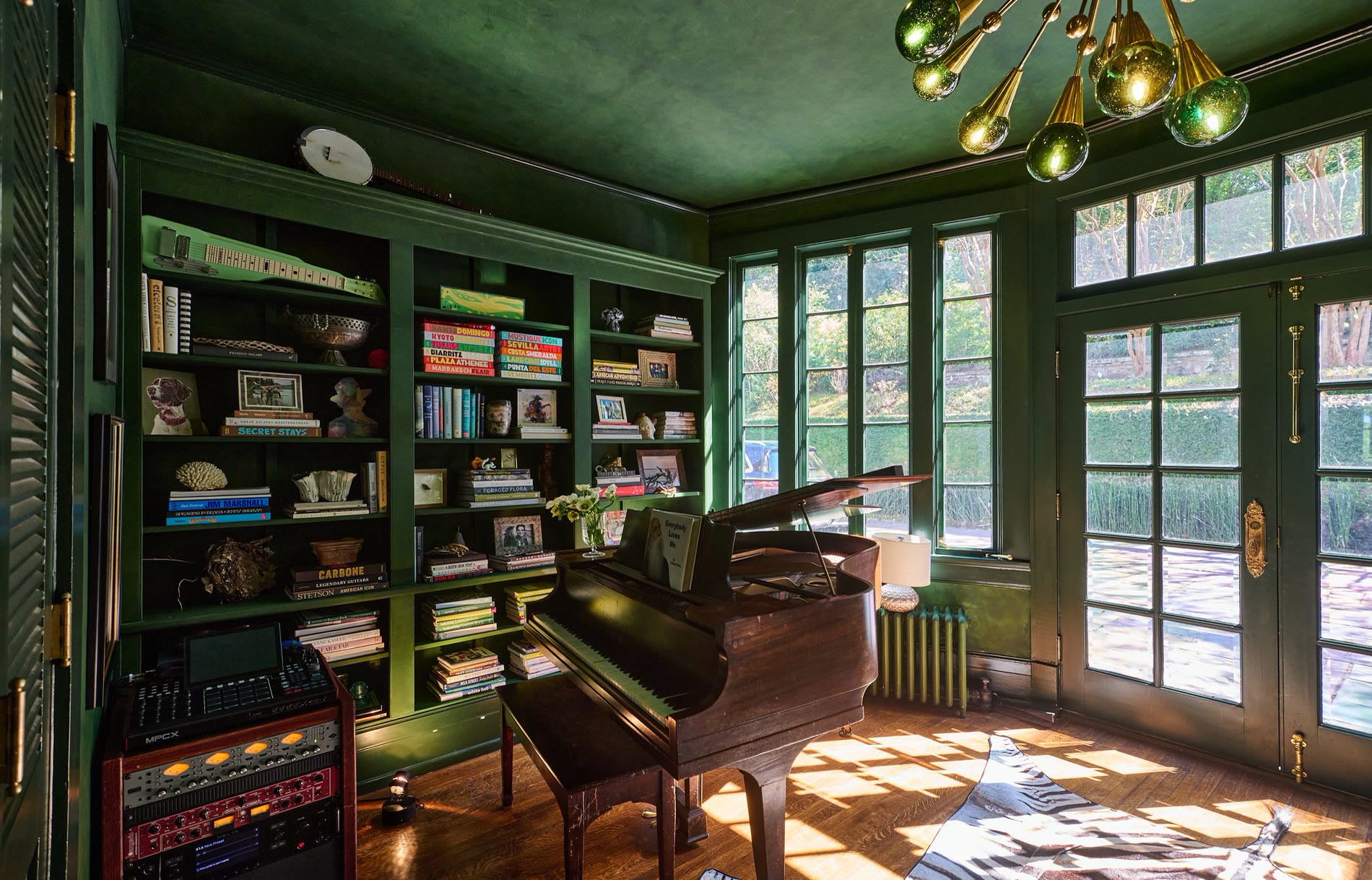
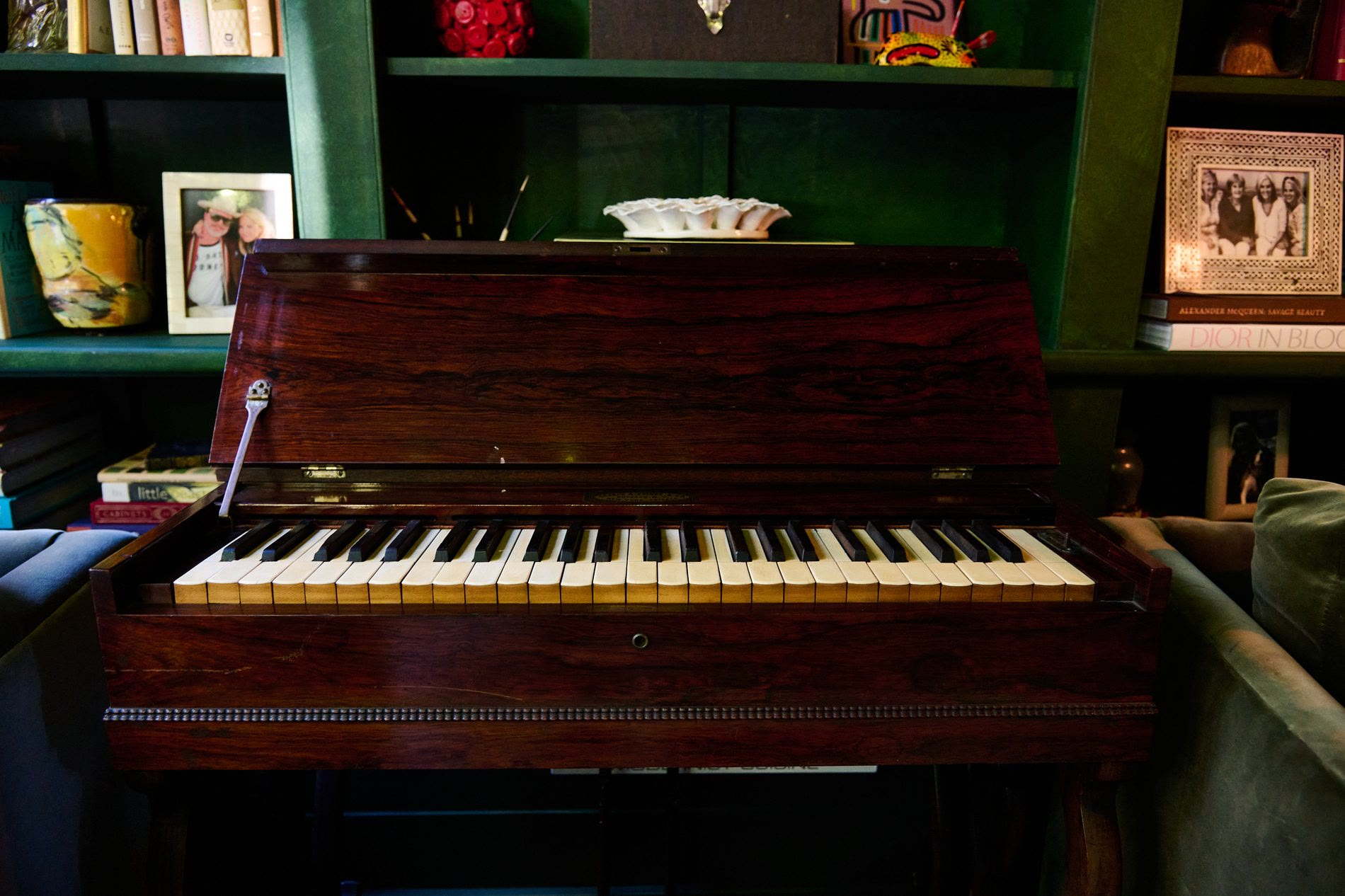
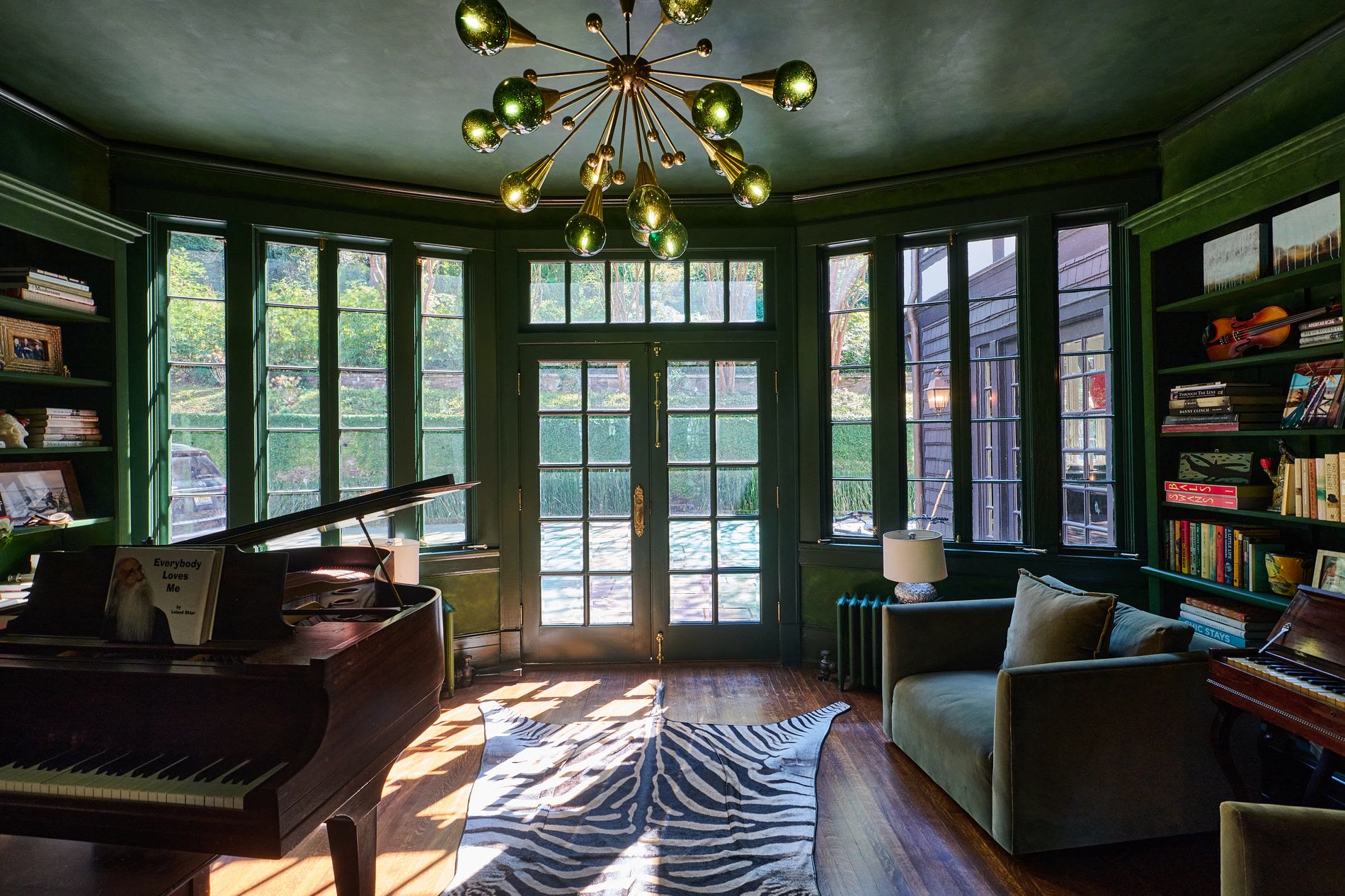
Forest-green lacquer, books to the ceiling, a grand piano and an 1847 harmonium that have seen more sessions than anyone playing them. Eight channels run behind the shelves. Good for strings, good for thinking, good for the take you didn't plan to keep.
PATCHED 8CH → 5088 · GREEN · BOOKS TO THE CEILING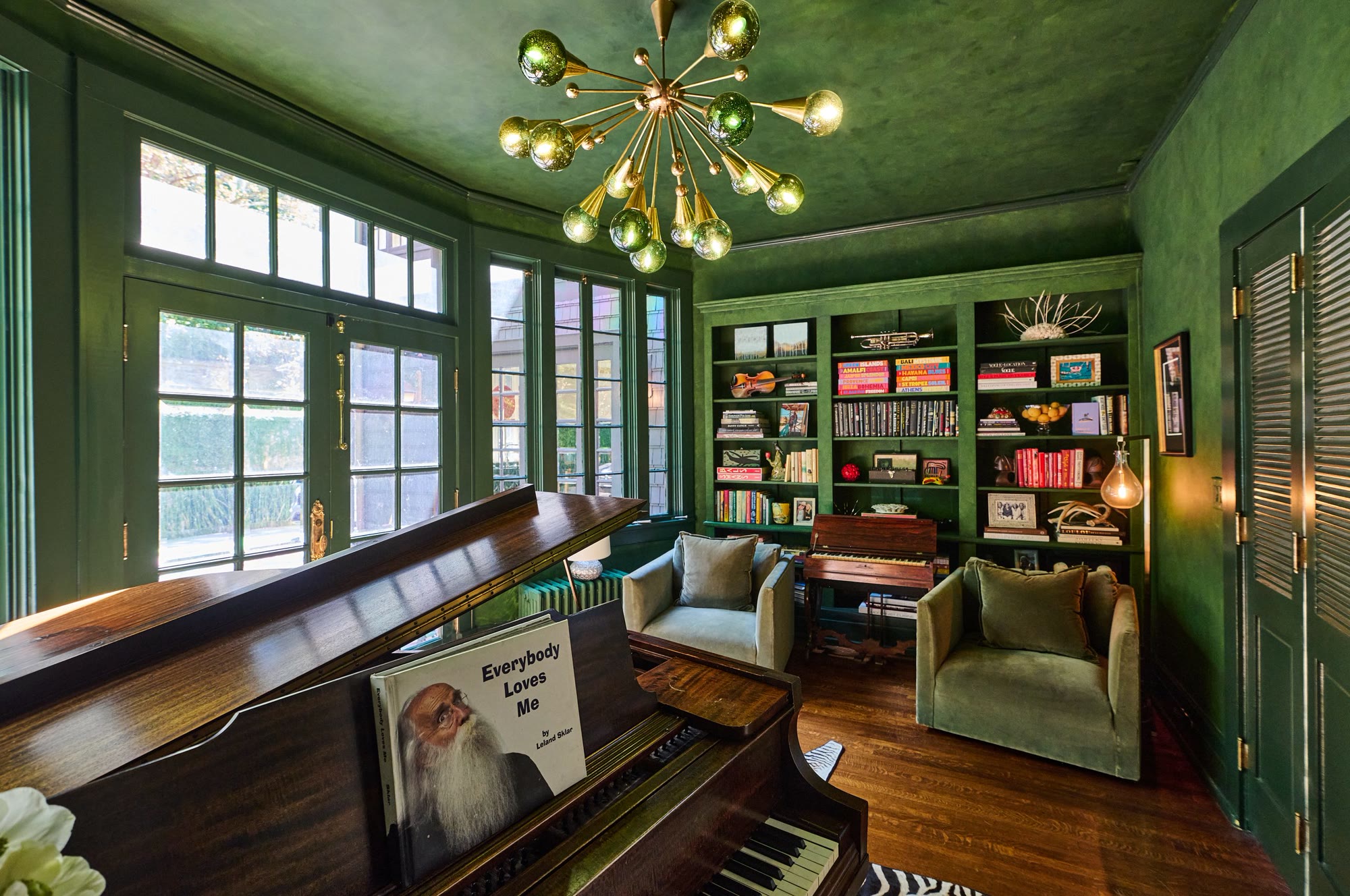
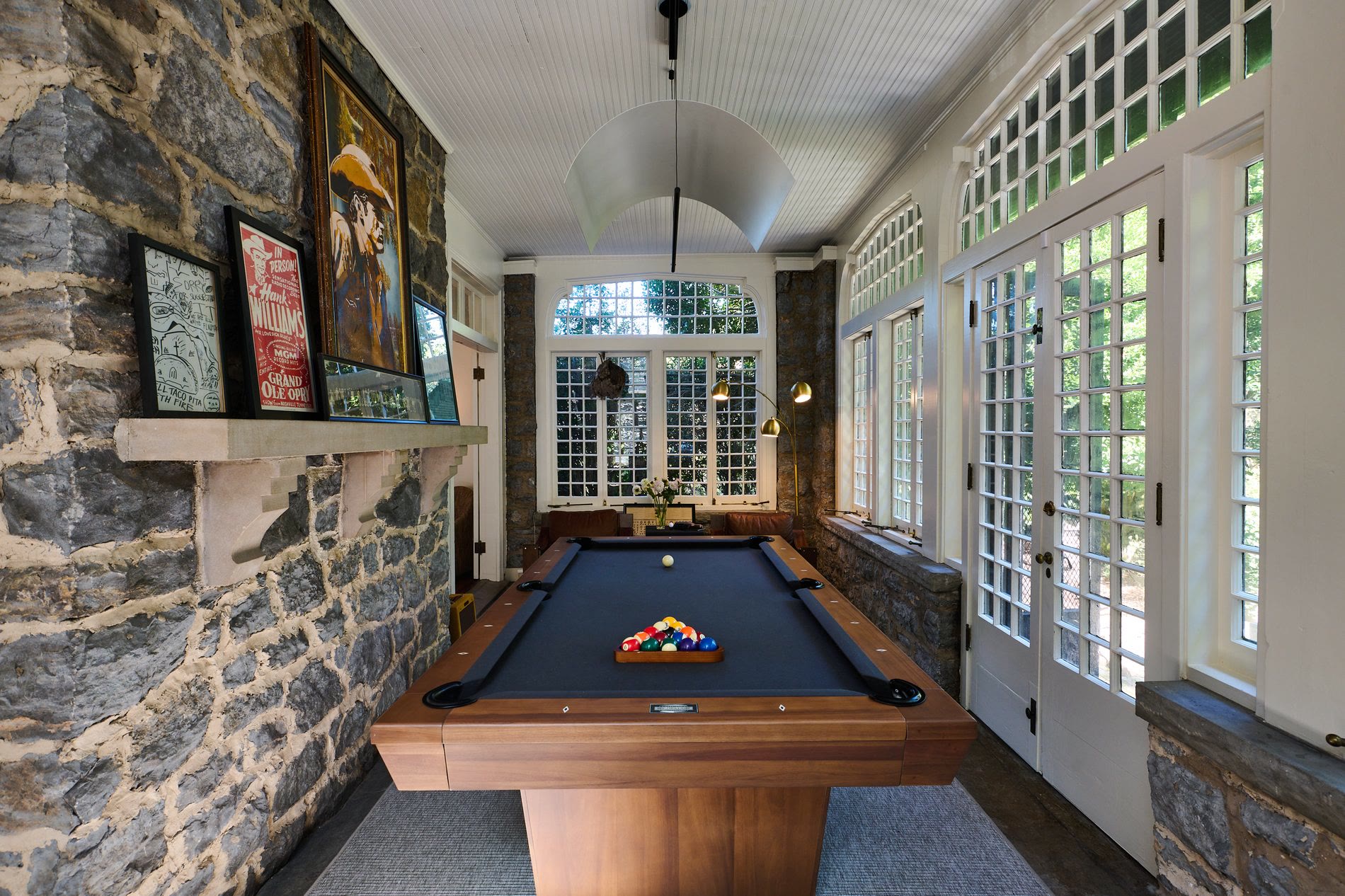
Next door, a hall walled in fieldstone with a billiards table down the middle — natural reverb you can't buy. Clap once and you'll understand.
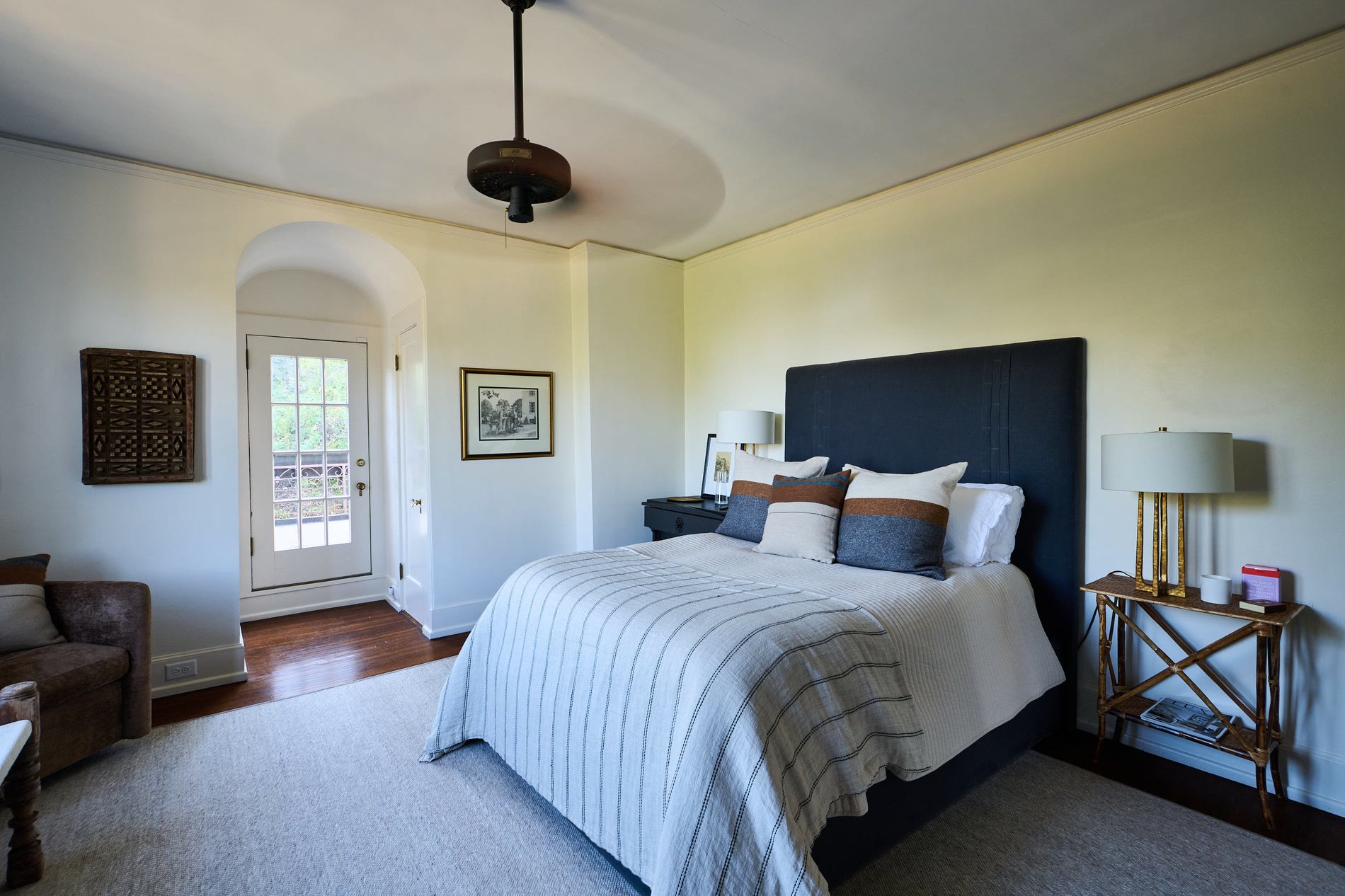
Eight en-suite rooms, no two alike — a blue four-poster, a navy headboard, a panelled suite, a dormer under the eaves. Sleep the whole band and crew on site; roll out of bed and into the session.
SLEEP ON SITE · EXCLUSIVE USE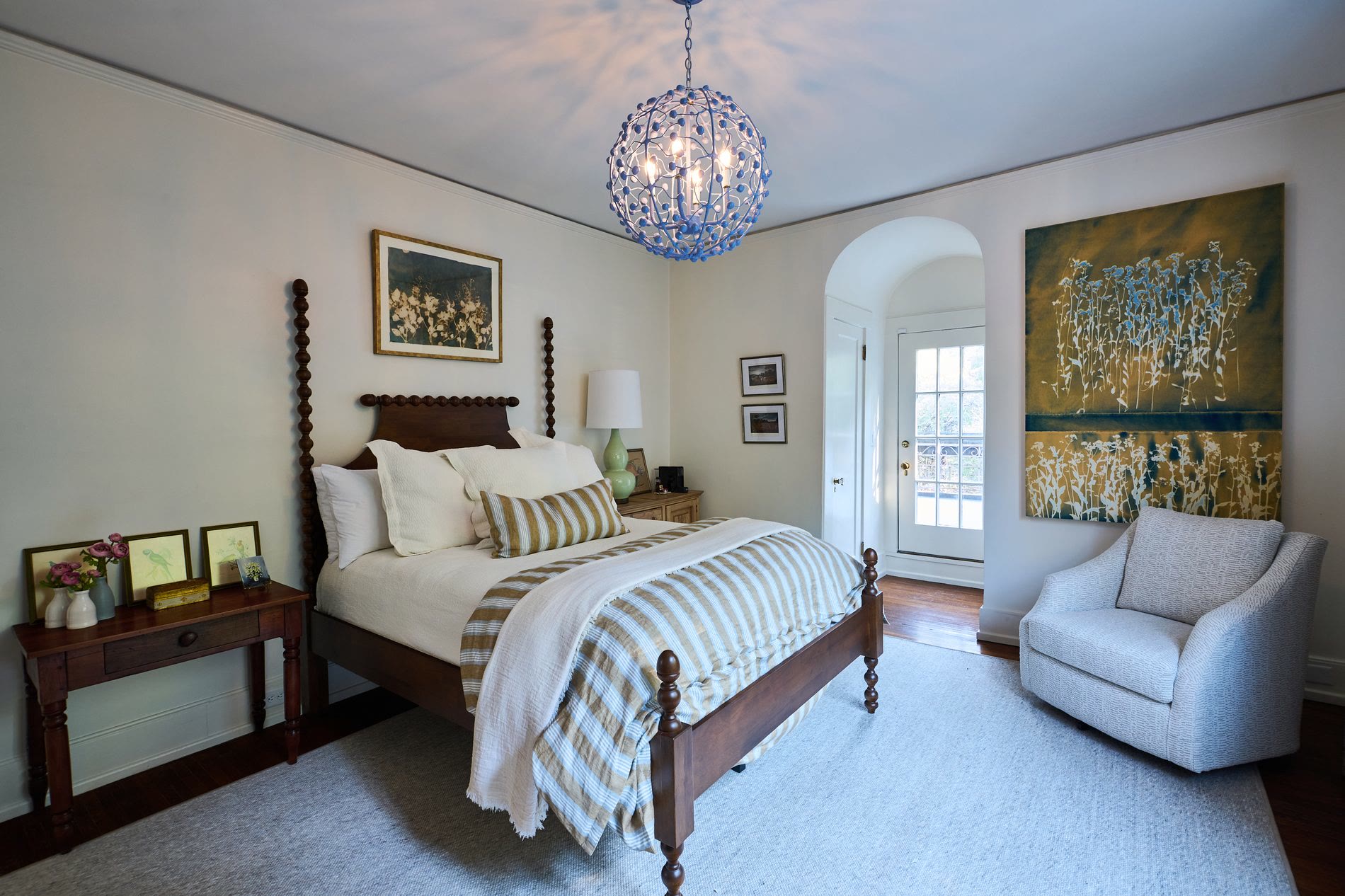
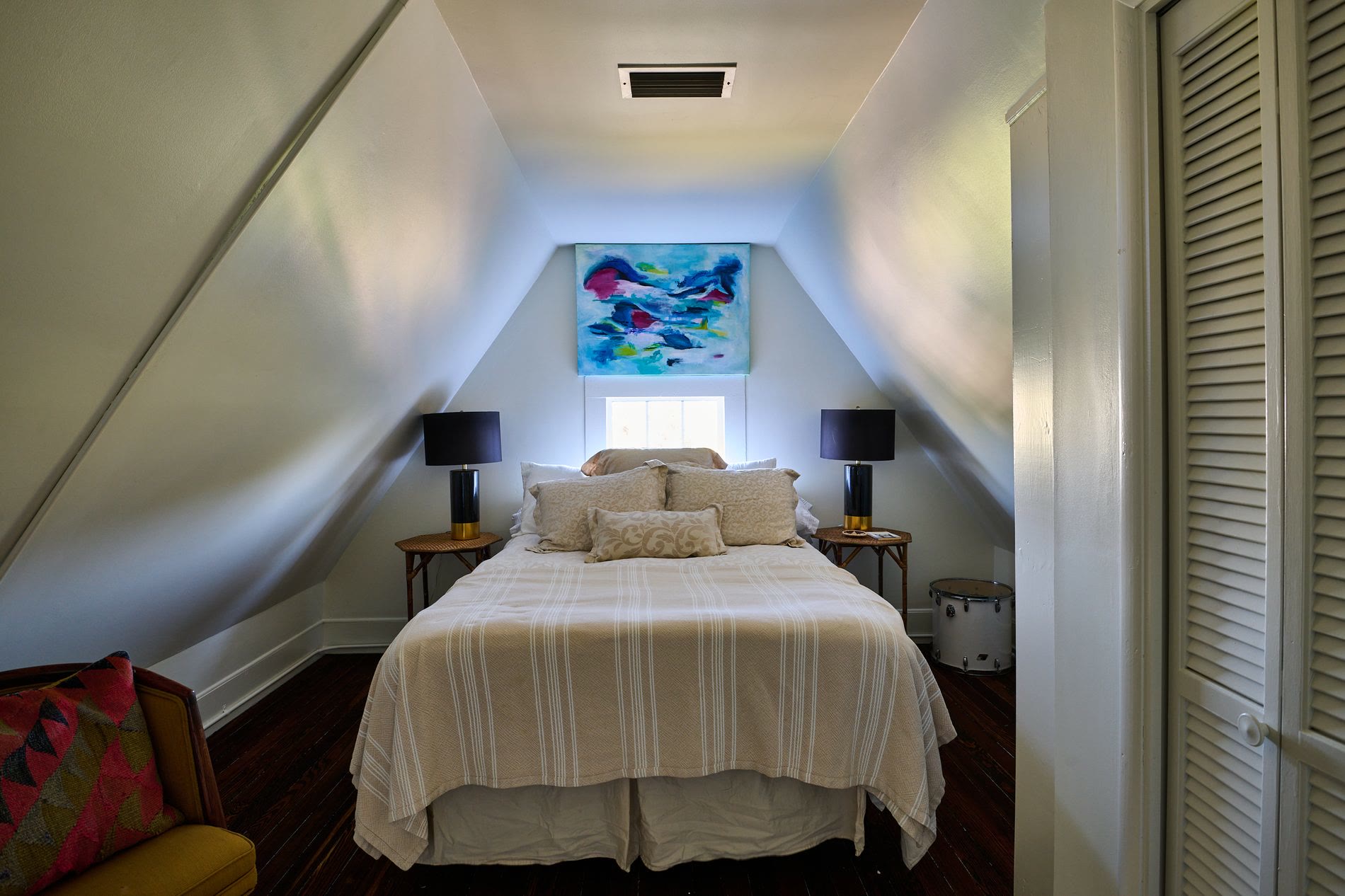
One suite the colour of a darkroom safelight. There is an eight-channel tieline behind the headboard, which is a strange sentence to write about a bedroom, and exactly the point.
People cut their best vocals in here. Usually around two in the morning, usually without meaning to.
PATCHED 8CH → 5088 · BEST AFTER MIDNIGHT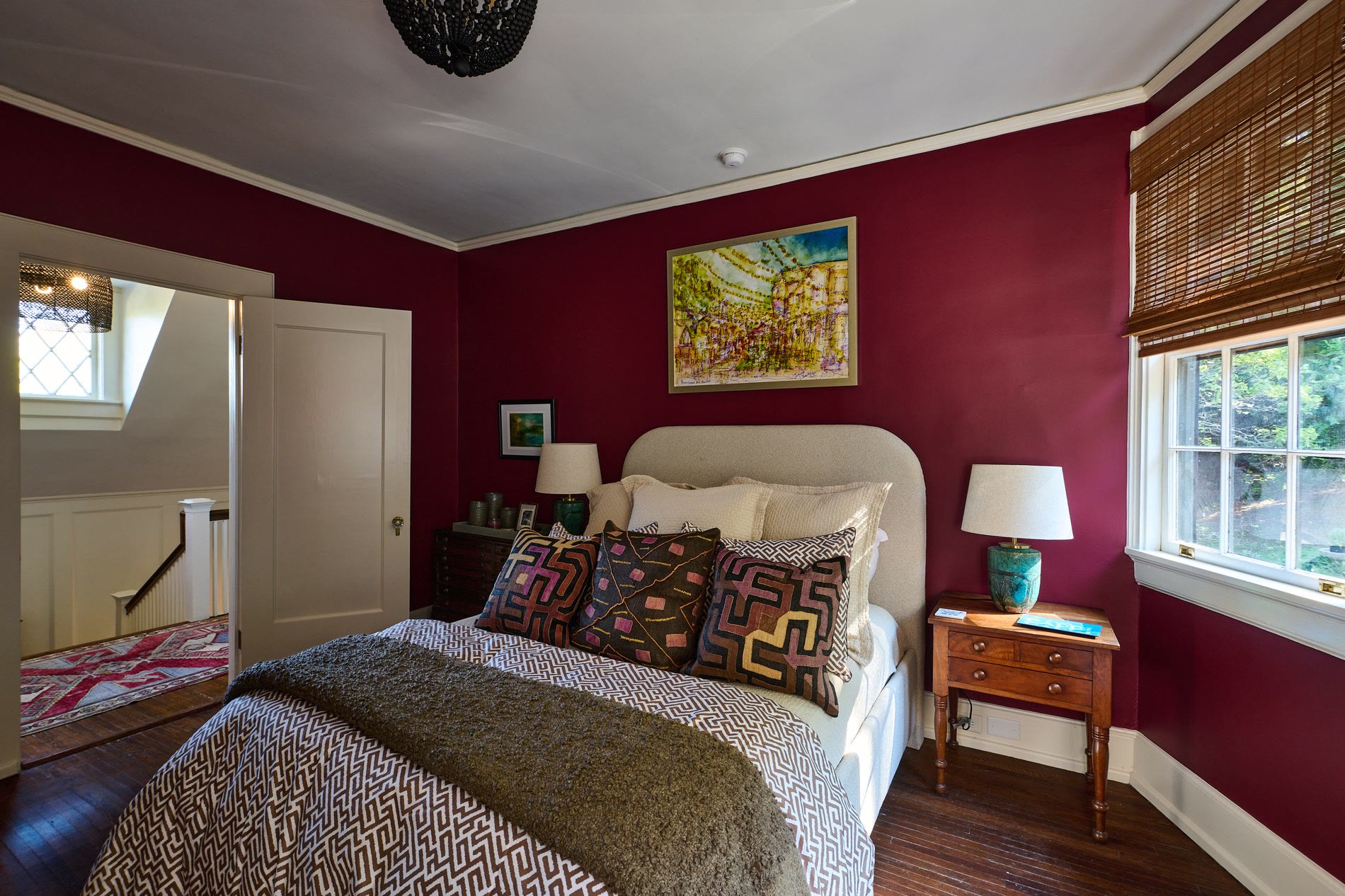
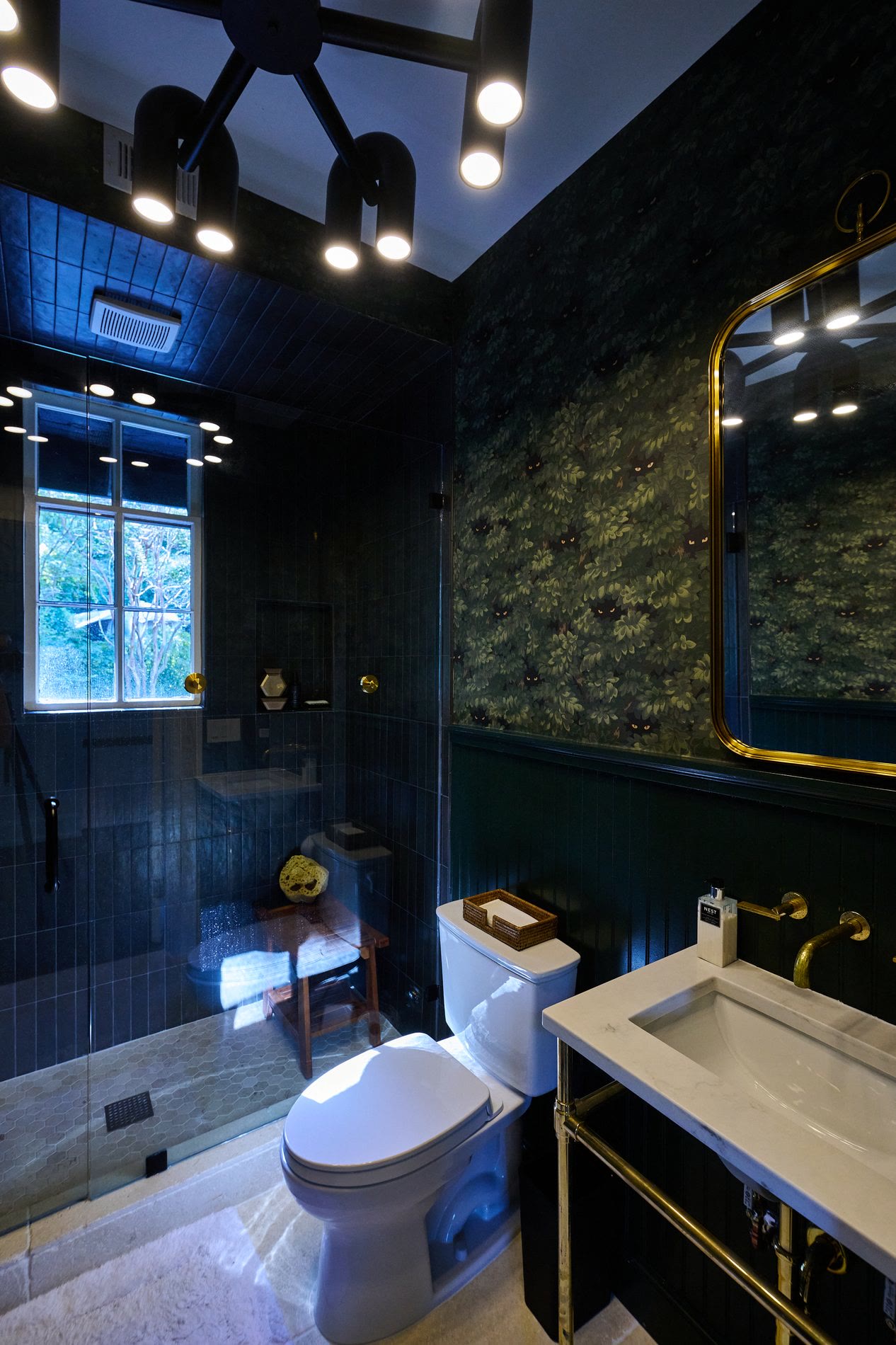
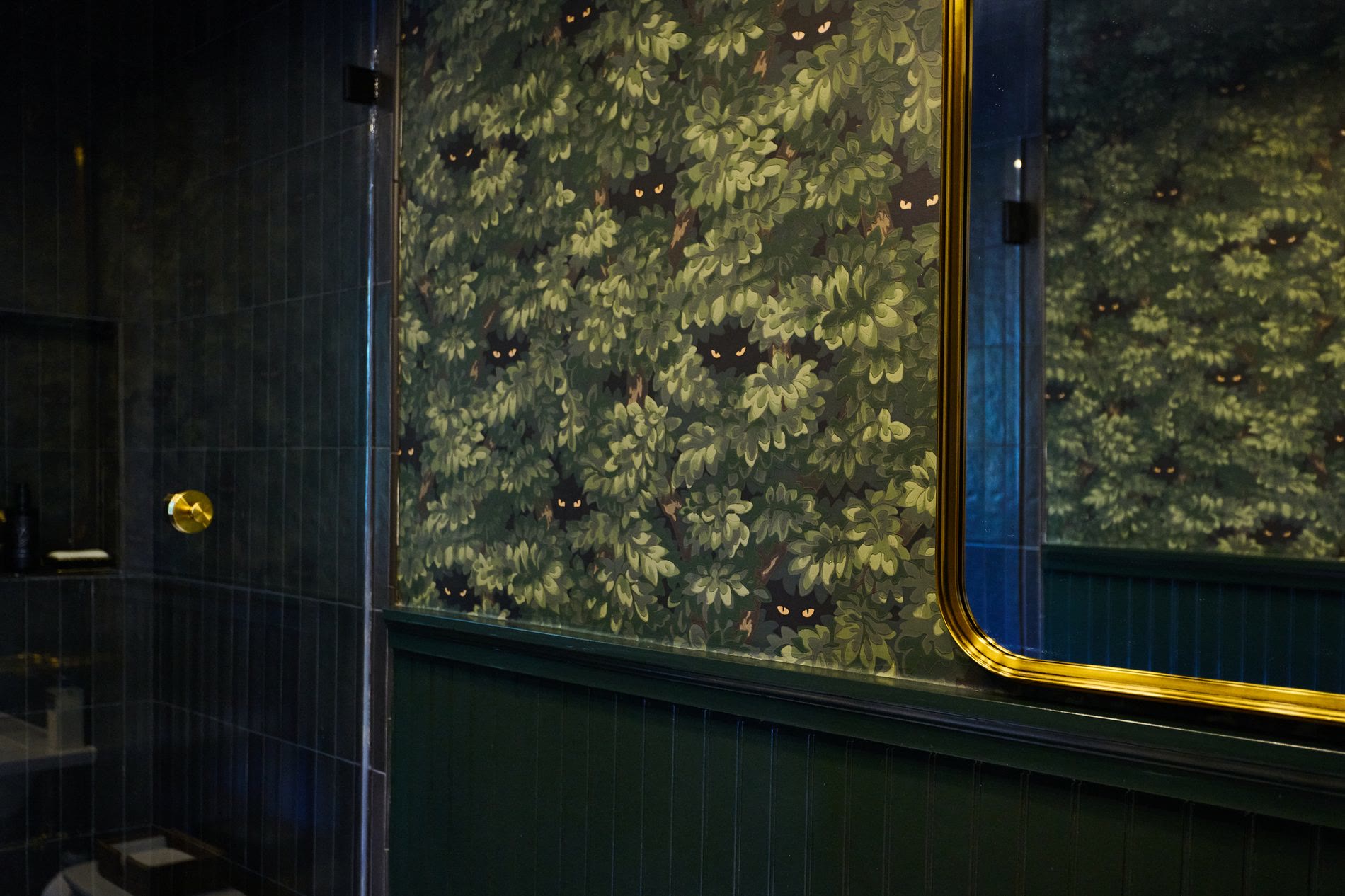
A jewel-box of a bathroom — malachite tile, brass fittings, and a small chandelier it has no business having. The wallpaper, we should mention, has eyes. Dozens of them, and they all face the shower. Bathe accordingly.
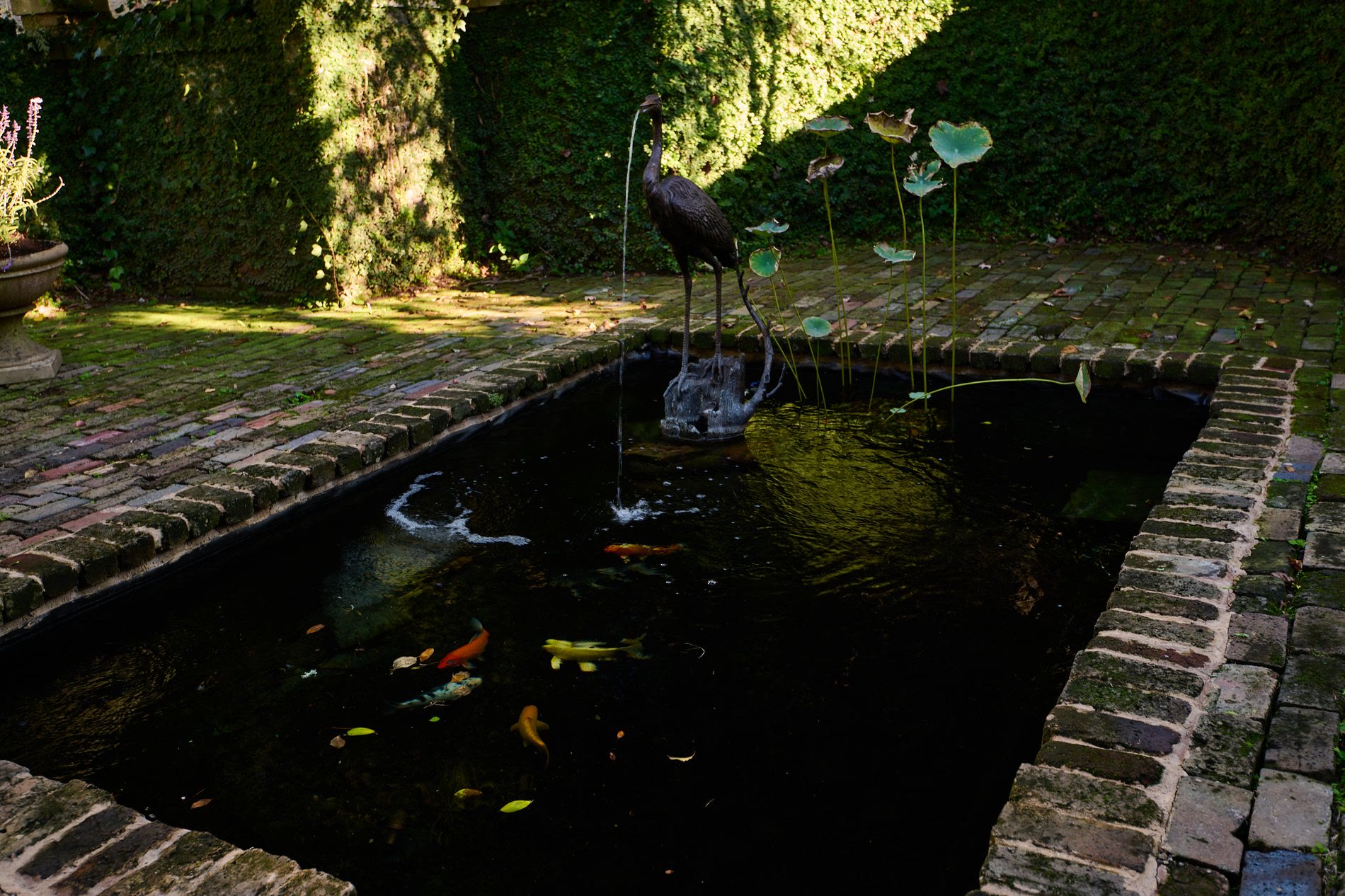
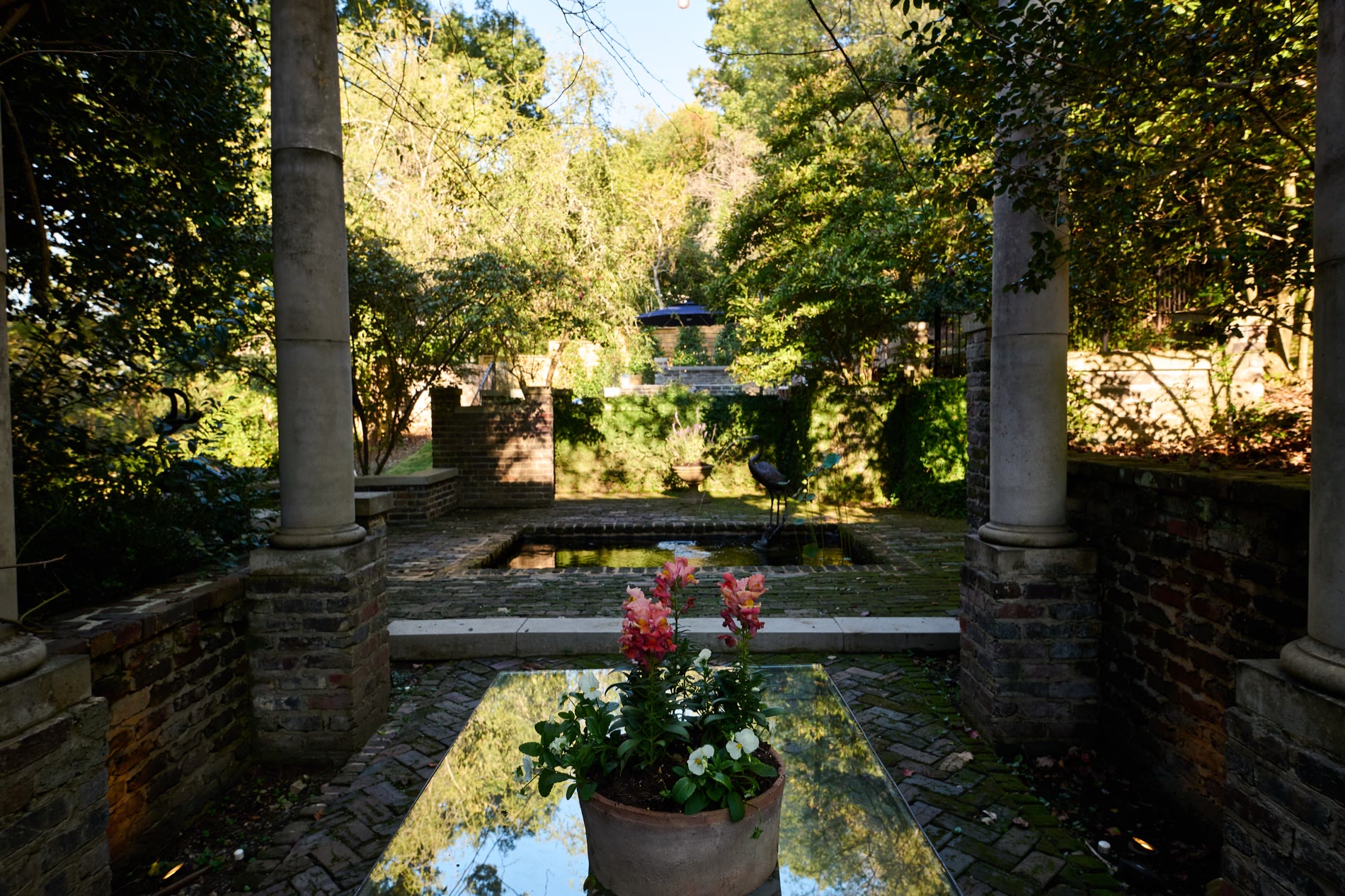
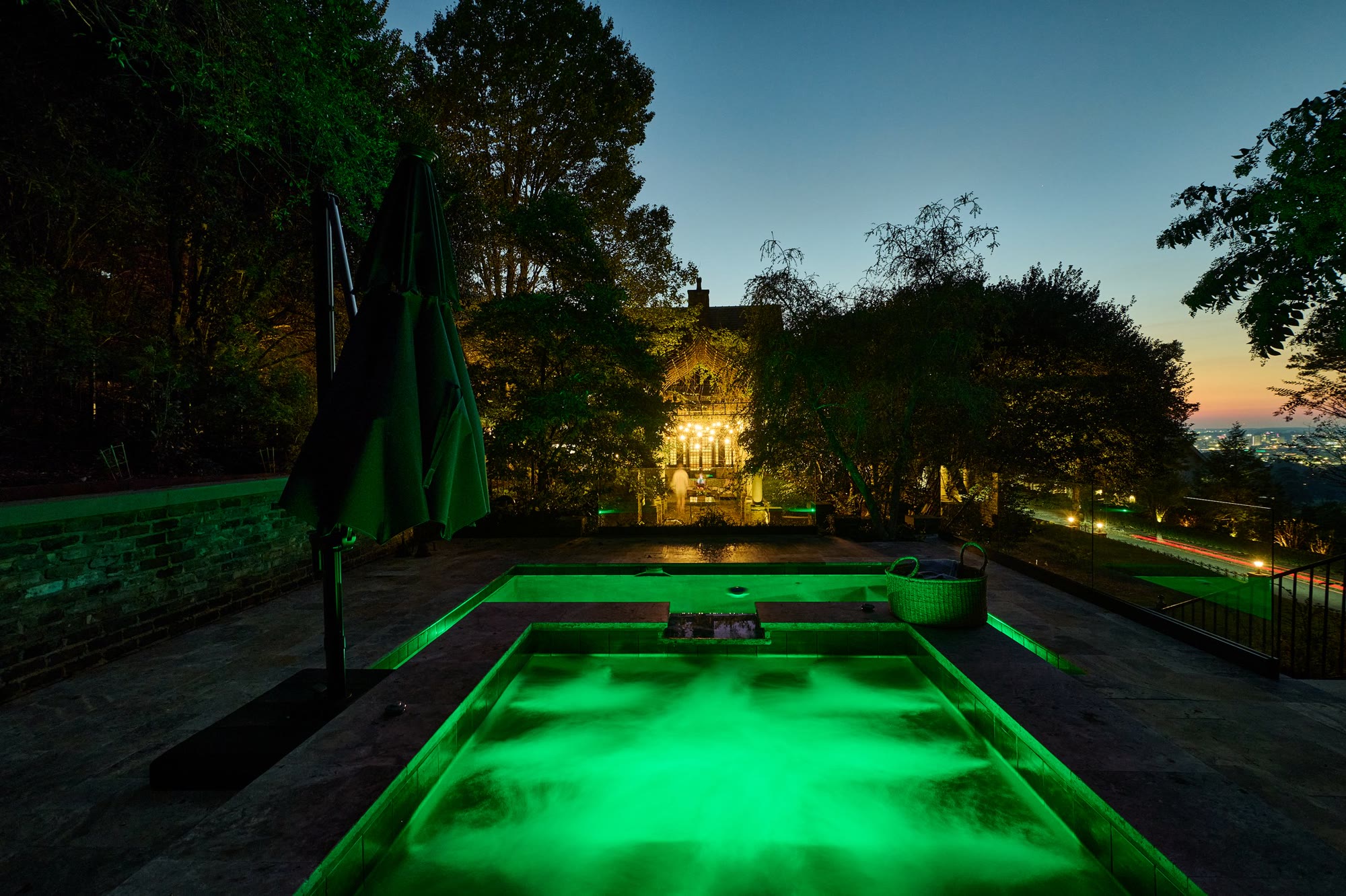
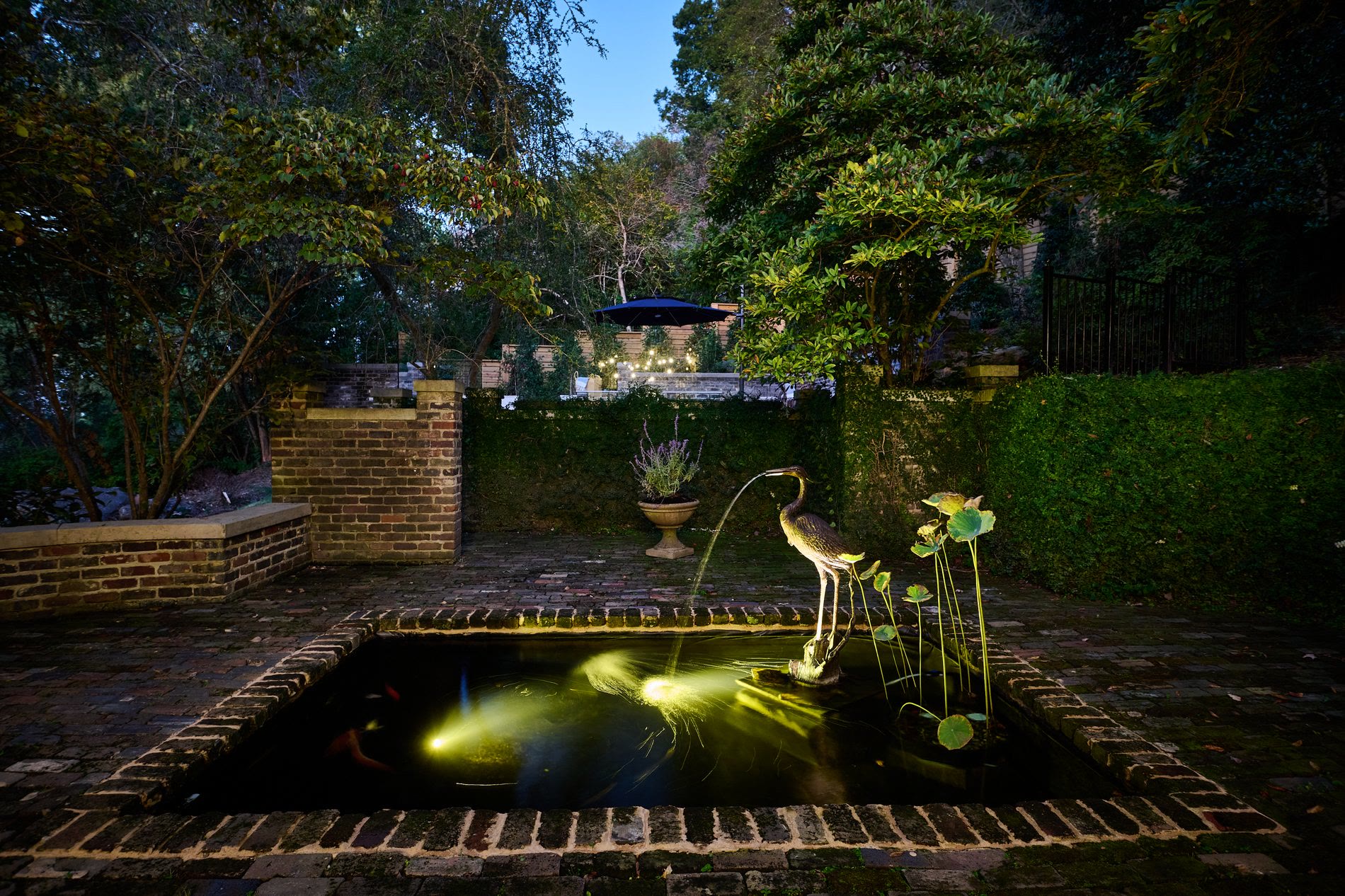
A koi pond, a stone colonnade, fountains in the reeds — and a pool at the edge of the lawn that turns green at nightfall. Where the record goes to breathe.
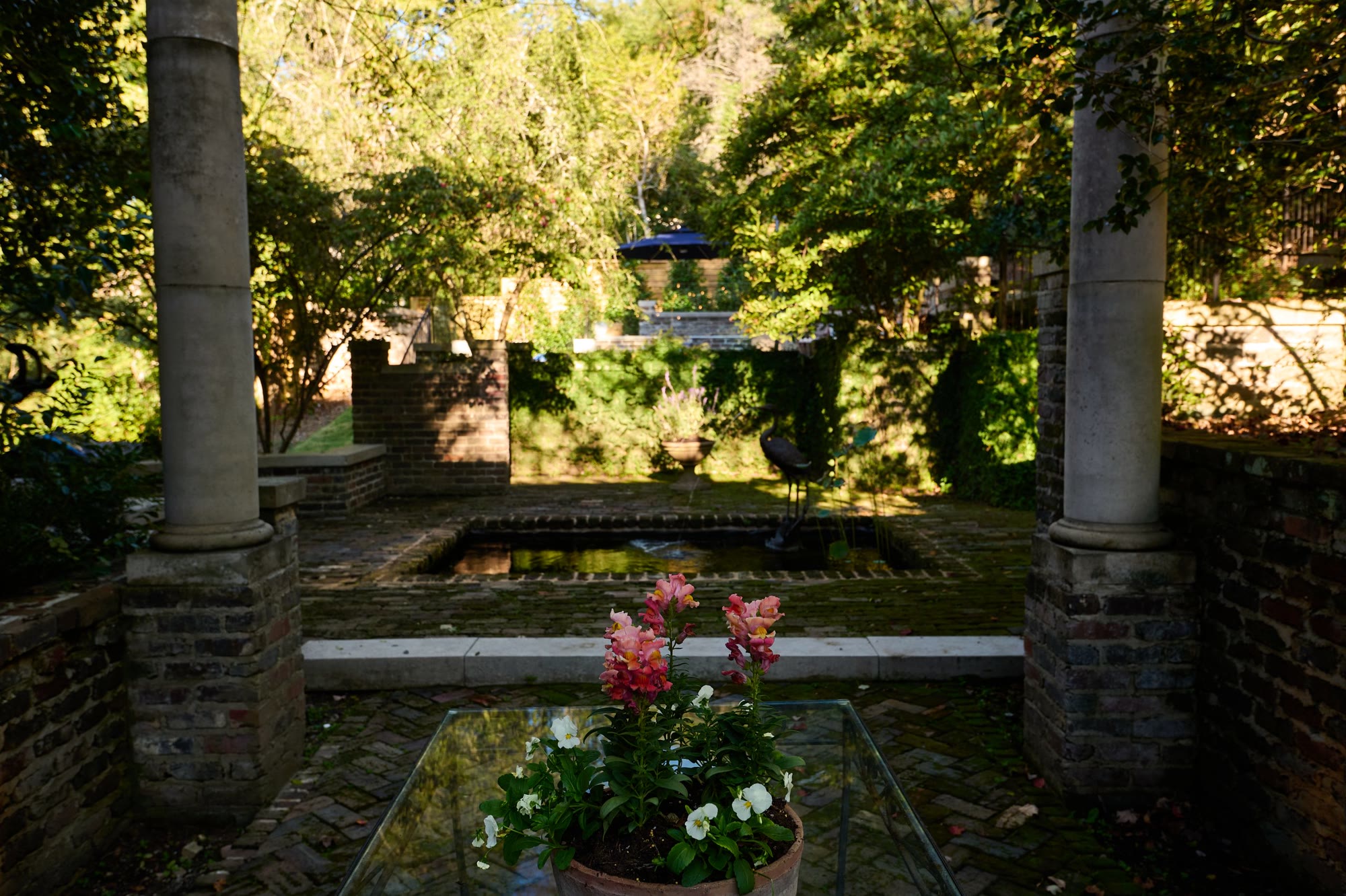
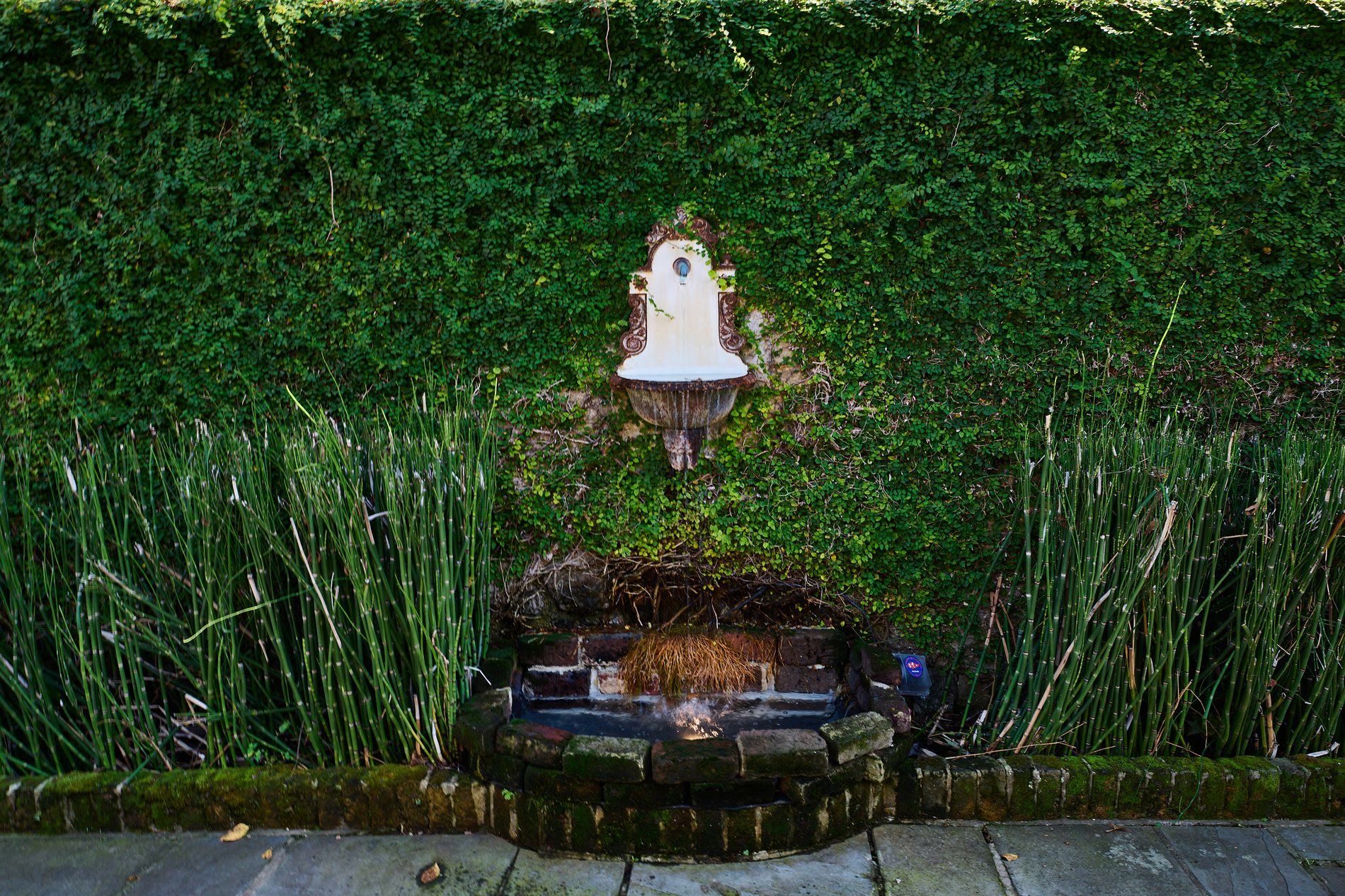
The landscape is as eccentric as the house: koi gliding under lotus, crane sculptures mid-step, a wall fountain in the reeds, a vine-wrapped colonnade going green at the edges. Four channels reach out here too.
The koi, for the record, have names — Goldy Prawn, Speckly Pete, Rorschach, Vanguard Ace, Orange Sickle, and Ming the Merciless, who runs the pond and knows it.
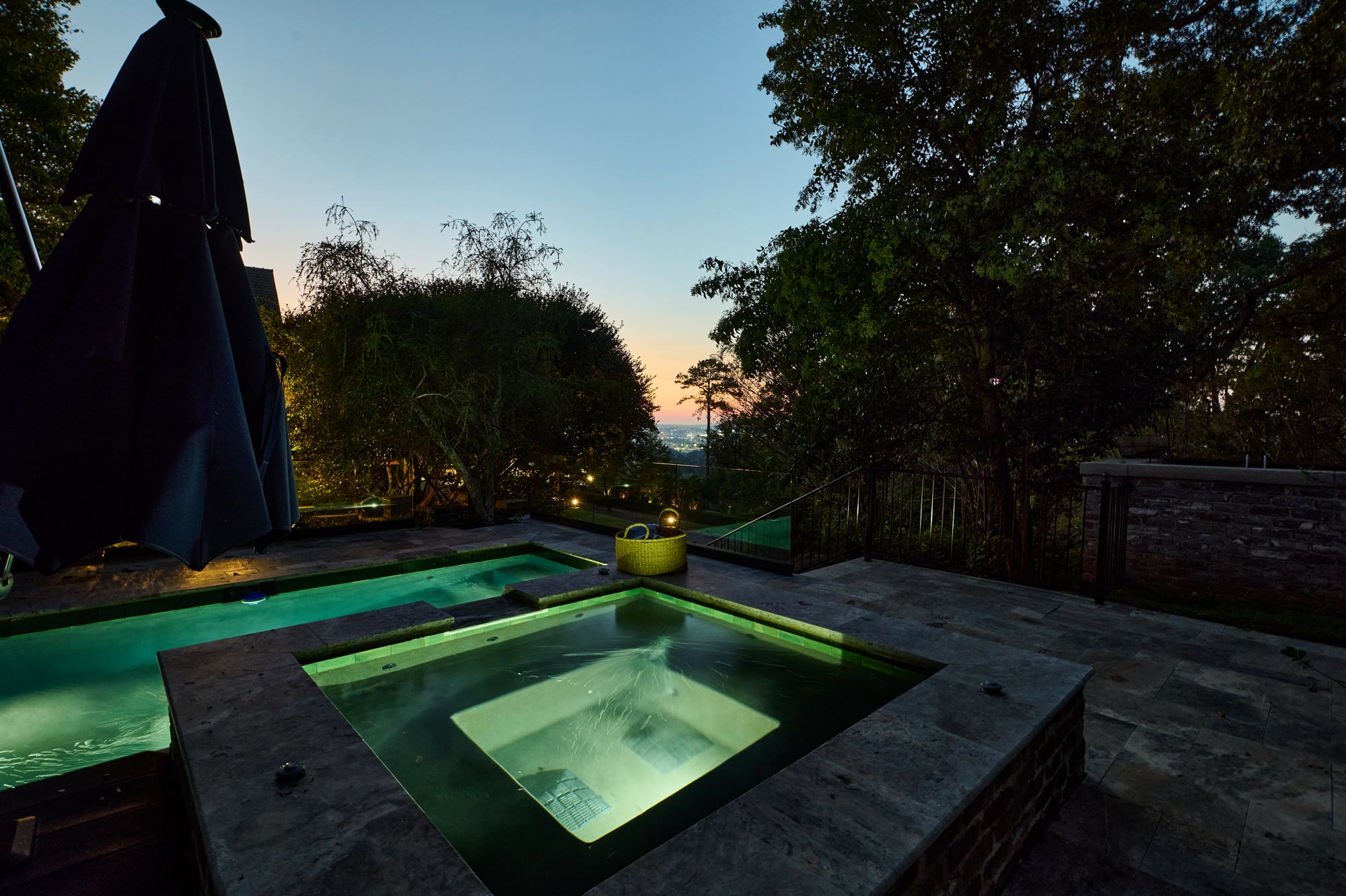
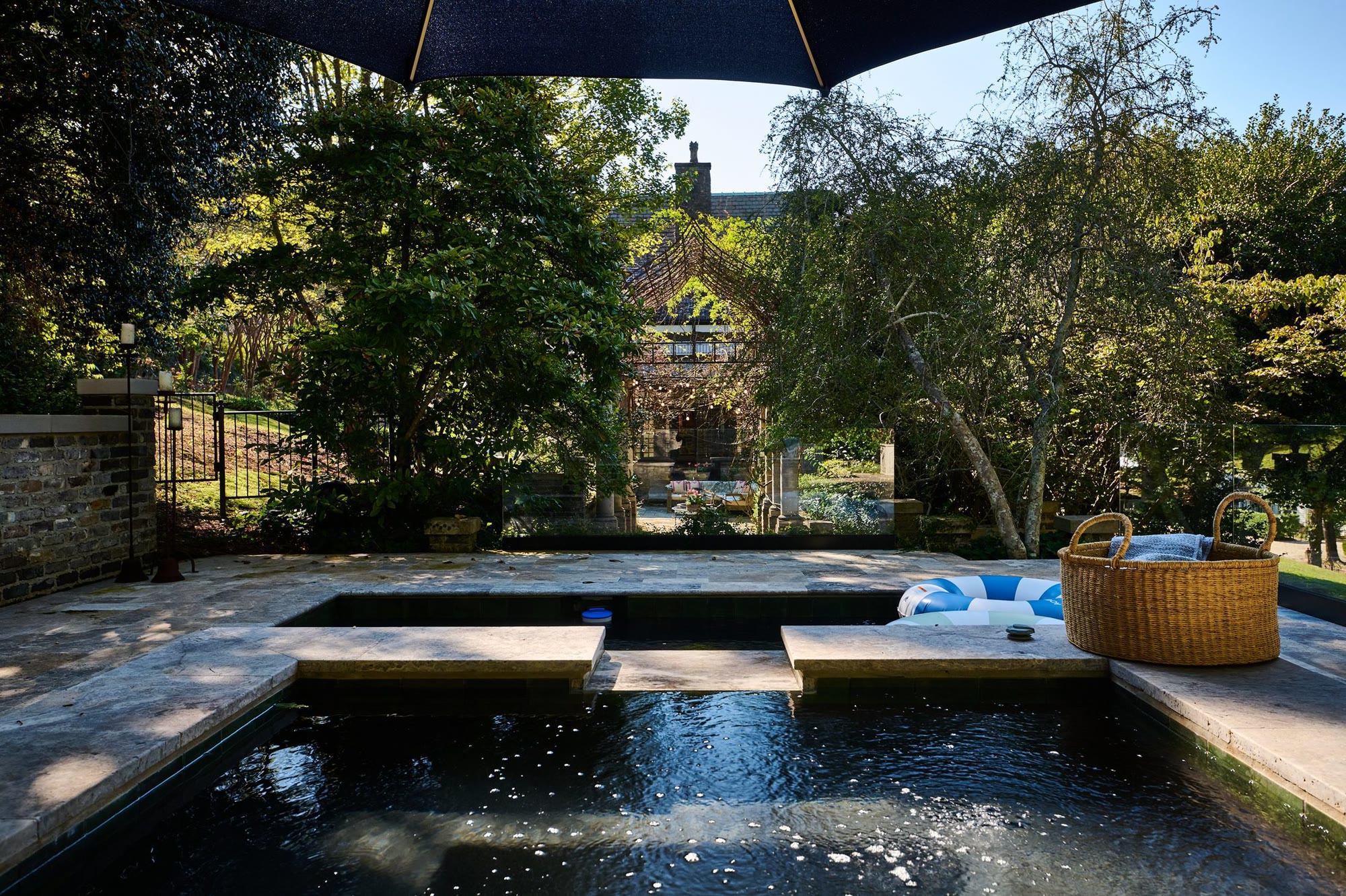
At the edge of the lawn, where the land drops to the trees. By day a cantilever umbrella and a stone table; by night, lit green, the whole terrace glowing. Yes, people have tracked out here. Yes, it made the record.
PATCHED 4CH → 5088 · AT THE EDGE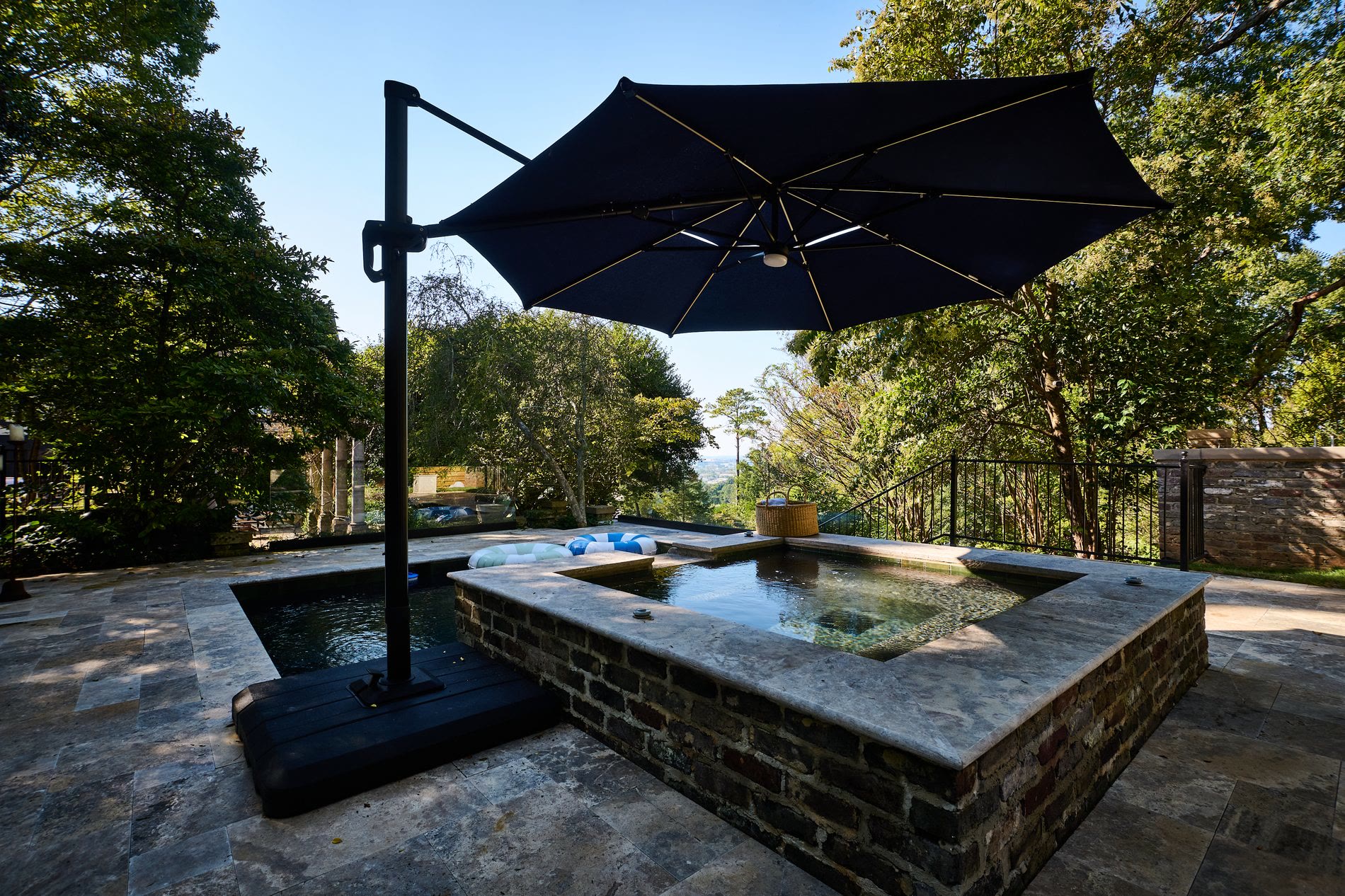
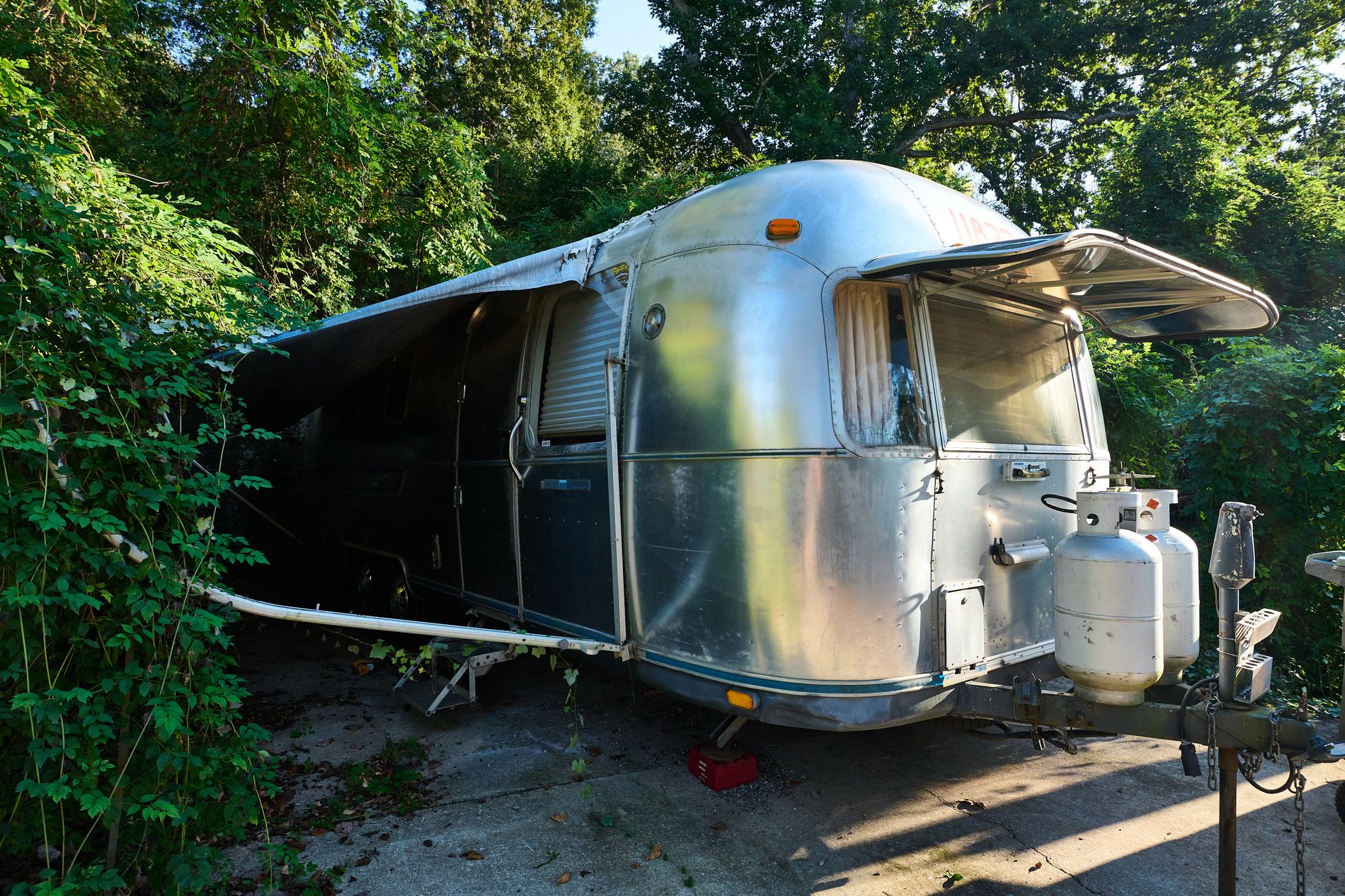
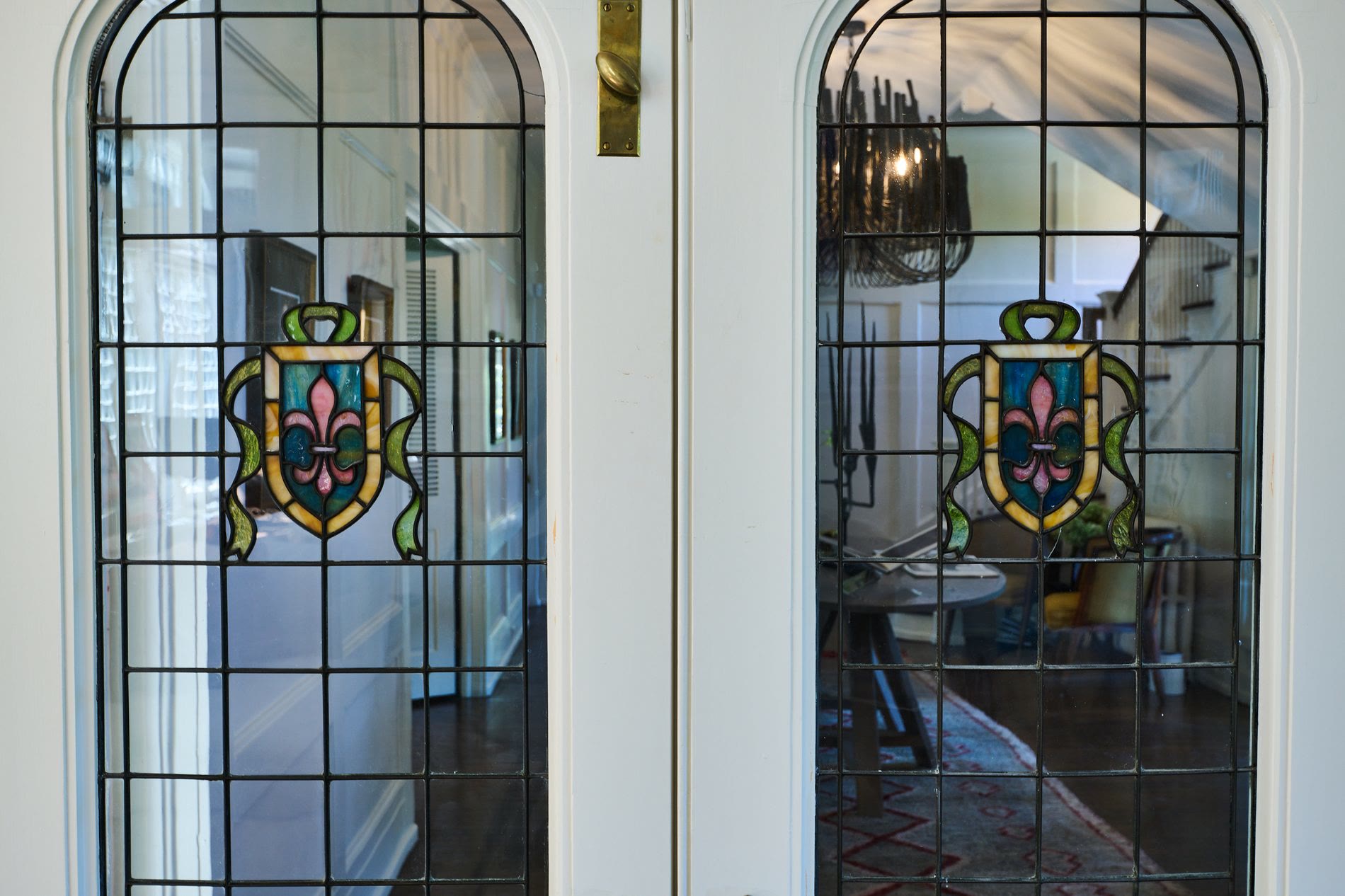
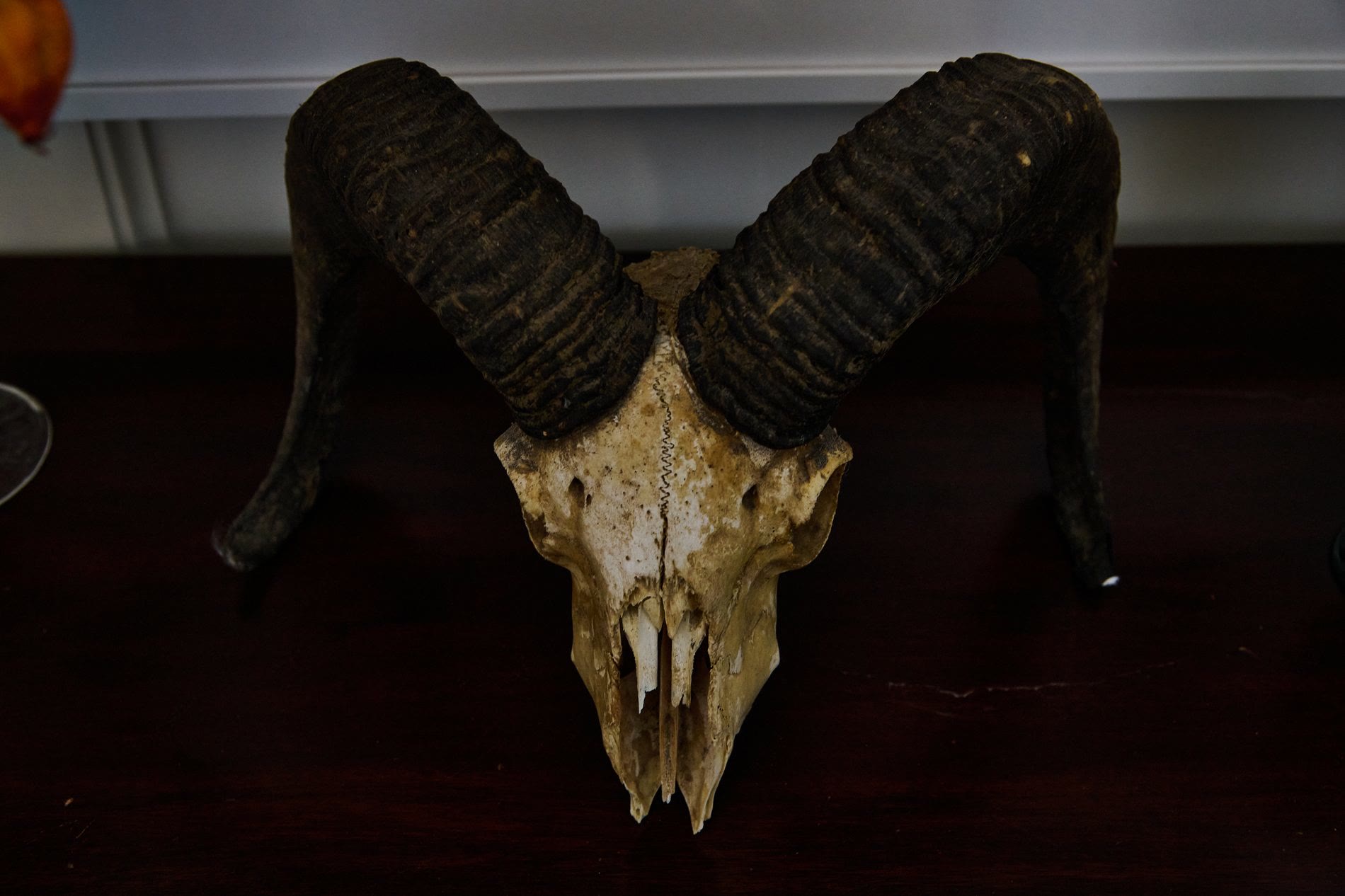
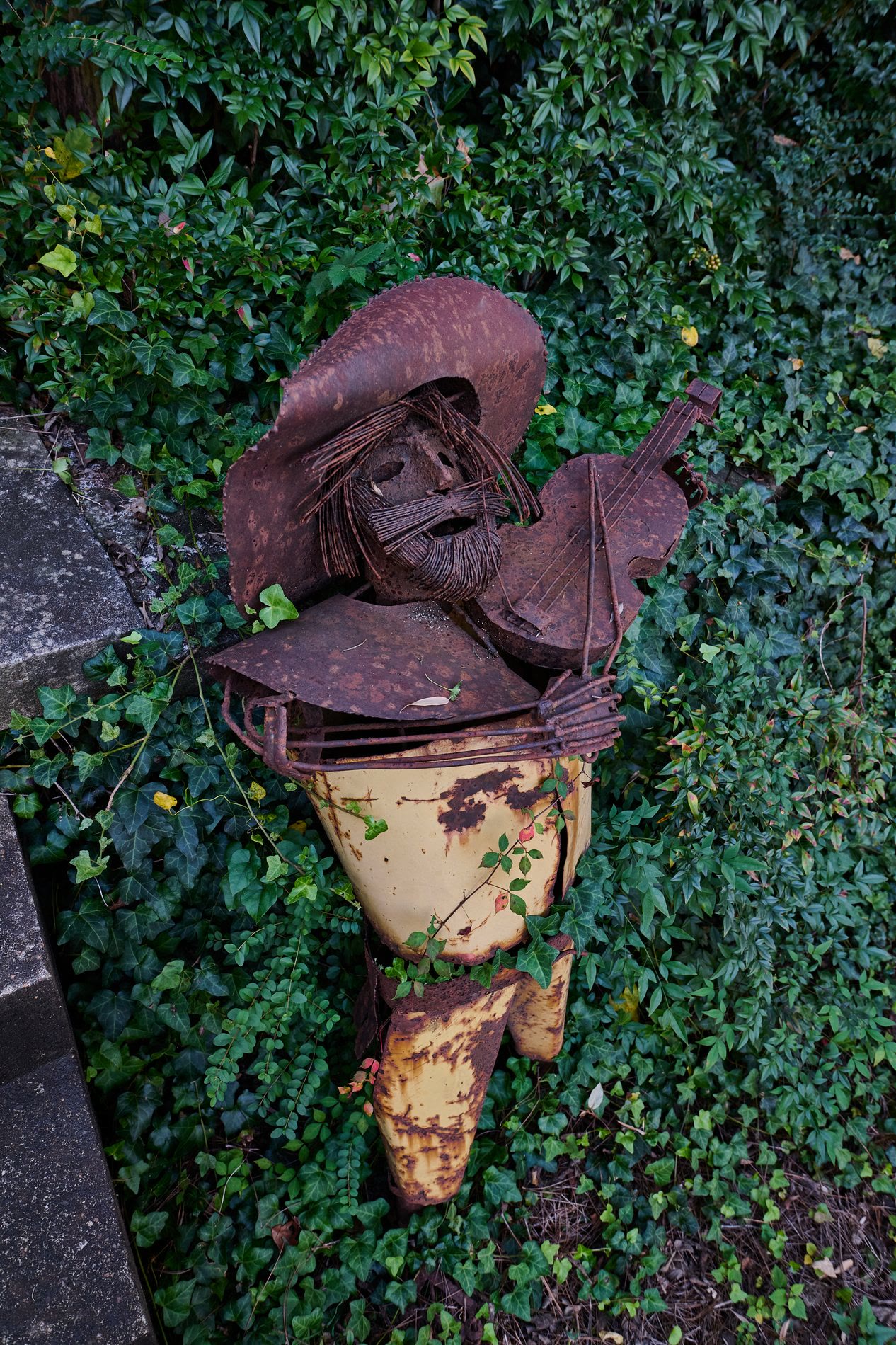
A house like this keeps odd company: a silver Airstream in the trees, heraldic glass, a ram's skull, a face in the ivy. We left it all where we found it.
We don't make much of who records here — discretion is half of what you're paying for. But since you're likely wondering: a short, deliberately incomplete list of the artists and engineers who've worked these rooms. Several you'll find on the record we launch this month — and between them, these walls have held more than thirty Grammys.
— and we opened less than a year ago.
The whole of Can'd Aid Christmas, Volume 1 was tracked or mastered in these rooms — and a handful of names we've been asked not to print.
The studio keeps mostly to itself. A few nights a year it doesn't — the doors open, the Live Room fills, and the record-making gives way to something closer to a party.
Once a year the house opens its doors for something bigger than any one record. This year it's the launch of Can'd Aid Christmas, Volume 1 — a compilation cut, in part, in these rooms — with an evening of Songwriters in the Round: some of the South's best bluegrass and Americana players, stripped down and close, every song arriving with the story behind it.
Elevated food and drink, intimate performances, and a cause worth the drive. Every ticket is tax-deductible — the proceeds put instruments into the hands of kids who'd otherwise go without.
SAT · NOV 14 · 5:30 PM CST · 3633 CLIFF RD, BIRMINGHAM
You don't book a session; you take the house. For three nights, for ten, or for a month — the estate is yours alone. Price on request, because every record asks for something different.
You won't need to leave the hill — but when you do, it's three minutes down Red Mountain into the Magic City. Condé Nast Traveler ran a feature on it; the Michelin Guide came to the American South for the first time and took eleven Birmingham tables with it. A short list, from people who live here.
We don't take bookings so much as answer letters. Tell us who you are and what you're trying to make, and we'll tell you honestly whether this is the house for it. The good ones usually know before they finish writing.